About this artwork
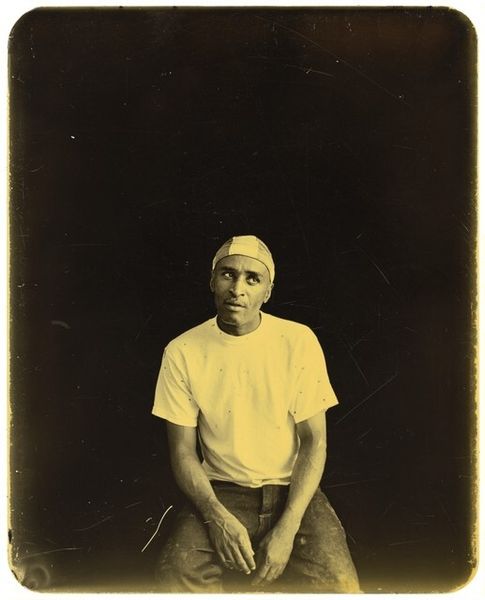
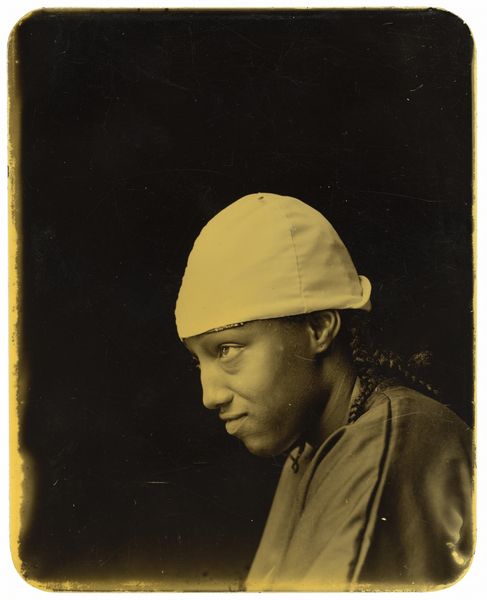
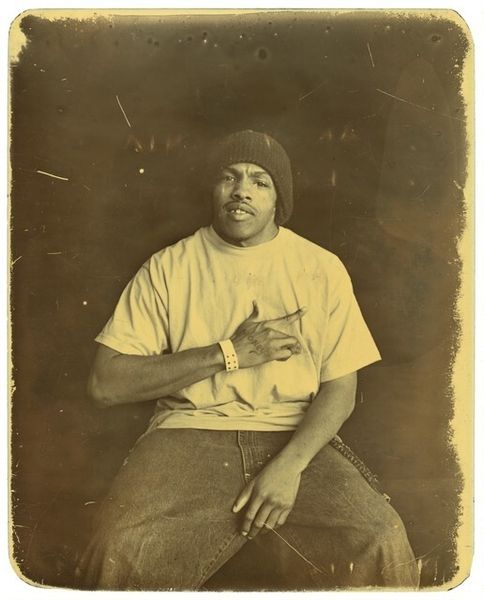
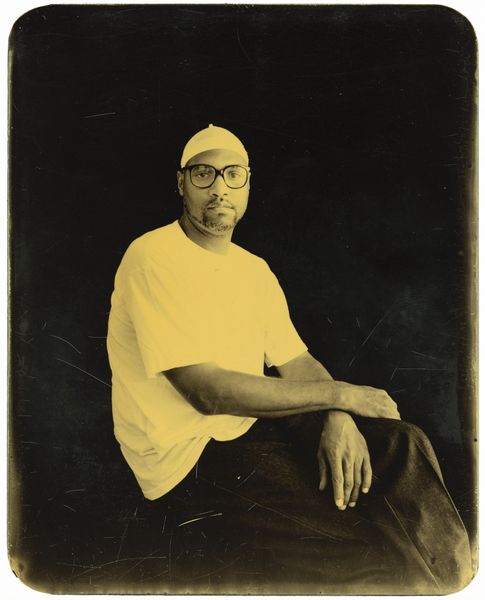
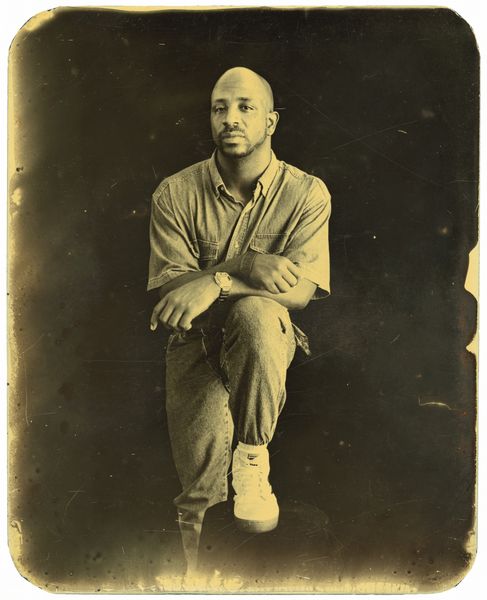
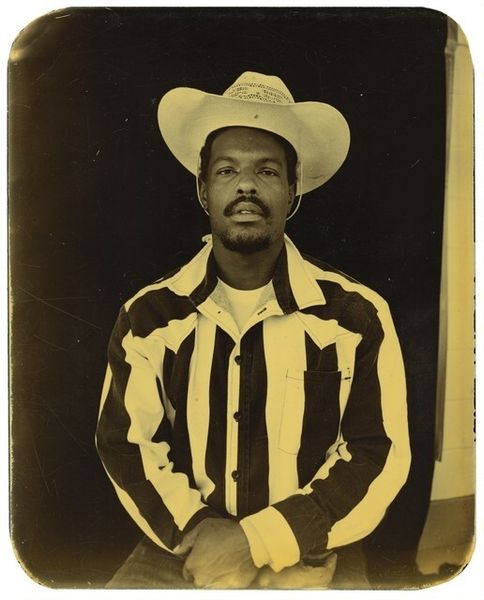
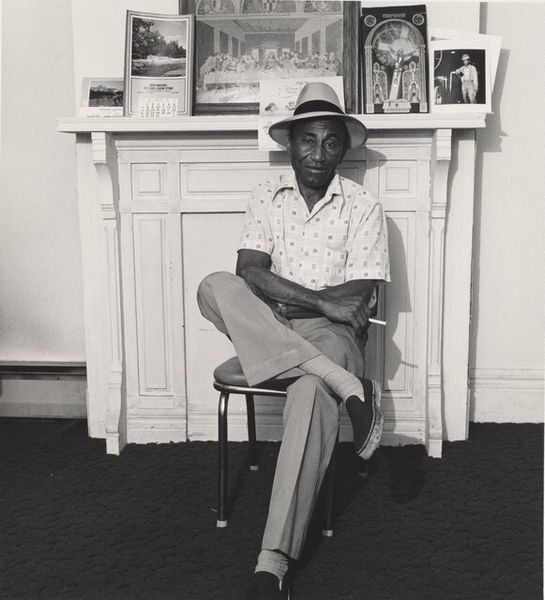
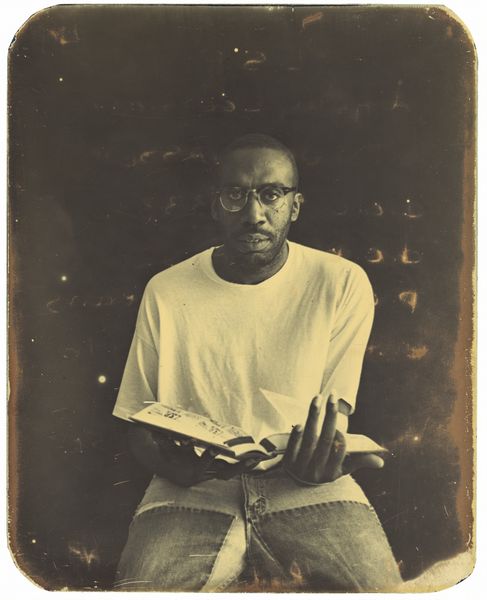
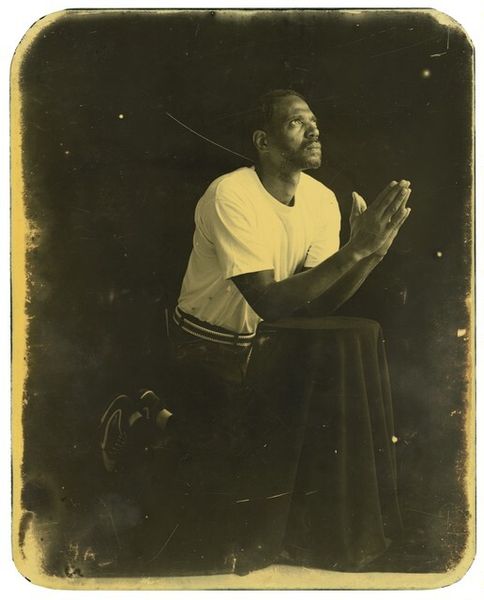
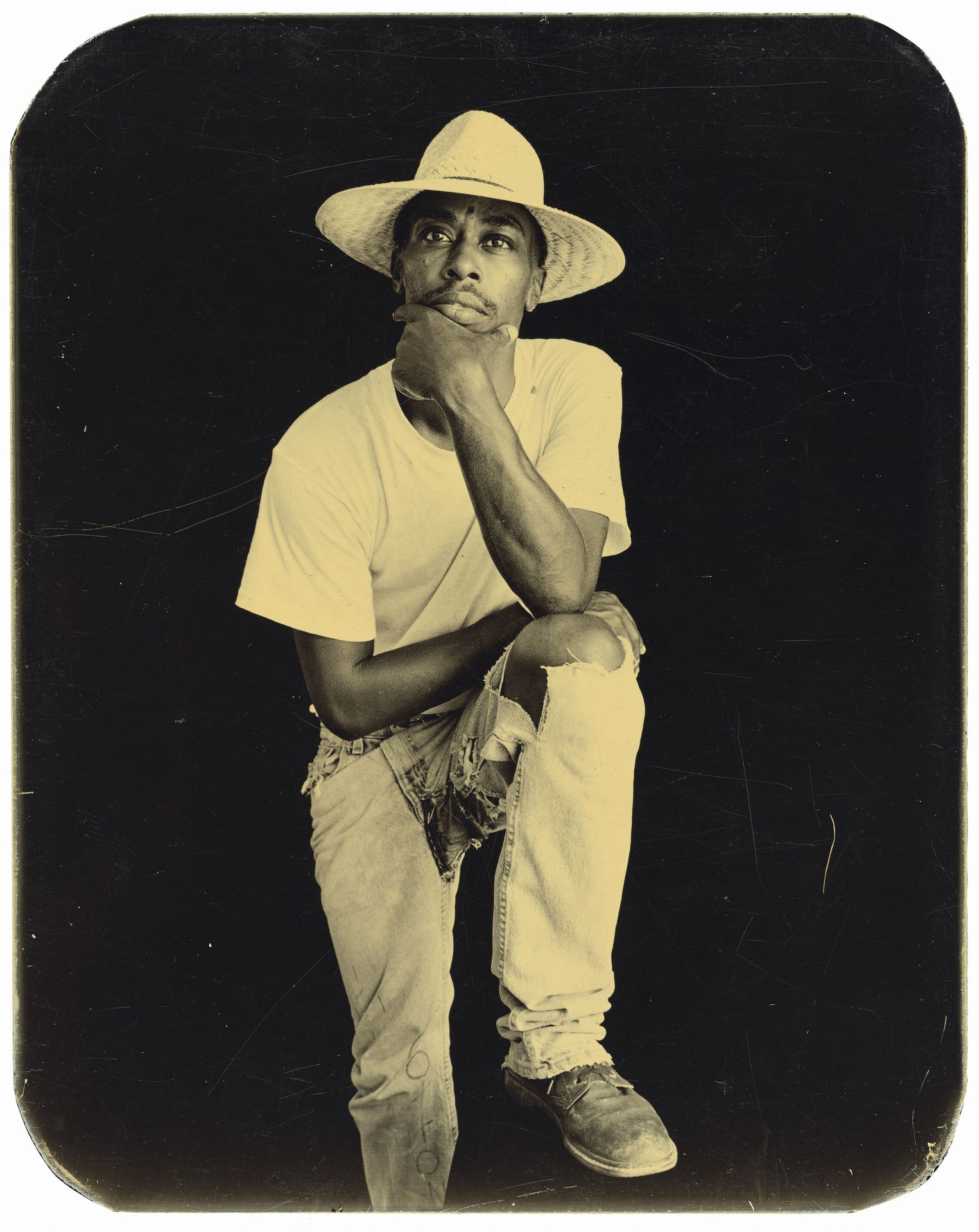
Editor: We're looking at "Pick," a photograph taken by Deborah Luster in November of 1999 at Angola, Louisiana. It depicts a man in work clothes, caught in a moment of contemplation. What do you see in this piece? Curator: This image resonates deeply with historical echoes and symbolic weight. Consider the man's pose, hand to chin – an archetypal symbol of thought, but placed against the reality of his attire, hinting at physical labor. Think about the weight carried within that image: who is he, what is he thinking? Editor: The location, Angola, also adds another layer, right? Isn't that a notorious prison? Curator: Precisely. The name itself conjures the history of slavery and exploitation. Luster isn't just showing us a portrait; she's presenting a complex symbol. The man, adorned with the trappings of labor, embodies generations marked by forced servitude, by inherited oppression. Do you see it in his gaze? Editor: I do. There's a resilience there, despite the weight you mentioned. But it also raises questions about representation – whose story are we really seeing? Curator: That's a critical point. Luster is prompting us to confront the complicated relationship between representation and reality. The man's individual story intertwines with the larger narrative of a place steeped in injustice. How do these histories exist within the picture plane and beyond it? Editor: It's much more than just a picture, then. It’s an icon, charged with historical memory and the ongoing struggle for dignity. Curator: Exactly! And that's the power of the image, isn't it? The compression of so much cultural weight into a single, arresting portrait.
Tracey Horne, "Pick", Angola, Louisiana 11 - 1999


Artwork details
- Dimensions
- image/plate: 12.7 × 10.1 cm (5 × 4 in.)
- Copyright
- National Gallery of Art: CC0 1.0
Tags
wedding photograph
photo restoration
historical photography
portrait reference
unrealistic statue
framed image
photographic element
advertising for male clothe
celebrity portrait
statue
Comments
No comments
About this artwork
Editor: We're looking at "Pick," a photograph taken by Deborah Luster in November of 1999 at Angola, Louisiana. It depicts a man in work clothes, caught in a moment of contemplation. What do you see in this piece? Curator: This image resonates deeply with historical echoes and symbolic weight. Consider the man's pose, hand to chin – an archetypal symbol of thought, but placed against the reality of his attire, hinting at physical labor. Think about the weight carried within that image: who is he, what is he thinking? Editor: The location, Angola, also adds another layer, right? Isn't that a notorious prison? Curator: Precisely. The name itself conjures the history of slavery and exploitation. Luster isn't just showing us a portrait; she's presenting a complex symbol. The man, adorned with the trappings of labor, embodies generations marked by forced servitude, by inherited oppression. Do you see it in his gaze? Editor: I do. There's a resilience there, despite the weight you mentioned. But it also raises questions about representation – whose story are we really seeing? Curator: That's a critical point. Luster is prompting us to confront the complicated relationship between representation and reality. The man's individual story intertwines with the larger narrative of a place steeped in injustice. How do these histories exist within the picture plane and beyond it? Editor: It's much more than just a picture, then. It’s an icon, charged with historical memory and the ongoing struggle for dignity. Curator: Exactly! And that's the power of the image, isn't it? The compression of so much cultural weight into a single, arresting portrait.
Comments
No comments