About this artwork
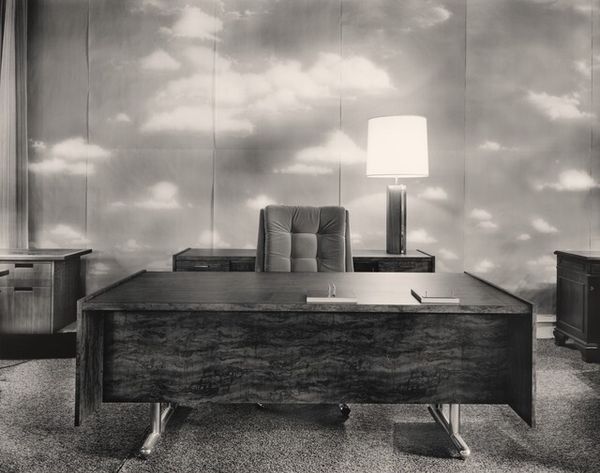
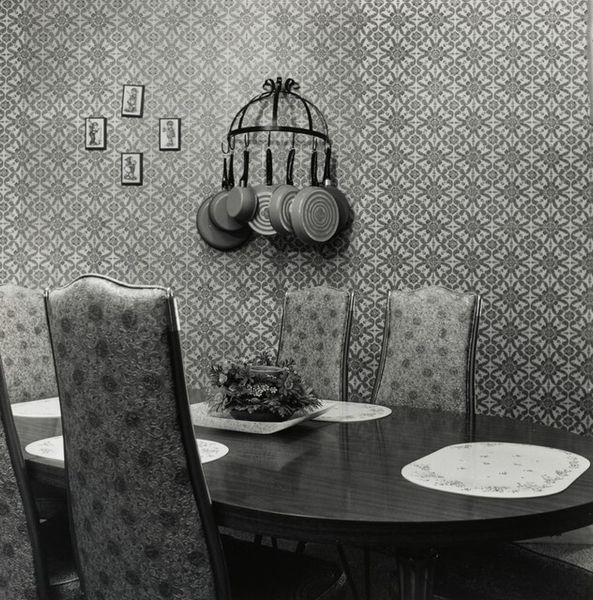
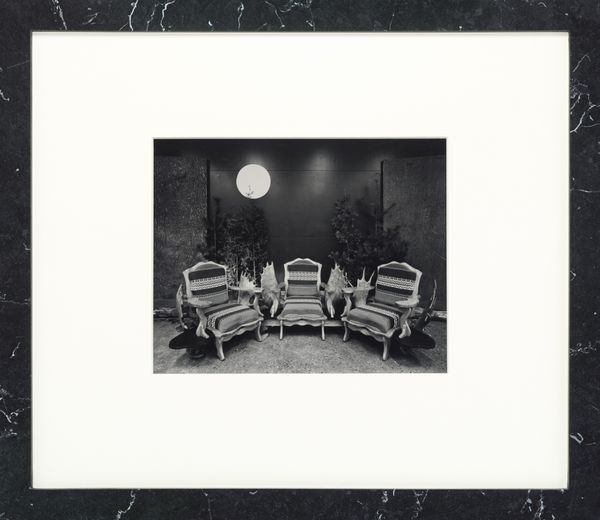
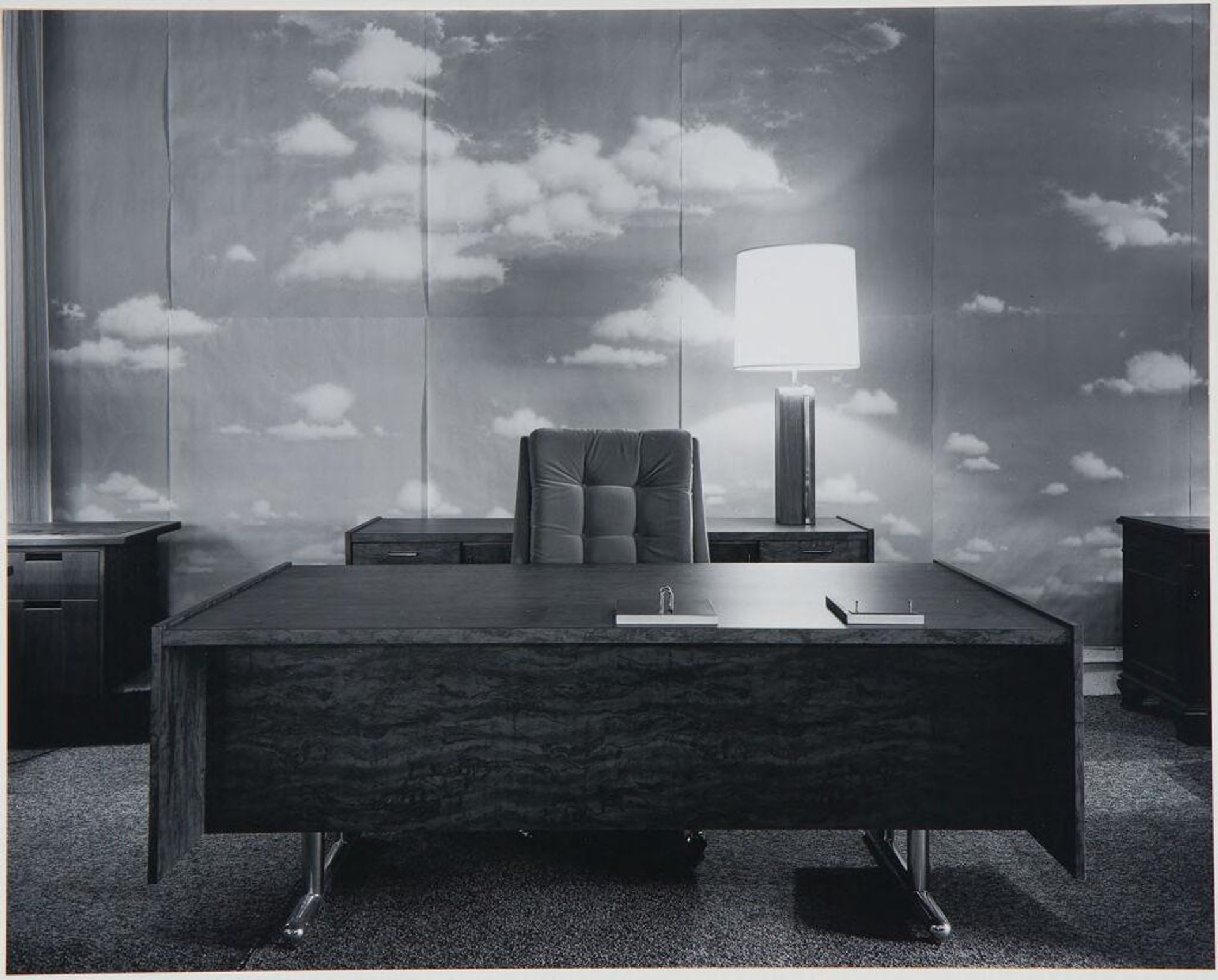
Editor: Here we have Lynne Cohen's photograph, "Future Furniture Co., Ottawa." The stark black and white contrasts with the whimsical cloud wallpaper, creating a very sterile yet bizarre environment. What strikes you about the image? Curator: The image presents a fascinating critique of office culture through its very construction. Consider the materials: the cheap cloud print juxtaposed with the veneer of the desk, a tension between manufactured nature and manufactured aspiration. How does this speak to the commodification of the workplace? Editor: That tension is clear. It's like a stage set, all surface. I wonder if Cohen's highlighting the artificiality of labor itself? Curator: Precisely. The photograph, as a product, becomes part of that cycle of representation and consumption. The materials and their arrangement expose the underlying processes of control and the illusion of escape. Editor: I see how her choices reflect on the broader economic landscape. The image now feels less random and more deliberate. Curator: Exactly, and hopefully it encourages one to think about the manufacturing of art and its impact on consumption.
Future Furniture Co., Ottawa
1976


Artwork details
- Dimensions
- image: 19.2 x 24.1 cm (7 9/16 x 9 1/2 in.) mount: 38 x 38 cm (14 15/16 x 14 15/16 in.)
- Location
- Harvard Art Museums
- Copyright
- CC0 1.0
Comments
Share your thoughts
About this artwork
Editor: Here we have Lynne Cohen's photograph, "Future Furniture Co., Ottawa." The stark black and white contrasts with the whimsical cloud wallpaper, creating a very sterile yet bizarre environment. What strikes you about the image? Curator: The image presents a fascinating critique of office culture through its very construction. Consider the materials: the cheap cloud print juxtaposed with the veneer of the desk, a tension between manufactured nature and manufactured aspiration. How does this speak to the commodification of the workplace? Editor: That tension is clear. It's like a stage set, all surface. I wonder if Cohen's highlighting the artificiality of labor itself? Curator: Precisely. The photograph, as a product, becomes part of that cycle of representation and consumption. The materials and their arrangement expose the underlying processes of control and the illusion of escape. Editor: I see how her choices reflect on the broader economic landscape. The image now feels less random and more deliberate. Curator: Exactly, and hopefully it encourages one to think about the manufacturing of art and its impact on consumption.
Comments
Share your thoughts