About this artwork
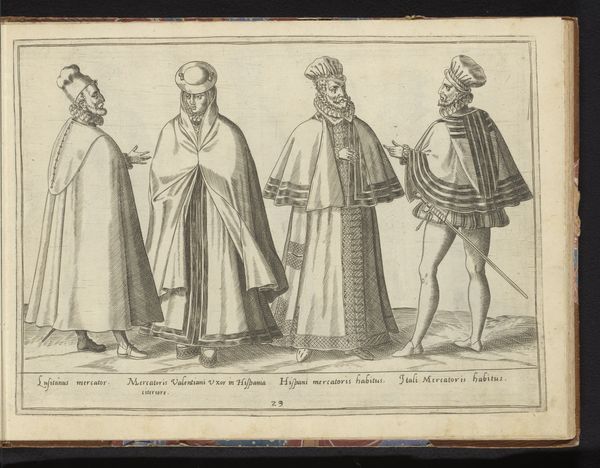
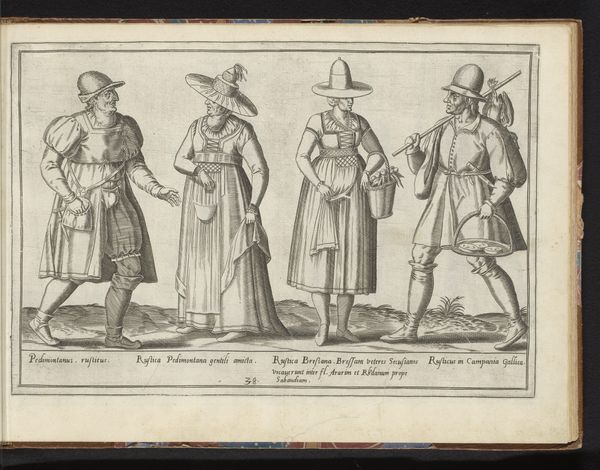
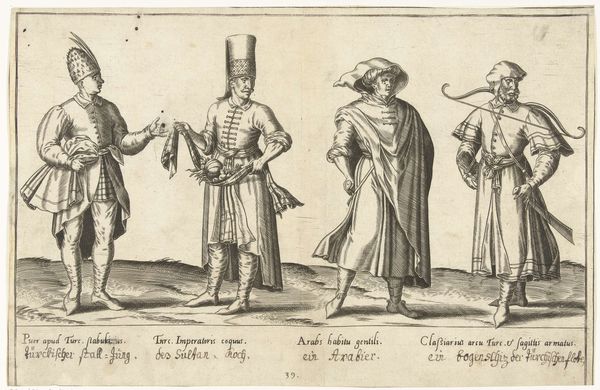
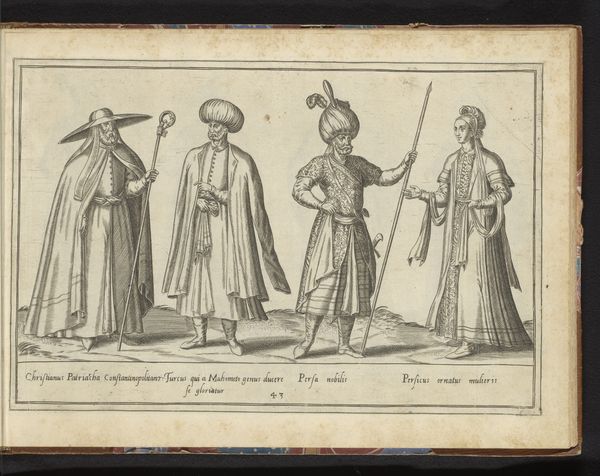
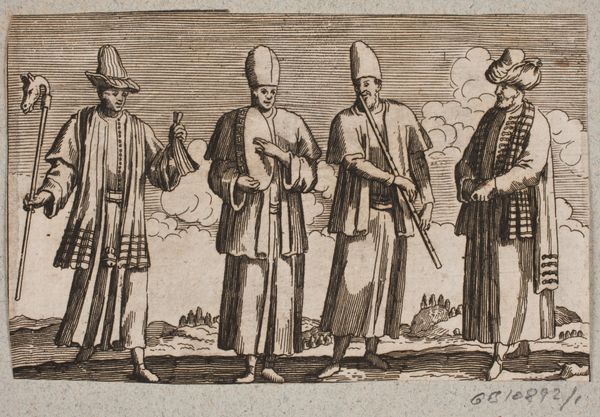
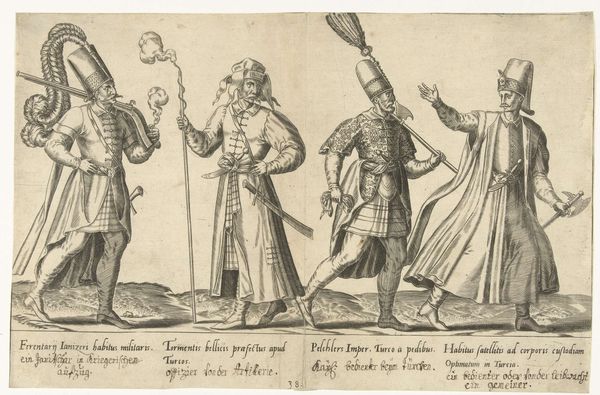
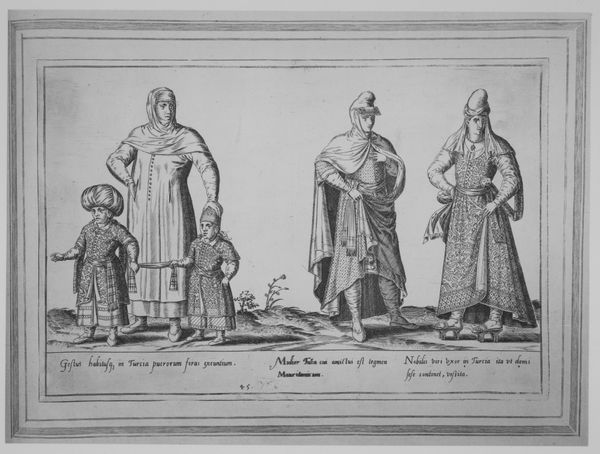
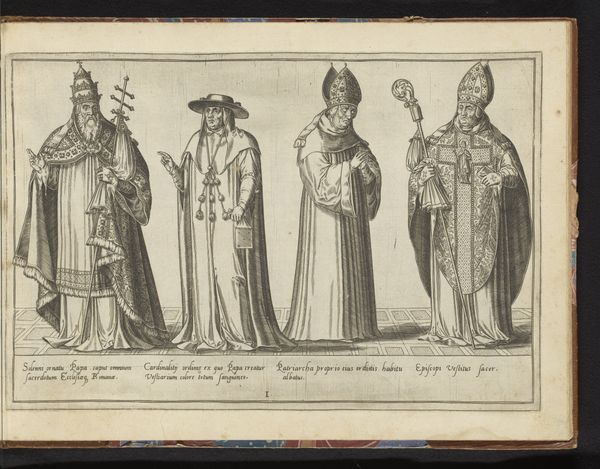
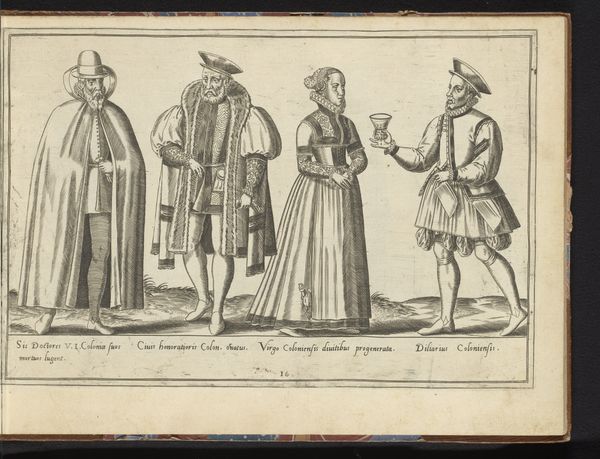
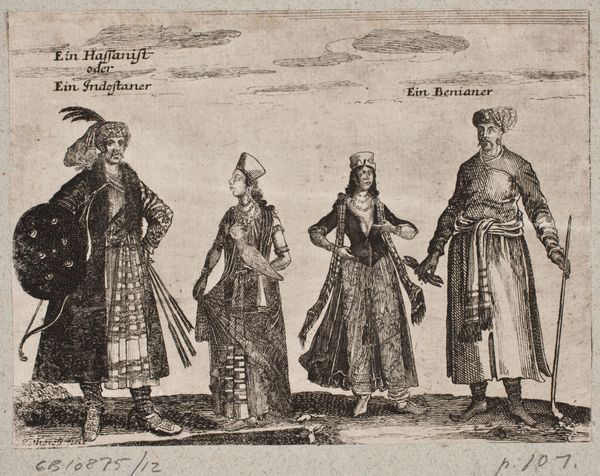
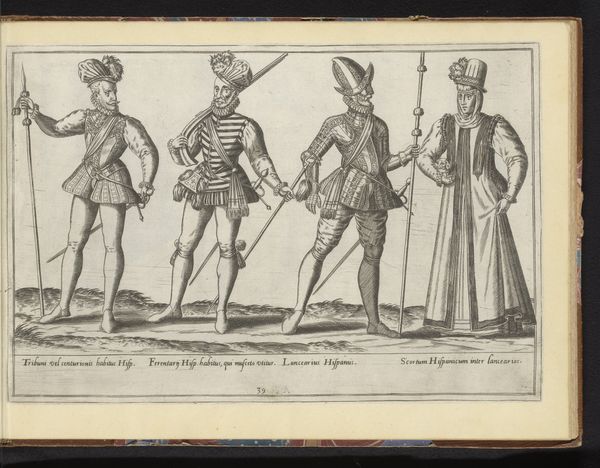
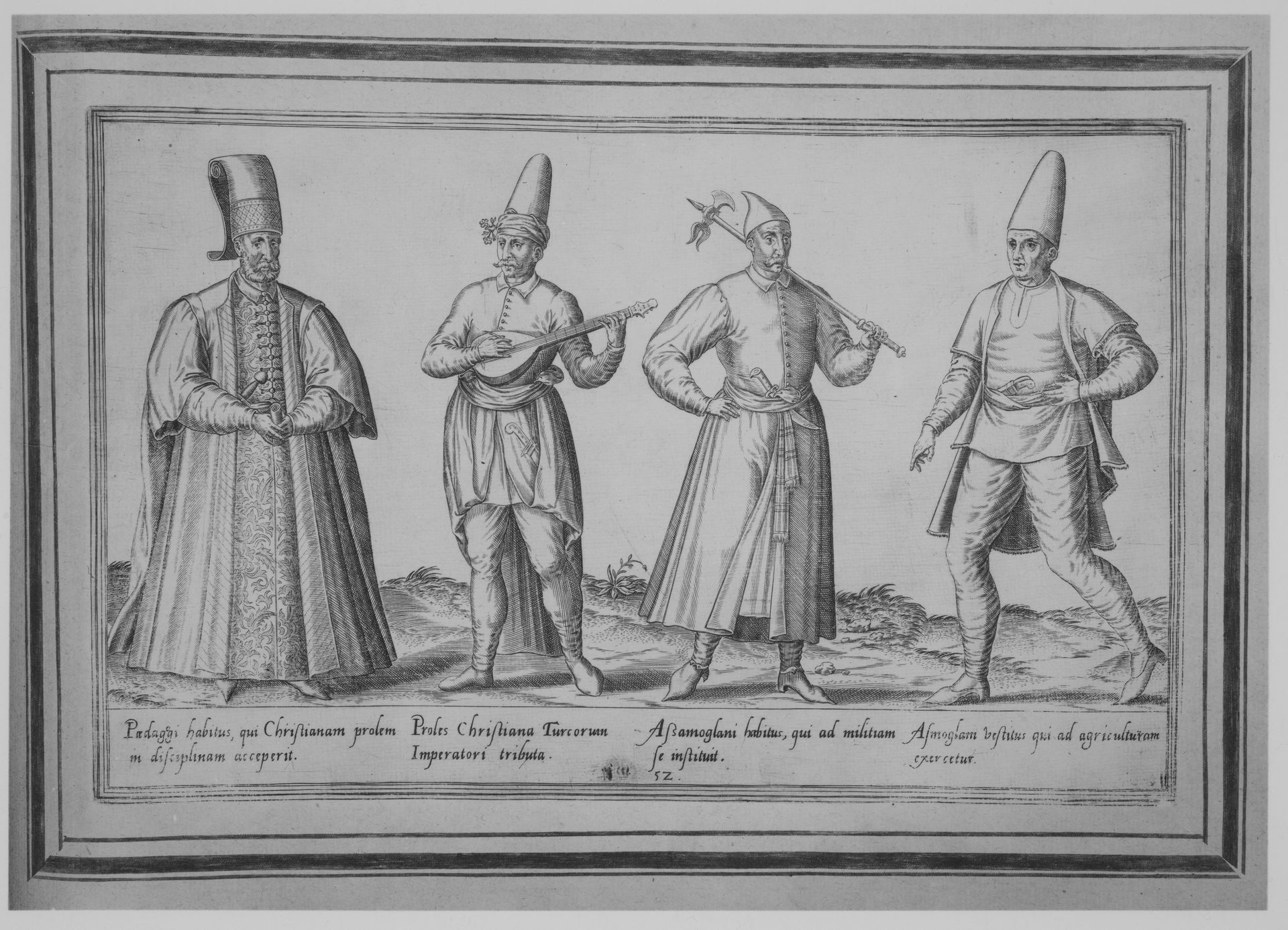
Abraham de Bruyn created this engraving, "Paedagogi habitus...", sometime between 1540 and 1587. The composition is neatly divided, presenting four figures uniformly spaced and framed. Note how the linear precision emphasizes the textures and patterns of their clothing. De Bruyn employs line and form to create distinct visual identities reflective of cultural types. The figures, likely representing different roles or social strata within Ottoman society, are distinguished by their attire and posture. Consider how the artist uses semiotic codes inherent in clothing—the cut of a garment, the style of a hat—to signal status and identity. Each figure stands in isolation, yet the composition as a whole implies a structured social order. By exploring the contrasts and similarities in their attire, the artist invites a deeper consideration of the visual cues that define and differentiate individuals within a society. This engraving serves as a reminder that art offers a dynamic arena for exploring cultural norms.
Paedagogi habitus, qui Christianam prolem in disceplinam acceperit; Proles Christiana Turcorum Imperatori tributa; Assamoglani habitus, qui ad militiam se instituit; Asmoglam vestituis qui ad agriculturam exercetur
1580


Artwork details
- Medium
- drawing, print, engraving
- Dimensions
- Image: 7 13/16 × 12 11/16 in. (19.9 × 32.2 cm) Frame: 9 1/2 × 14 5/16 in. (24.2 × 36.4 cm) Sheet: 21 5/16 × 16 5/16 in. (54.2 × 41.5 cm) Book: 21 7/8 × 16 3/4 × 1 15/16 in. (55.5 × 42.5 × 5 cm)
- Location
- Metropolitan Museum of Art, New York, NY
- Copyright
- Public Domain
Tags
Comments
Share your thoughts
About this artwork
Abraham de Bruyn created this engraving, "Paedagogi habitus...", sometime between 1540 and 1587. The composition is neatly divided, presenting four figures uniformly spaced and framed. Note how the linear precision emphasizes the textures and patterns of their clothing. De Bruyn employs line and form to create distinct visual identities reflective of cultural types. The figures, likely representing different roles or social strata within Ottoman society, are distinguished by their attire and posture. Consider how the artist uses semiotic codes inherent in clothing—the cut of a garment, the style of a hat—to signal status and identity. Each figure stands in isolation, yet the composition as a whole implies a structured social order. By exploring the contrasts and similarities in their attire, the artist invites a deeper consideration of the visual cues that define and differentiate individuals within a society. This engraving serves as a reminder that art offers a dynamic arena for exploring cultural norms.
Comments
Share your thoughts