About this artwork
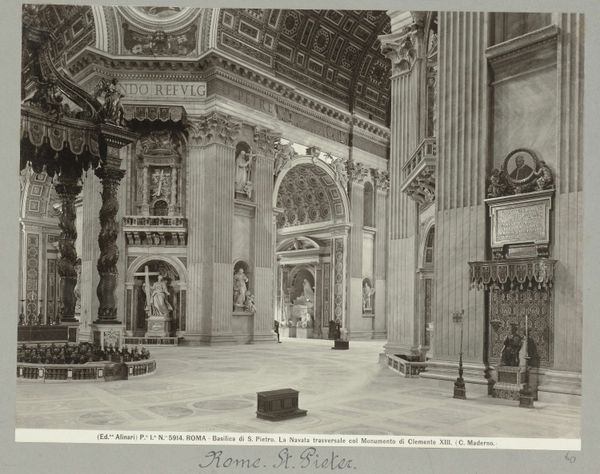
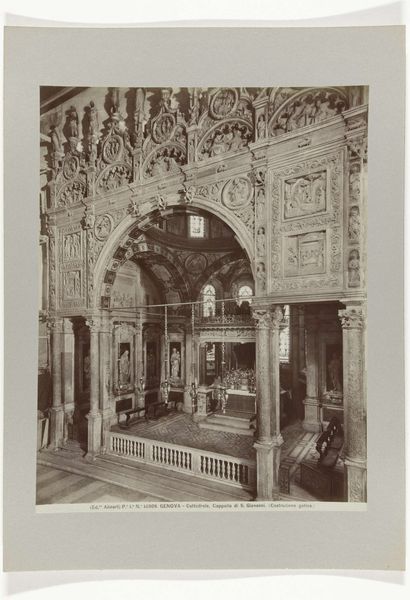
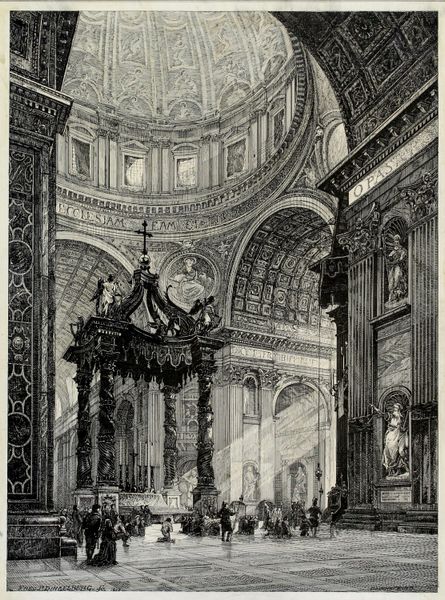
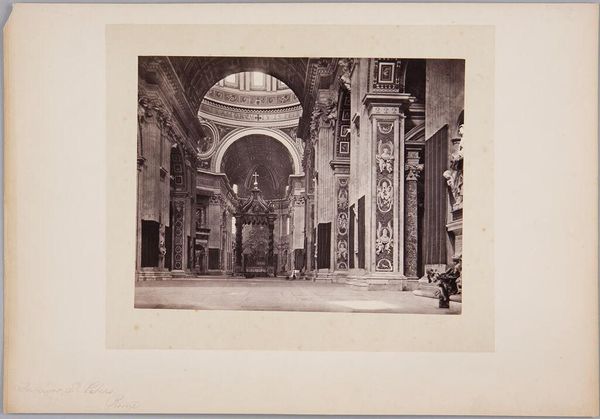
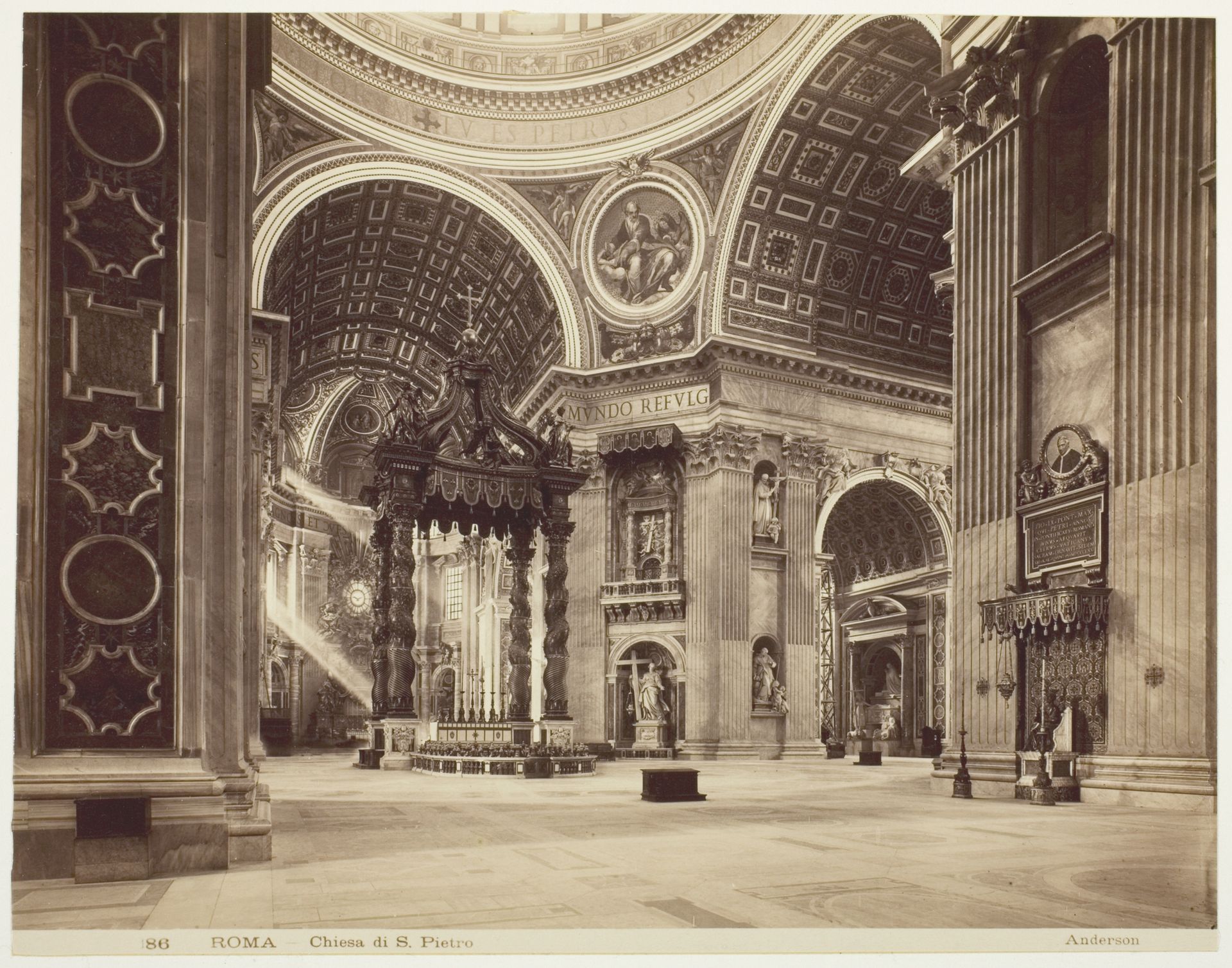
This albumen print shows the interior of St. Peter's Church in Rome, captured by James Anderson in the 19th century. The grandeur of the basilica is immediately evident, with its towering columns, ornate decorations, and expansive dome creating a sense of awe and reverence. The composition emphasizes the church's architectural structure. Light filters through the space, highlighting the textures of marble and stone. Anderson's attention to detail and use of light and shadow create depth and volume. The photograph invites us to consider the relationship between space and power. The sheer scale of St. Peter's suggests the dominance of the Catholic Church, while the precise rendering of its architectural features reflects a desire to capture and preserve its cultural significance. This image prompts us to consider how photography itself can be a tool for documenting and interpreting the structures that shape our world.
Church of St. Peter's (Roma, Chiesa di San Pietro)
c. 1870


Artwork details
- Medium
- print, paper, photography, architecture
- Dimensions
- 19.9 × 26.1 cm (image); 20.5 × 26.1 cm (paper); 35.5 × 45.7 cm (mount)
- Location
- The Art Institute of Chicago
- Copyright
- Public Domain
Tags
Comments
Share your thoughts
About this artwork
This albumen print shows the interior of St. Peter's Church in Rome, captured by James Anderson in the 19th century. The grandeur of the basilica is immediately evident, with its towering columns, ornate decorations, and expansive dome creating a sense of awe and reverence. The composition emphasizes the church's architectural structure. Light filters through the space, highlighting the textures of marble and stone. Anderson's attention to detail and use of light and shadow create depth and volume. The photograph invites us to consider the relationship between space and power. The sheer scale of St. Peter's suggests the dominance of the Catholic Church, while the precise rendering of its architectural features reflects a desire to capture and preserve its cultural significance. This image prompts us to consider how photography itself can be a tool for documenting and interpreting the structures that shape our world.
Comments
Share your thoughts