1945 - 1948
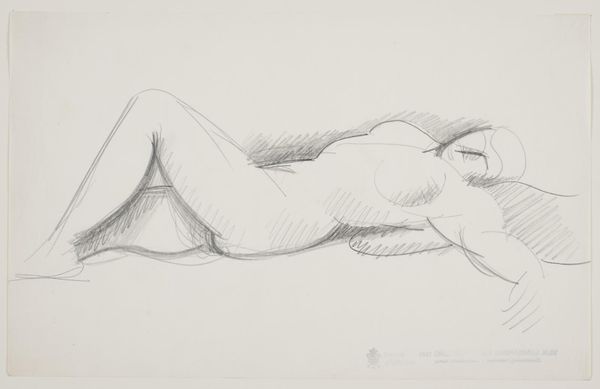
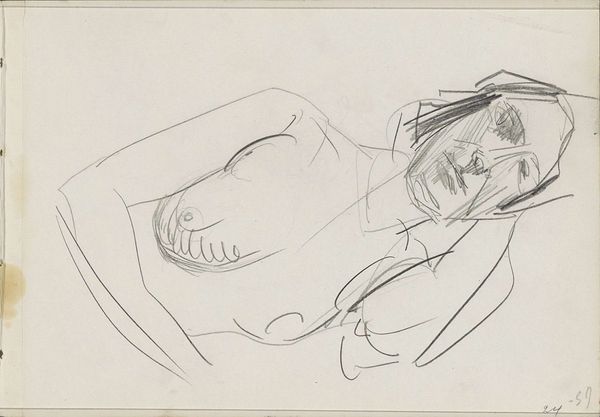
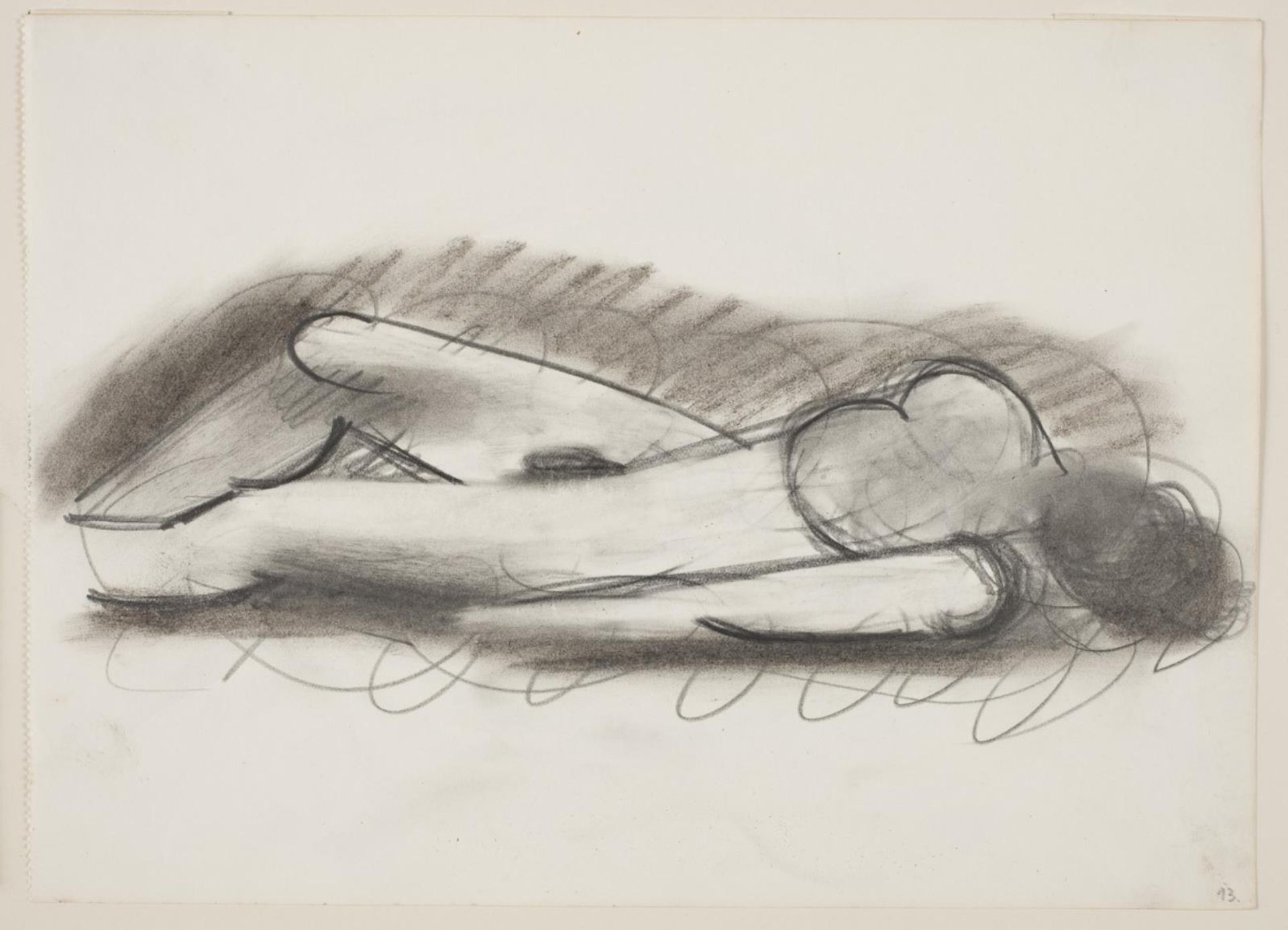
Liggende nøgen kvinde, hovedet mod højre


Listen to curator's interpretation
Curatorial notes
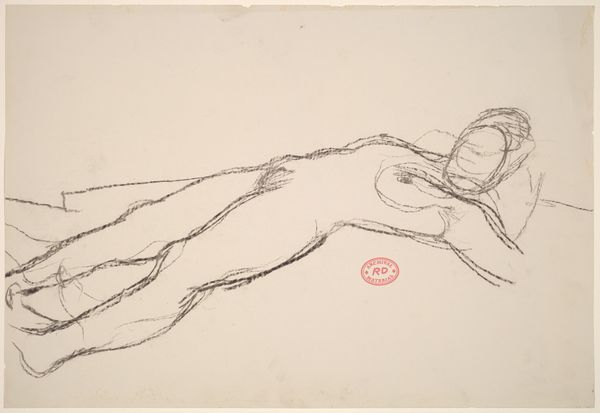
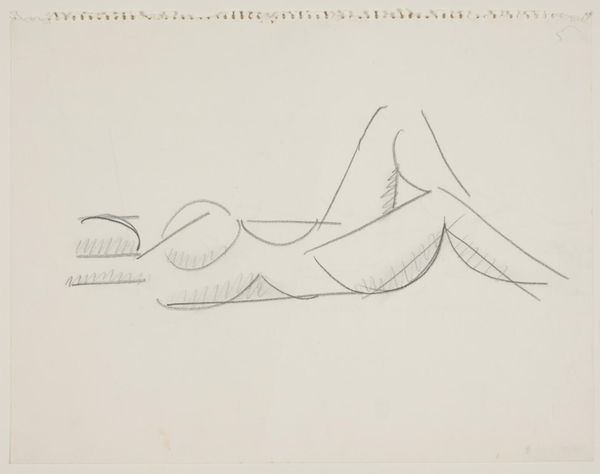
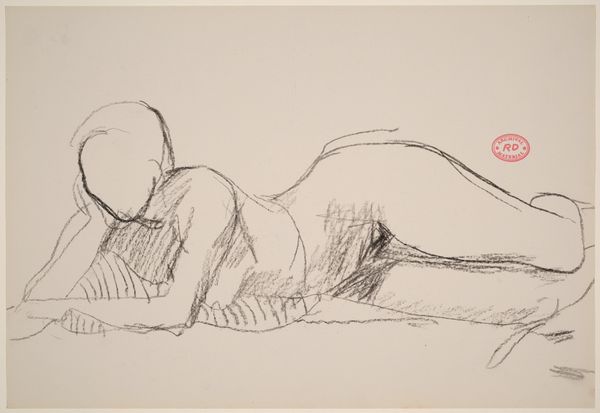
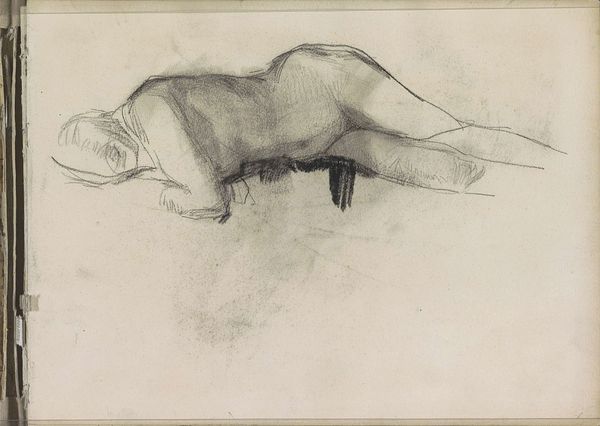
Curator: This is Vilhelm Lundstrom’s "Liggende nøgen kvinde, hovedet mod højre," or "Reclining Nude Woman, Head to the Right," a pencil drawing made between 1945 and 1948. What are your first thoughts? Editor: There’s an immediacy here, almost unfinished, but I see power in those raw, energetic lines. It has a sort of weighty presence despite its relative sketchiness. Curator: The loose hatching does create an interesting tension. Lundstrom, though working in the post-Impressionist style, truly emphasizes line and form. Consider how the density of pencil strokes defines volume and suggests the curvature of the figure. Editor: And I'm drawn to think about the act of creation itself. Pencil on paper, such basic materials, used to render a body that’s simultaneously there and dissolving back into abstraction. What paper did he favor? Was the pencil soft or hard? I wonder how the materiality shapes the final impression. Curator: It's not just the line, it’s the spatial relationships that compel me. The pose, while reclining, feels strangely active. It suggests both vulnerability and strength within the subject’s form. Editor: Precisely. It’s tempting to delve into the social climate of the time, the potential constraints or freedoms Lundstrom may have felt expressing the female nude. How does that socio-political landscape manifest in the chosen medium, in his artistic choices? Curator: One could consider the absence of detail around the figure itself. The stark whiteness that serves as a backdrop accentuates her isolation within the composition, inviting a study of negative space almost. Editor: It's intriguing how Lundstrom renders the hair, almost cloud-like. This could be related to his labor. One can imagine him at the beginning of a series or study, exploring the capabilities of pencil as medium. This informs so much about the final work. Curator: In the end, this drawing remains open to interpretation—a beautiful exploration of form and space, capturing a fleeting moment with striking efficiency. Editor: A compelling piece—demonstrating that even through sparse means, complex dialogues concerning material, body, and historical context can still arise.