1791
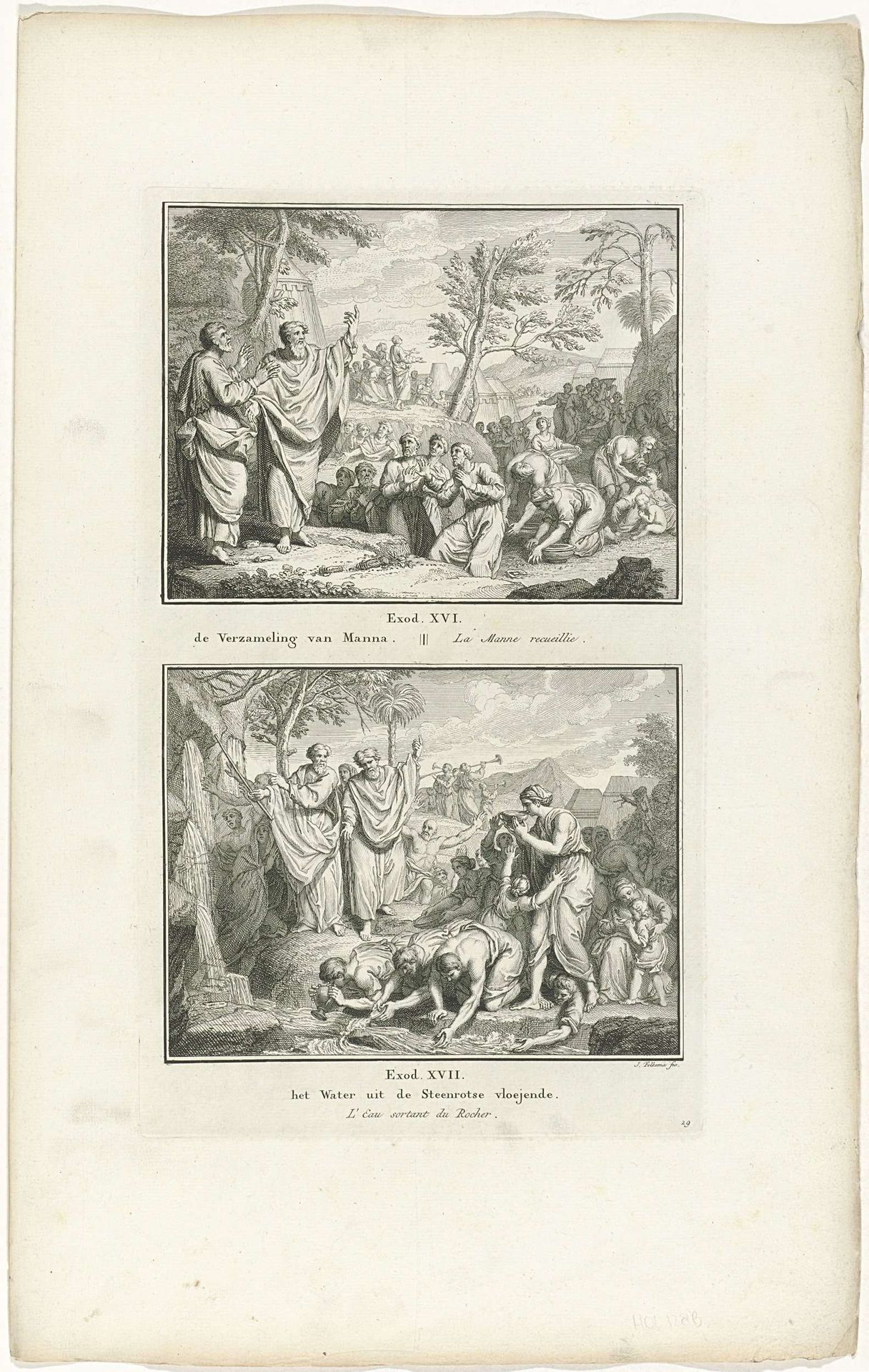
Israëlieten rapen het manna en Mozes slaat water uit een rots

Jacob Folkema
1692 - 1767Location
RijksmuseumListen to curator's interpretation
Curatorial notes
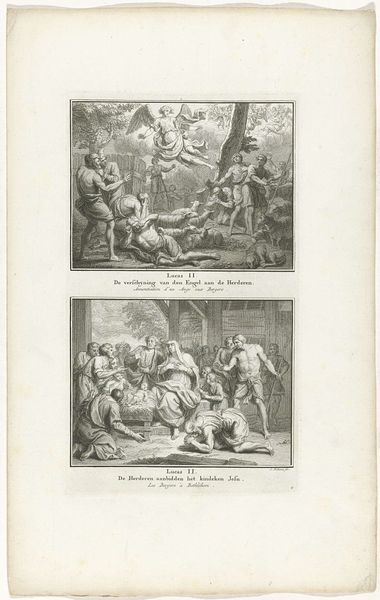
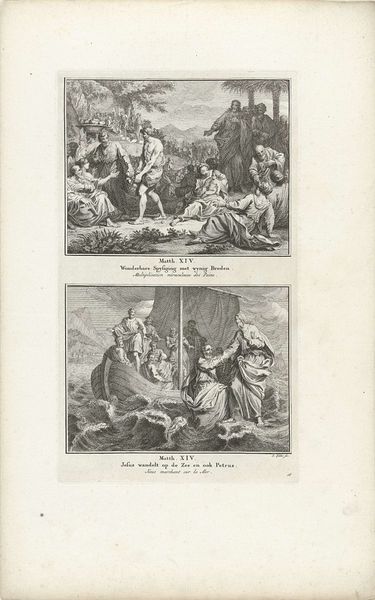
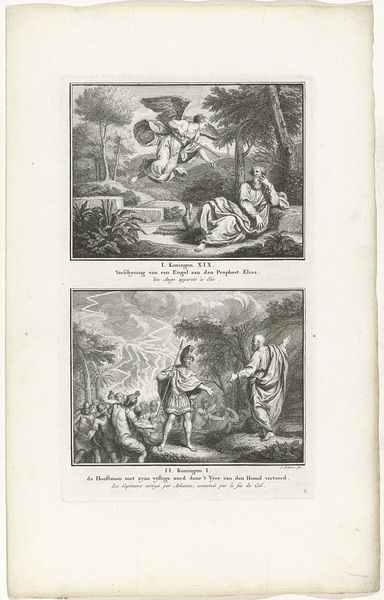
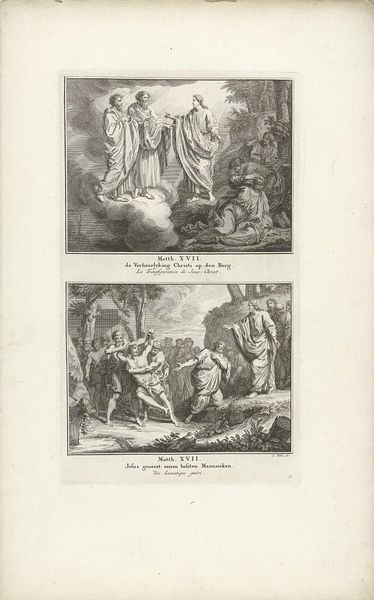
Editor: This is "Israëlieten rapen het manna en Mozes slaat water uit een rots," an engraving made in 1791 by Jacob Folkema. I'm struck by how neatly it divides these two distinct scenes within the same frame. What jumps out at you when you look at this piece? Curator: The immediate and resonant image is one of provision and miraculous sustenance. Manna from heaven, water from stone: potent symbols of divine intervention in times of dire need. What enduring psychological power do these images hold, wouldn’t you say? Consider the landscape itself, not merely background but a witness—a testament—to these extraordinary events. Do you notice how the barrenness is almost theatrical, heightening the drama of unexpected bounty? Editor: Absolutely! It’s like the harsh environment amplifies the feeling of desperation, making the miracles even more impactful. The repetition of Moses, almost identical in both scenes, also creates this interesting connection between the two miracles. Curator: He acts as a bridge, doesn't he? Think about how this single figure resonates through centuries, embodying leadership and faith. The outstretched hands— both receiving and bestowing—also speak volumes. Note how the people are arranged – their posture, their expressions. It speaks volumes about reliance and devotion, echoing the artist’s interpretation. Do you find it creates a sense of universality to the scenes portrayed? Editor: I hadn’t thought about it that way, but now that you mention it, these scenes depict very basic human needs: hunger and thirst. That certainly gives them a timeless and universal quality. Curator: Exactly! And it’s within these timeless visual symbols that we tap into shared human experiences and a continuity of cultural memory, connecting us to both the past and each other. Editor: I see it now; I initially saw them as just old biblical illustrations but reflecting on these powerful concepts helps me appreciate them much more. Thanks!