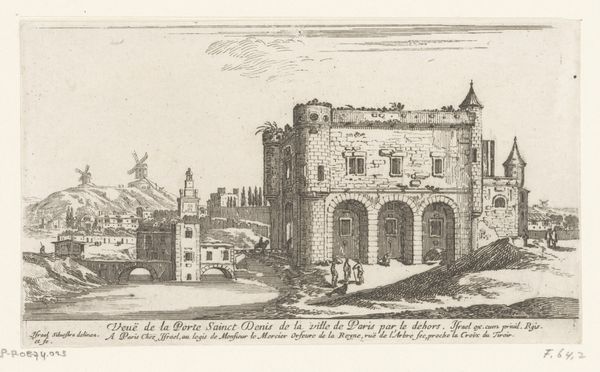
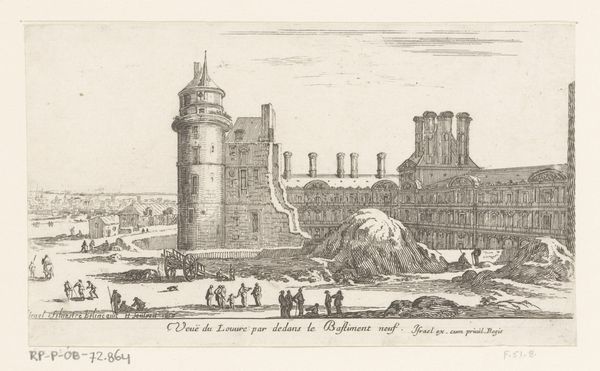
print, etching
#
baroque
# print
#
etching
#
landscape
#
cityscape
Dimensions: height 99 mm, width 168 mm
Copyright: Rijks Museum: Open Domain
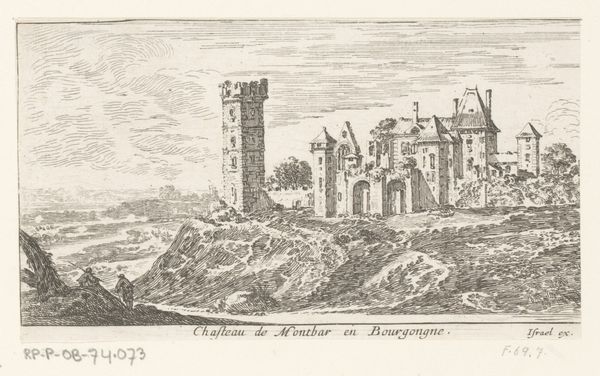
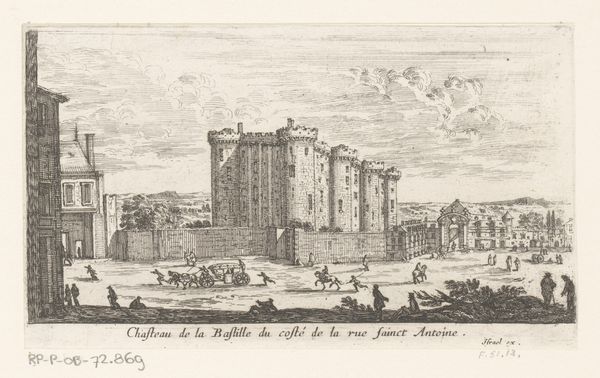
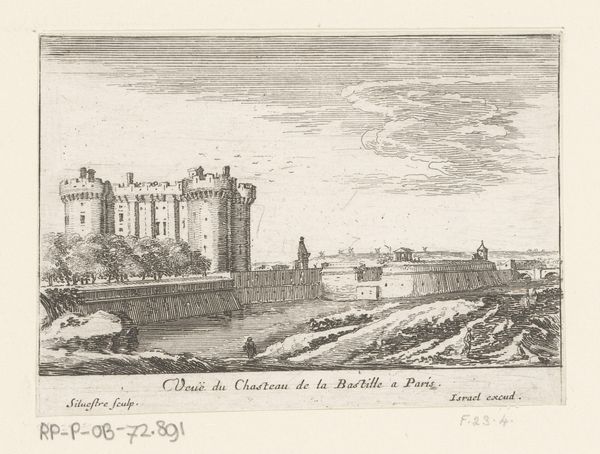
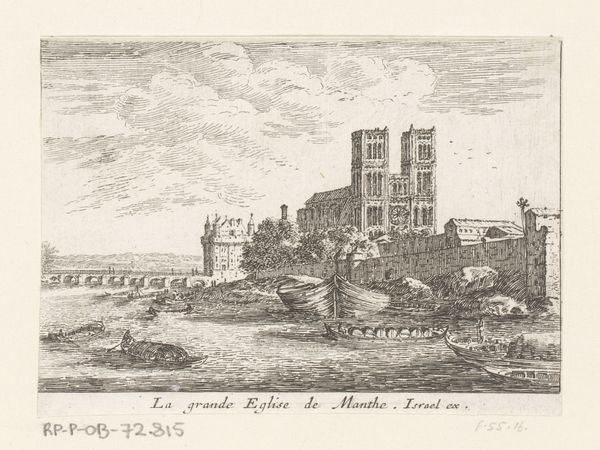
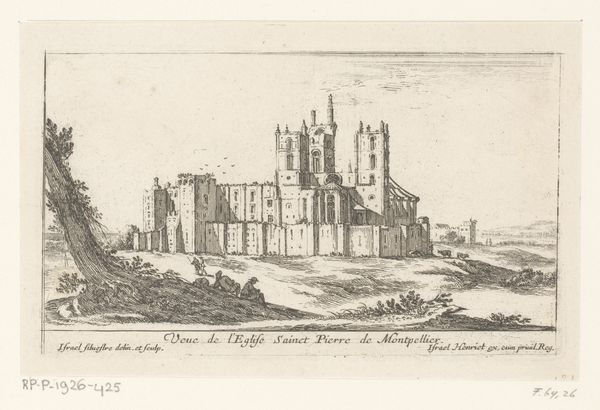
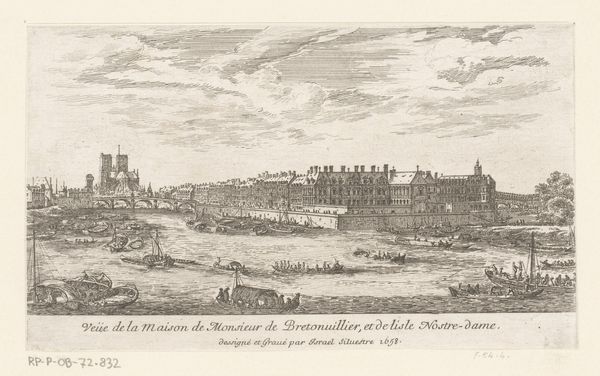
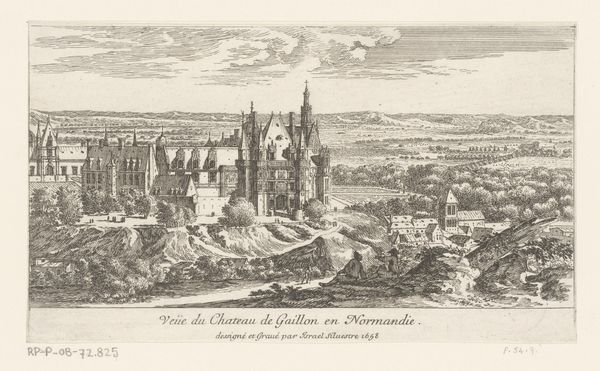
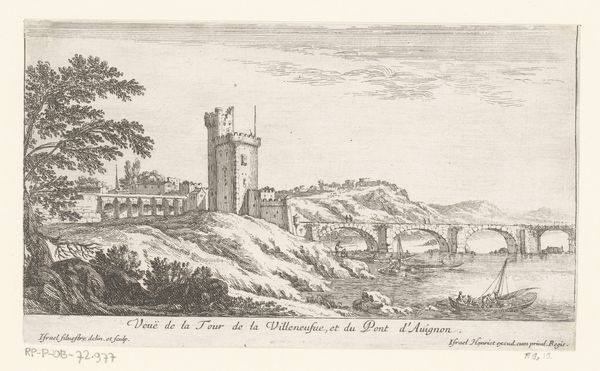
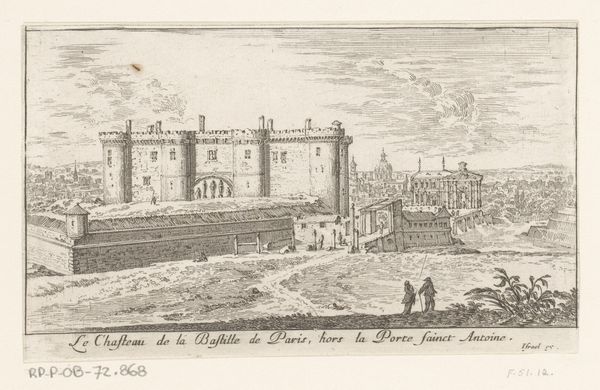
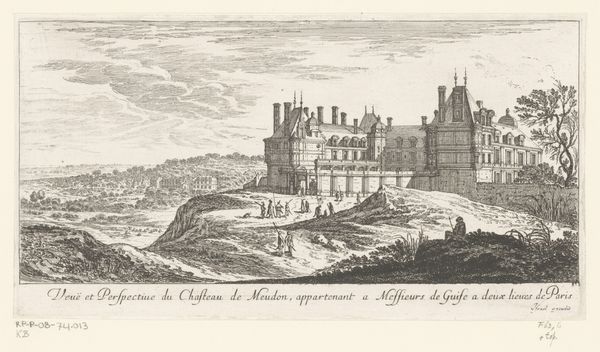
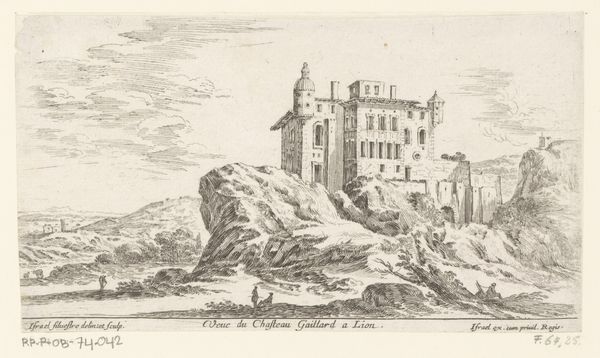
Editor: This is "View of the Village Moret", an etching by Israel Silvestre, created sometime between 1631 and 1691. I find it captivating how he captures the essence of the town using delicate lines; it almost feels like looking at a memory. What catches your eye? Curator: The architectural features certainly speak volumes, not just about the village, but the cultural aspirations of the time. What kind of emotional resonance do the church and fortress evoke for you? Editor: The church conveys a sense of stability and devotion, but I wonder about the fortress. Does it stand as a reminder of conflict or a symbol of resilience for the community? Curator: That's a wonderful question! The fortress, placed prominently, echoes the baroque fascination with power and defense. Its presence here isn't simply about physical security; it speaks to the psychological need for order and control within a rapidly changing world. Consider, too, the symbolic weight of cityscapes: visually representing societal values, historical narratives, and collective identities across generations. Does seeing this vista prompt consideration of cultural continuity over time? Editor: Definitely! Now I'm contemplating the enduring significance of places and structures—like the church and the fortress— in embodying societal values and leaving a lasting imprint on memory. Curator: Exactly! And the artist uses symbols to evoke continuity across time. Understanding the visual vocabulary helps decipher the story that they tell us. The print acts almost as a cultural time capsule! Editor: Thanks, this has made me think differently about how architectural landscapes are embedded with cultural meaning. Curator: Indeed, by examining visual symbols we’ve unearthed shared histories and human values!
Comments
No comments
Be the first to comment and join the conversation on the ultimate creative platform.
 Collect
 React
React Comment
More like this