print, engraving
#
medieval
#
allegory
# print
#
figuration
#
genre-painting
#
history-painting
#
nude
#
engraving
Dimensions: height 399 mm, width 1100 mm, height 399 mm, width 565 mm, height 399 mm, width 535 mm
Copyright: Rijks Museum: Open Domain
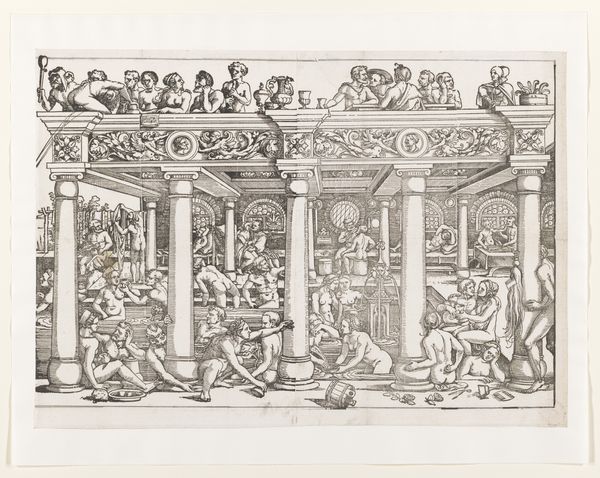
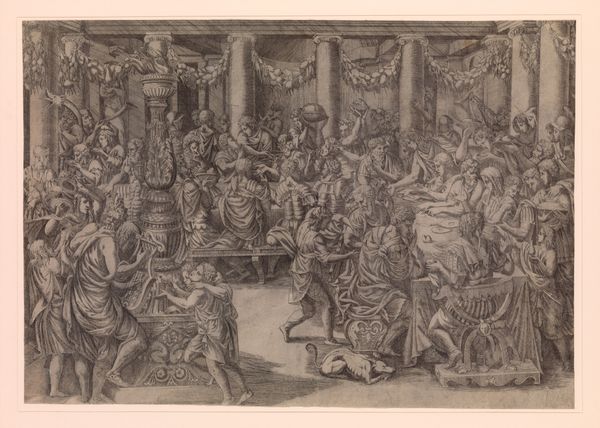
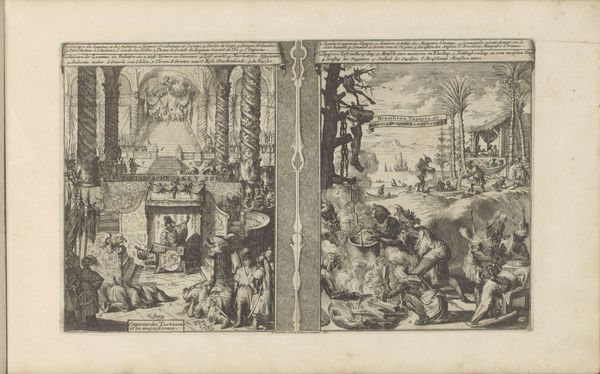
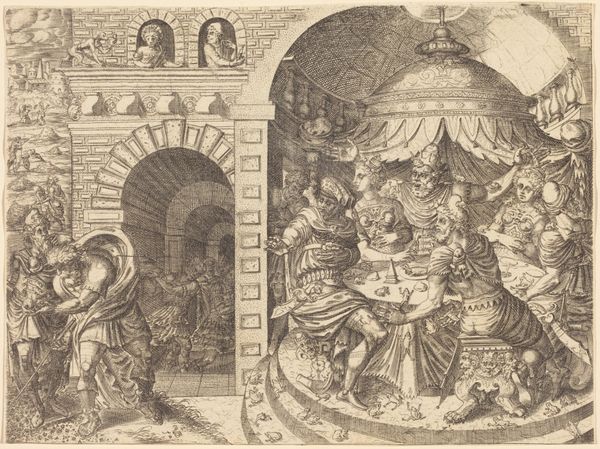
Curator: This is "Fontein van de jeugd, bestaande uit twee delen" or "Fountain of Youth, Consisting of Two Parts." It's an engraving from the 16th century, dating roughly 1510 to 1550, and currently held in the collection of the Rijksmuseum. Its artist is unknown. Editor: My first impression is chaotic energy, even bawdy! It feels packed, like a visual assault of bodies. What's going on? Curator: Well, the Fountain of Youth was a popular allegory. People flock to this fountain seeking rejuvenation. The print consists of two panels and represents the journey and its aftermath. Editor: I see that. The left panel centers around the fountain itself, which is visually dominant. We've got naked figures clamoring around it, climbing ladders, emerging from what looks like an underground passage... There’s definitely a sense of struggle, a desperate desire to reach the water. The figures are old, or at least older, entering the fountain and then seem to reappear younger on the other side. It's pretty literal! Curator: The right panel shows the results of this rejuvenating bath. People are engaged in revelry, feasts, perhaps overindulgence. It could be a moralizing commentary on the consequences of seeking eternal youth. What do you see there? Editor: I note that many figures are nude, perhaps emphasizing their vulnerability but also… liberation? Then again, the heavy architecture behind them feels like a gilded cage. Are they really free, or simply prisoners of their own renewed desires? The artist's choice to depict them as white and mostly the same, with some bald heads, suggests universality, doesn't it? As in this wish belongs to all humans, not just certain ethnicities or social groups. Curator: Absolutely. The widespread fascination with legends of rejuvenation is undeniable, especially during that period of exploration and expanding worldviews. Consider how this ties to colonial desires for wealth and power – it’s all entangled. Editor: That’s a point I had not considered, how colonial ideas might contribute to, or perhaps distort, older myths. Fascinating to consider how these ideas are often embedded into visual form. Curator: And perhaps something still relevant to today’s anti-aging industry. A cycle of desire and supposed remedies presented and commercialized as the solution. Editor: True! It highlights that this need to refresh our image continues from early prints through social media to now. Visuals like this become important records for seeing those cultural echoes.
Comments
No comments
Be the first to comment and join the conversation on the ultimate creative platform.
 Collect
 React
React Comment
More like this