Dimensions: 62.3 cm (height) (Netto)
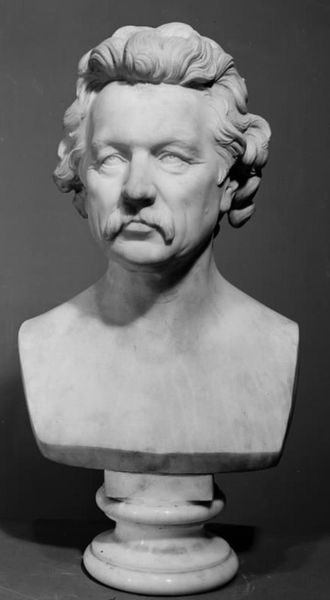
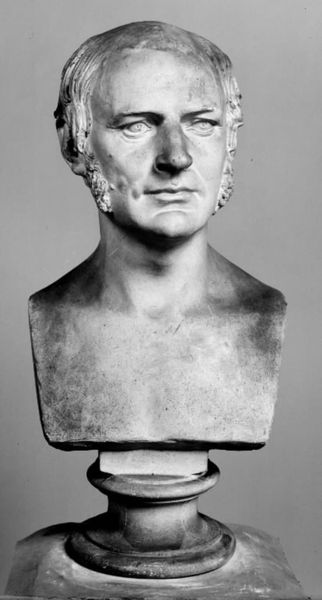
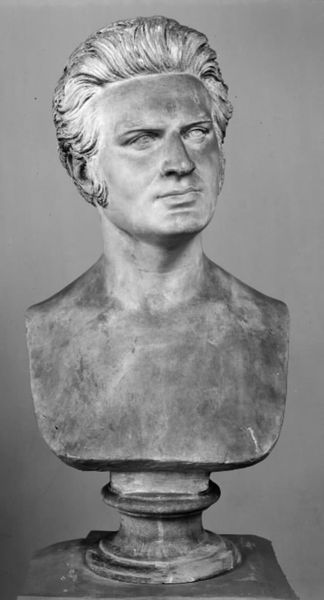
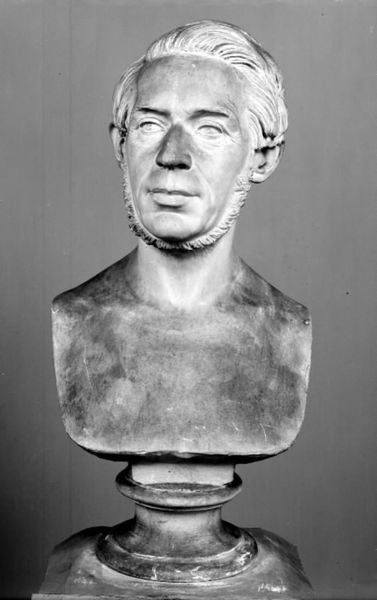
Editor: This marble sculpture, “Den norske digter Andreas Munch” created in 1862 by H.W. Bissen, has such a powerful stillness. There's an undeniable calm and strength in his expression. How do you interpret this work? Curator: The calm is precisely what strikes me, too. It’s as if Bissen wasn't just sculpting marble, but capturing a moment of quiet contemplation, perhaps Munch mid-thought, searching for the perfect word. What do you notice about the eyes? They're unseeing, almost… Editor: Vacant? Yeah, like he is looking inward more than outward. Curator: Exactly! And the Neoclassical style really lends itself to this sense of inner reflection. The clean lines, the smooth surface, the emphasis on ideal beauty rather than a raw, unfiltered portrayal… it’s all contributing to this idealized image of a poet lost in his own world. What do you think that idealization does to our understanding of Munch? Editor: It's interesting because on the one hand you are showing reverence. But on the other, it feels like a distancing. By idealizing him, it obscures the real person beneath the poet. Curator: Precisely. It's like creating a monument, which freezes a particular interpretation for posterity. And what do we, as viewers, bring to that monument? Our own perspectives, challenging the very notion of a singular "truth". Isn't it wonderful how a still, silent sculpture can spark so many thoughts? Editor: Totally! I guess it shows the conversation art has with the viewer is ongoing, evolving even hundreds of years later.
Comments
No comments
Be the first to comment and join the conversation on the ultimate creative platform.
 Collect
 React
React Comment
More like this