


Curatorial notes
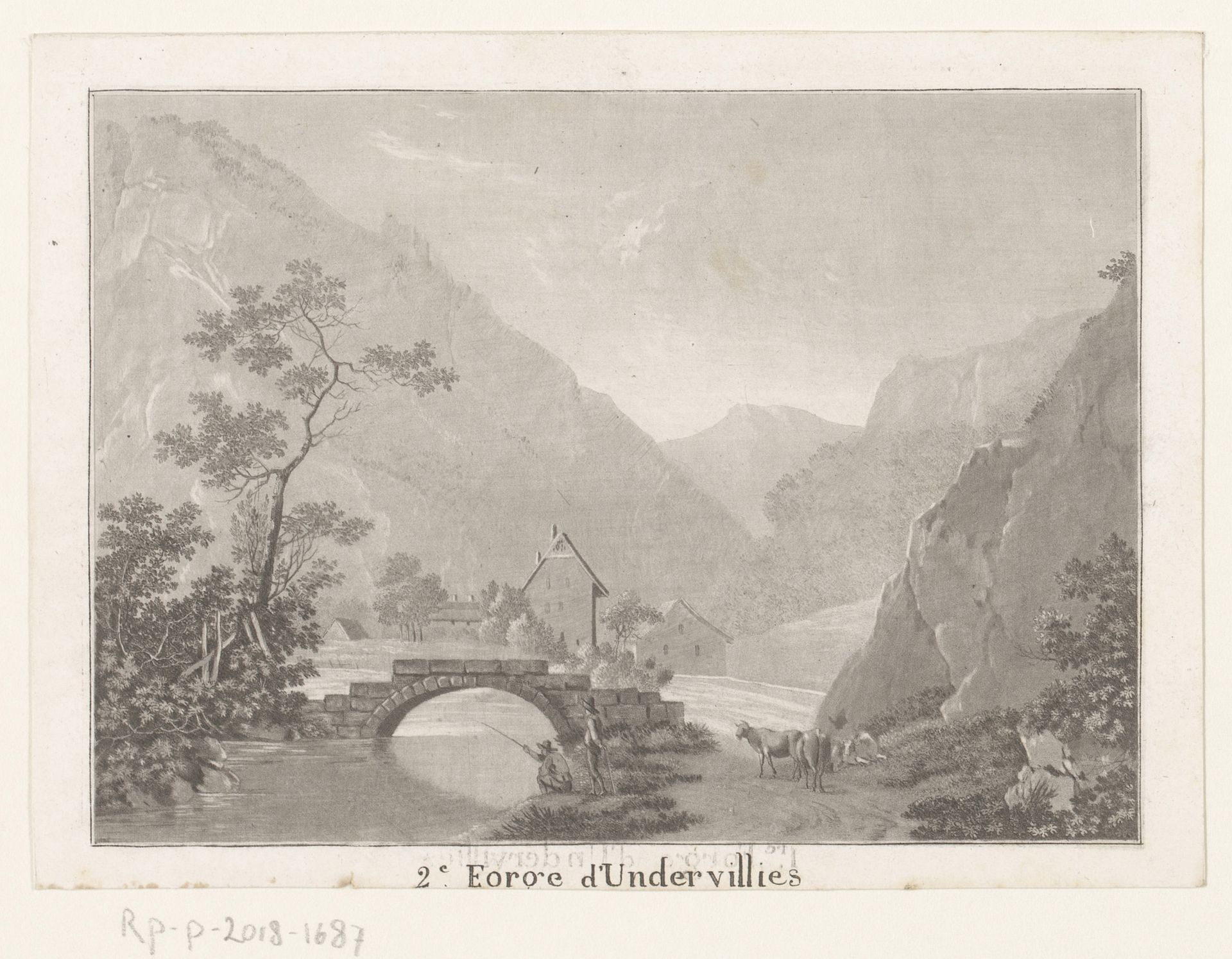
Curator: What a soothing scene. I find it's easy to slip into the quietude of this etching. Editor: You know, it is incredibly calming. It feels like a hazy memory, almost sepia-toned before sepia was a thing. A simple bridge, mountains rising, livestock grazing. Very bucolic. Curator: Precisely. The artwork we're looking at is titled "Gezicht op Undervelier," an etching created around 1810. The artist's name is not clearly identified, it is labeled anonymous for now. Editor: Anonymous… adds to the mystery, doesn't it? Were they trying to capture the soul of a place rather than putting a name on it? Makes me wonder, did the livestock pose? What were they thinking, standing so still? Probably just waiting for lunchtime, same as us. Curator: It does give us pause. This work comes from an era deeply engaged with romantic ideals of nature and rural life. It served to reinforce ideas about harmony, the value of simple lives and even national identity within the Swiss landscape. Prints such as these were a means of documenting landscapes and local customs. They functioned, too, as symbols of progress, showing bridges being built, waterways being tamed, agriculture flourishing, and populations thriving. Editor: Tamed, flourishing…it's so ordered. Did that guy by the bridge catch any fish? I feel like he embodies all the solitude anyone would ever need. Was it this orderly in reality, or did our anonymous artist take some liberties? Curator: Doubtless, liberties were taken. Artists rarely offer pure, unadulterated reality. Romanticism emphasizes feeling and idealization. Editor: Right. More about the impression of a place than the grit. It's lovely, though. Curator: Absolutely. A reminder of the selective vision through which we've always viewed and reshaped our world. Editor: Thanks, a reminder well-taken and so peaceful too, even after deconstruction. Curator: Yes. Perhaps that is why it endures, something genuine remains even if framed through particular cultural ideals.