About this artwork
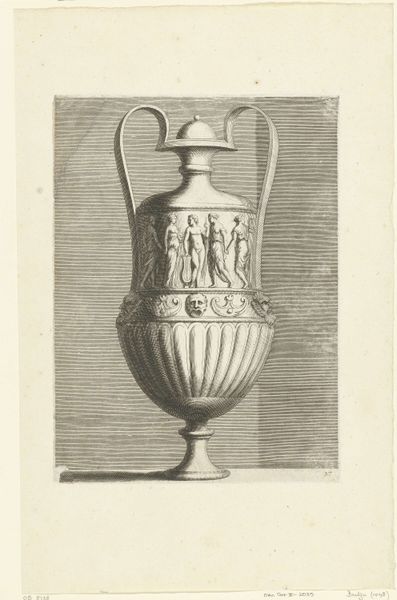
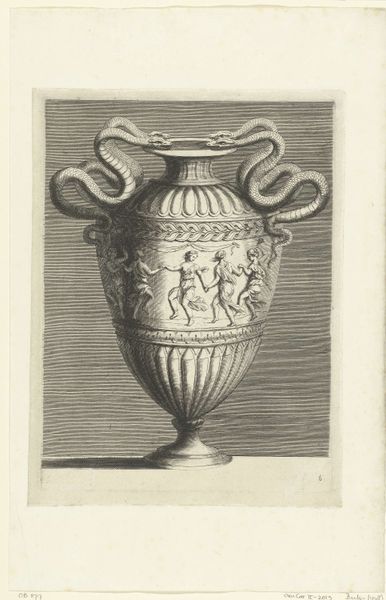
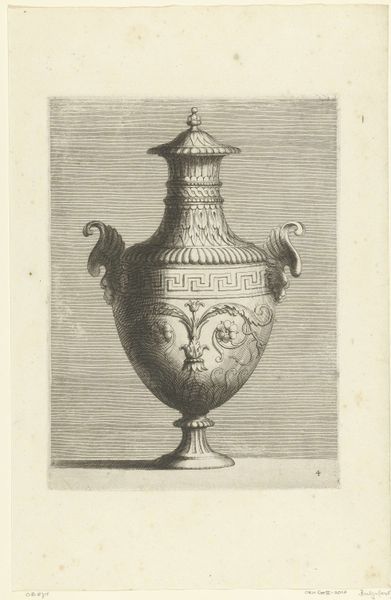
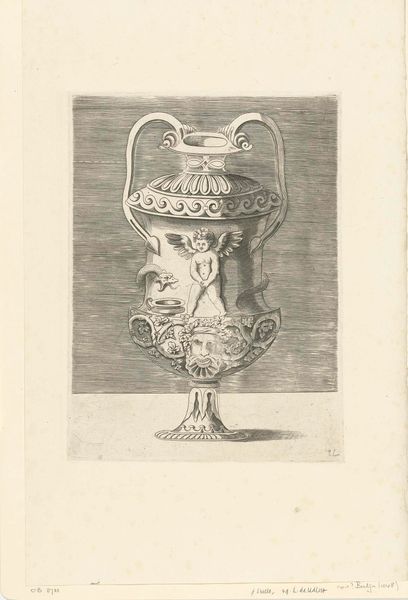
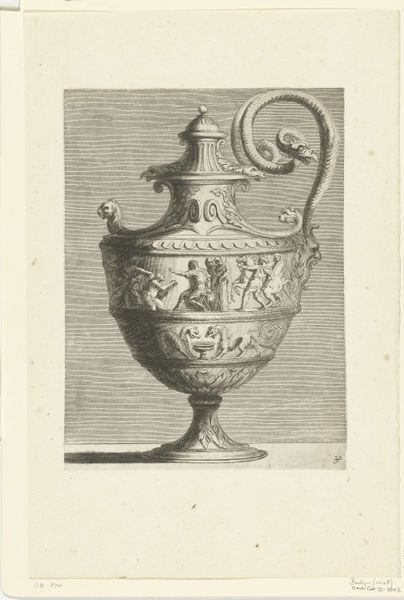
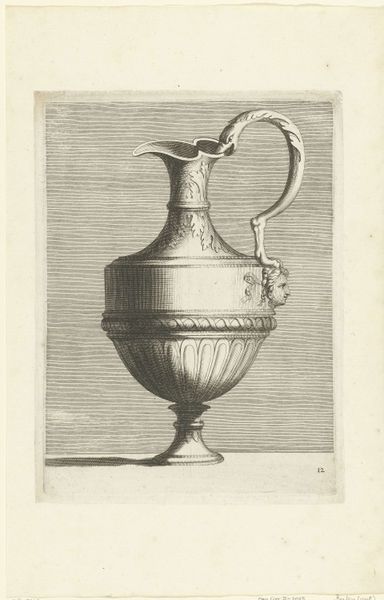
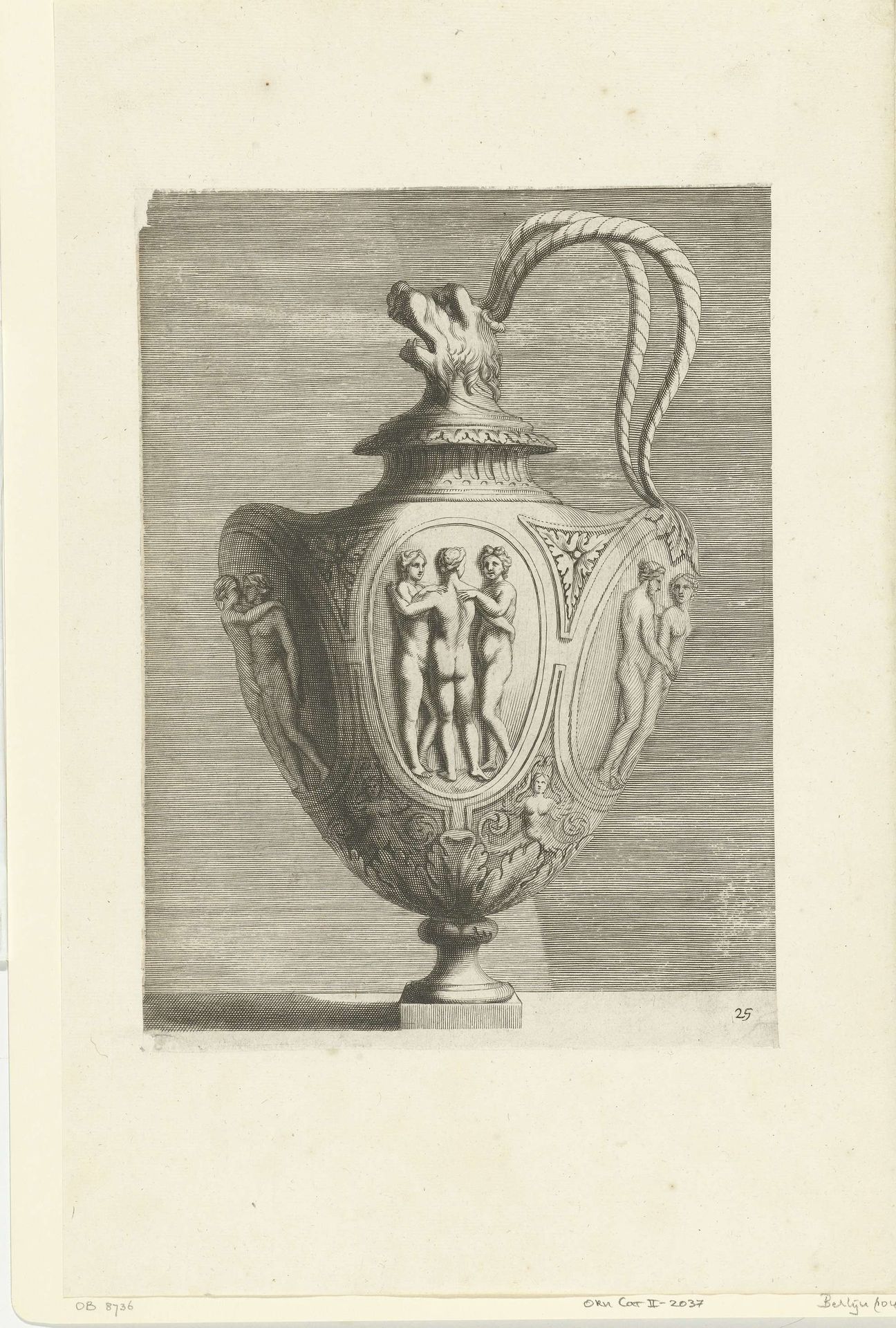
This is Françoise Bouzonnet’s ‘Schenkkan met leeuwenkop als tuit,’ made sometime in the 17th century. Bouzonnet, born in Paris, was part of a family of artists. As a woman working in the arts, she was in a unique position; her gender both circumscribed and shaped her artistic practice. Bouzonnet's print depicts a ewer, adorned with classical figures, an object associated with wealth and domesticity. The bodies of the figures, frozen in the printmaking process, seem to speak to both the sensuality and the restrictions placed on women's bodies in the 17th century. The lion head spout brings to mind the tension between the wild and the contained, the masculine and the feminine. As we consider this ewer, let's also think about the labor involved in its creation, the social rituals it might have been used for, and the stories it could tell about the lives of women in the 17th century.

Artwork details
- Medium
- print, metal, etching, engraving
- Dimensions
- height 272 mm, width 200 mm
- Copyright
- Rijks Museum: Open Domain
Tags
Comments
Share your thoughts
About this artwork
This is Françoise Bouzonnet’s ‘Schenkkan met leeuwenkop als tuit,’ made sometime in the 17th century. Bouzonnet, born in Paris, was part of a family of artists. As a woman working in the arts, she was in a unique position; her gender both circumscribed and shaped her artistic practice. Bouzonnet's print depicts a ewer, adorned with classical figures, an object associated with wealth and domesticity. The bodies of the figures, frozen in the printmaking process, seem to speak to both the sensuality and the restrictions placed on women's bodies in the 17th century. The lion head spout brings to mind the tension between the wild and the contained, the masculine and the feminine. As we consider this ewer, let's also think about the labor involved in its creation, the social rituals it might have been used for, and the stories it could tell about the lives of women in the 17th century.
Comments
Share your thoughts