About this artwork
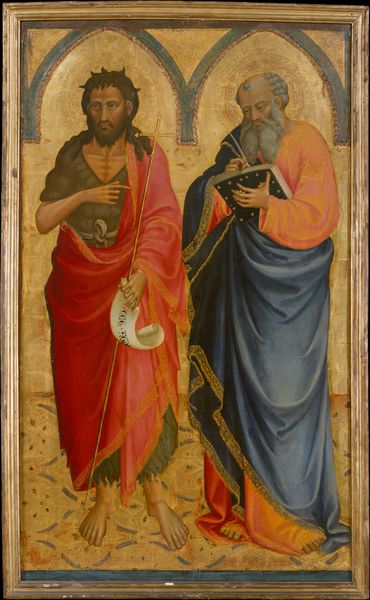
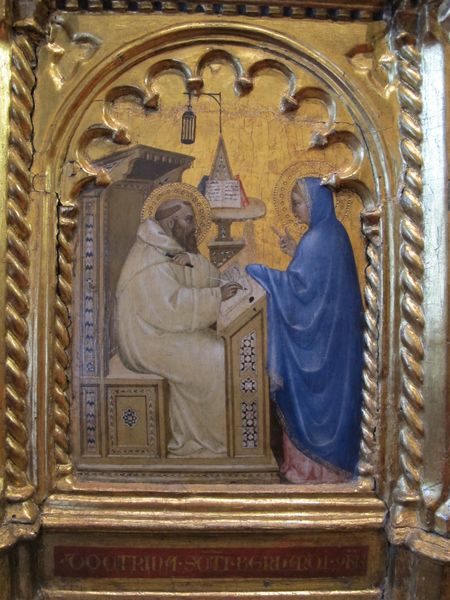
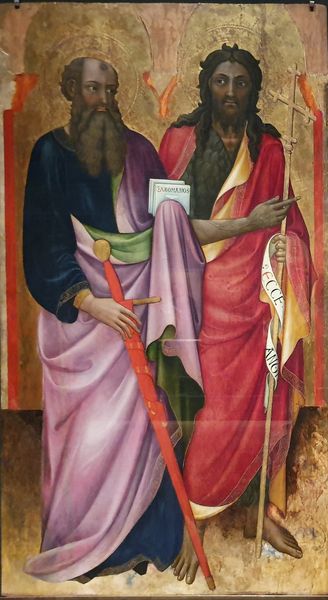
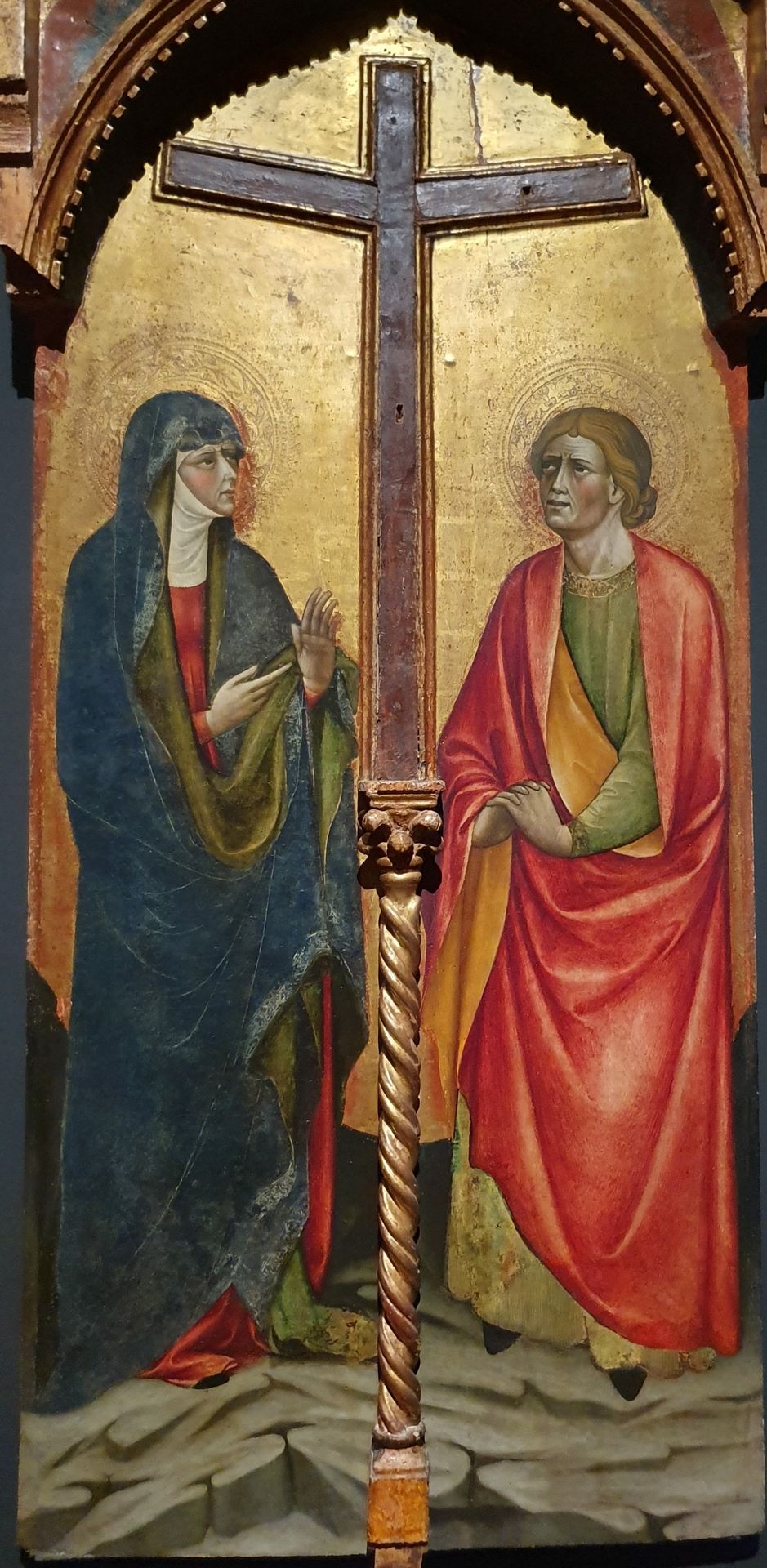
Editor: This panel painting from 1453 by Álvaro Pires de Évora depicts the Virgin Mary and St. John the Evangelist. It looks to be tempera on panel. I'm struck by the gold background and the rather somber mood. How should we interpret the choices in materials and presentation? Curator: Note how tempera allowed for those sharp lines, and that deliberate, flattened space emphasizes the here and now of religious experience as an active social and economic process. Think about who commissioned this. What sort of patron valued such obvious materiality? Editor: I see what you mean. It’s not about illusionism, but about declaring its own making. The gold leaf isn't trying to mimic light; it’s proclaiming value, wealth. Curator: Precisely. And look closely at the rendering of Mary's cloak – the intense blue pigment was extraordinarily expensive to source. Its ultramarine richness isn’t merely decorative; it's a statement about the investment in creating sacred imagery as a trade and cultural touchstone. Do you think the patrons appreciated such a visible expenditure? Editor: I imagine it signaled their own piety and status, a visual transaction with the divine and the earthly community. Curator: Exactly! So we have materials, artistic labour, religious messaging, and economic power all coalescing. Early Renaissance art, especially in panels like these, shows a very intentional connection between craft, consumption, and belief. Editor: That makes the somber mood more intriguing – it is less about sorrow and more about a deliberate display of constructed piety. I didn’t see that at first. Curator: Analyzing art through materials really opens up some fascinating lines of thought, doesn’t it? Editor: It does. I’ll definitely look at paintings differently now, thinking more about their physical presence as an assertion of labor, cost, and place within society. Thanks!
A Virgem Maria e S. João Evangelista
53

Álvaro Pires de Évora
1390 - 1450Location
Pinacoteca e Museo Civico di Volterra, Volterra, ItalyArtwork details
- Medium
- panel, tempera, painting
- Location
- Pinacoteca e Museo Civico di Volterra, Volterra, Italy
- Copyright
- Public domain
Tags
Comments
Share your thoughts
About this artwork
Editor: This panel painting from 1453 by Álvaro Pires de Évora depicts the Virgin Mary and St. John the Evangelist. It looks to be tempera on panel. I'm struck by the gold background and the rather somber mood. How should we interpret the choices in materials and presentation? Curator: Note how tempera allowed for those sharp lines, and that deliberate, flattened space emphasizes the here and now of religious experience as an active social and economic process. Think about who commissioned this. What sort of patron valued such obvious materiality? Editor: I see what you mean. It’s not about illusionism, but about declaring its own making. The gold leaf isn't trying to mimic light; it’s proclaiming value, wealth. Curator: Precisely. And look closely at the rendering of Mary's cloak – the intense blue pigment was extraordinarily expensive to source. Its ultramarine richness isn’t merely decorative; it's a statement about the investment in creating sacred imagery as a trade and cultural touchstone. Do you think the patrons appreciated such a visible expenditure? Editor: I imagine it signaled their own piety and status, a visual transaction with the divine and the earthly community. Curator: Exactly! So we have materials, artistic labour, religious messaging, and economic power all coalescing. Early Renaissance art, especially in panels like these, shows a very intentional connection between craft, consumption, and belief. Editor: That makes the somber mood more intriguing – it is less about sorrow and more about a deliberate display of constructed piety. I didn’t see that at first. Curator: Analyzing art through materials really opens up some fascinating lines of thought, doesn’t it? Editor: It does. I’ll definitely look at paintings differently now, thinking more about their physical presence as an assertion of labor, cost, and place within society. Thanks!
Comments
Share your thoughts