About this artwork
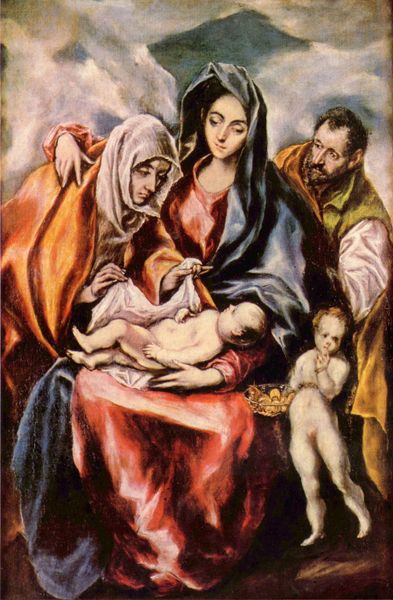
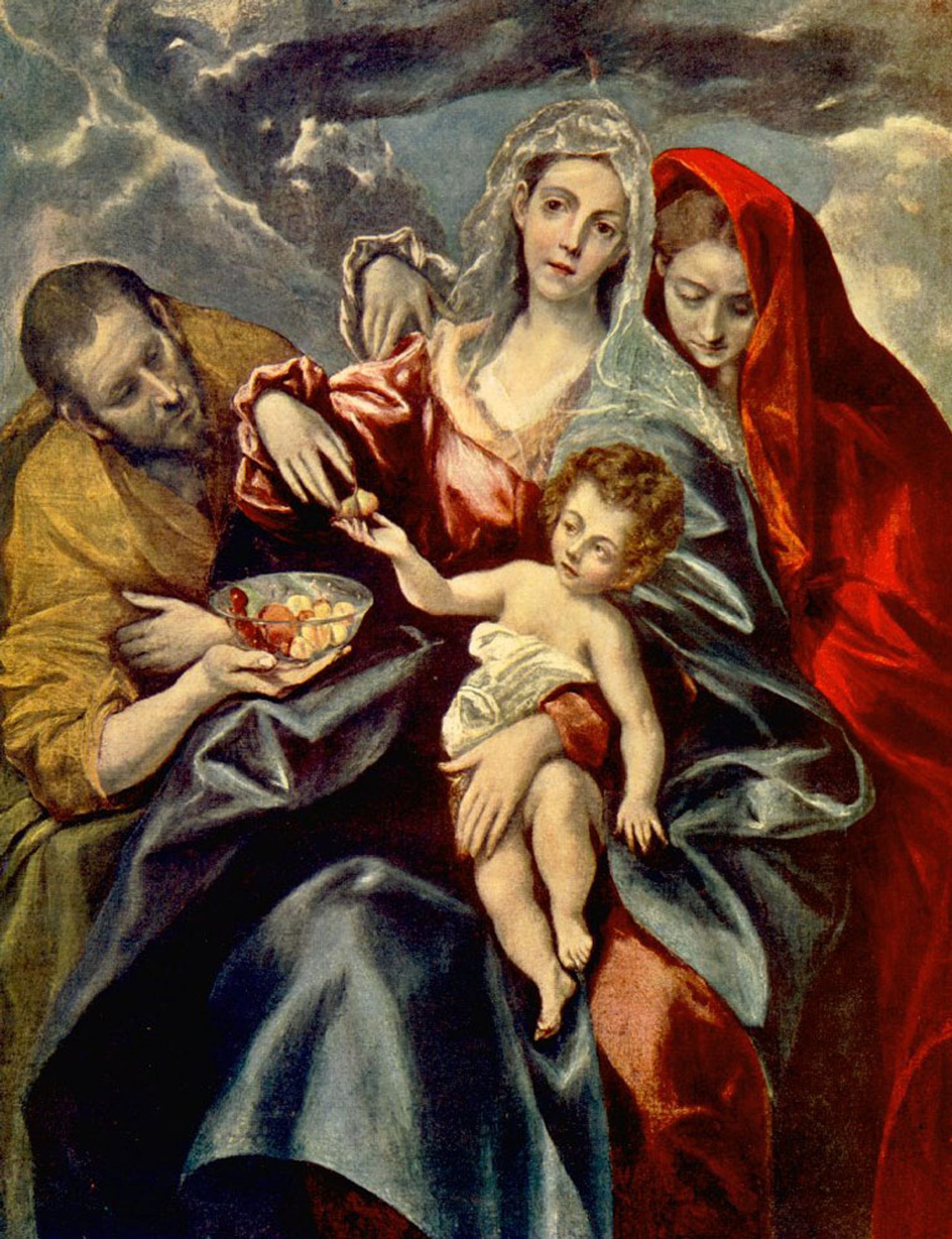
El Greco painted the Holy Family, now at the Rhode Island School of Design Museum, using oil on canvas. What strikes you immediately is how El Greco uses elongated forms and dramatic color contrasts to create an otherworldly atmosphere. The figures, especially Mary, are stretched upwards, contributing to a sense of spiritual elevation. The composition is almost theatrical, with the figures arranged in a tight, pyramidal structure. El Greco’s Mannerist style departs from Renaissance naturalism, favoring distortion and expressive intensity. The colors, particularly the vibrant reds and blues, are not just descriptive but emotionally charged. Notice how the light falls unevenly, creating deep shadows that add to the scene's drama. In this context, the painting challenges the classical ideals of beauty and harmony, opting instead for a more subjective and emotionally resonant expression. The painting invites us to reconsider traditional notions of form and representation in favor of a more dynamic and individual artistic vision.
Holy Family
1592

El Greco (Domenikos Theotokopoulos)
1540 - 1614Location
Rhode Island School of Design Museum (RISD Museum), Providence, RI, USArtwork details
- Medium
- oil-paint
- Dimensions
- 130 x 100 cm
- Location
- Rhode Island School of Design Museum (RISD Museum), Providence, RI, US
- Copyright
- Public domain
Tags
Comments
Share your thoughts
About this artwork
El Greco painted the Holy Family, now at the Rhode Island School of Design Museum, using oil on canvas. What strikes you immediately is how El Greco uses elongated forms and dramatic color contrasts to create an otherworldly atmosphere. The figures, especially Mary, are stretched upwards, contributing to a sense of spiritual elevation. The composition is almost theatrical, with the figures arranged in a tight, pyramidal structure. El Greco’s Mannerist style departs from Renaissance naturalism, favoring distortion and expressive intensity. The colors, particularly the vibrant reds and blues, are not just descriptive but emotionally charged. Notice how the light falls unevenly, creating deep shadows that add to the scene's drama. In this context, the painting challenges the classical ideals of beauty and harmony, opting instead for a more subjective and emotionally resonant expression. The painting invites us to reconsider traditional notions of form and representation in favor of a more dynamic and individual artistic vision.
Comments
Share your thoughts