About this artwork
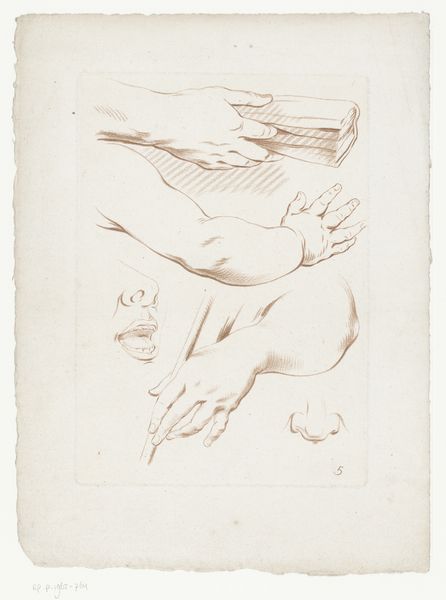
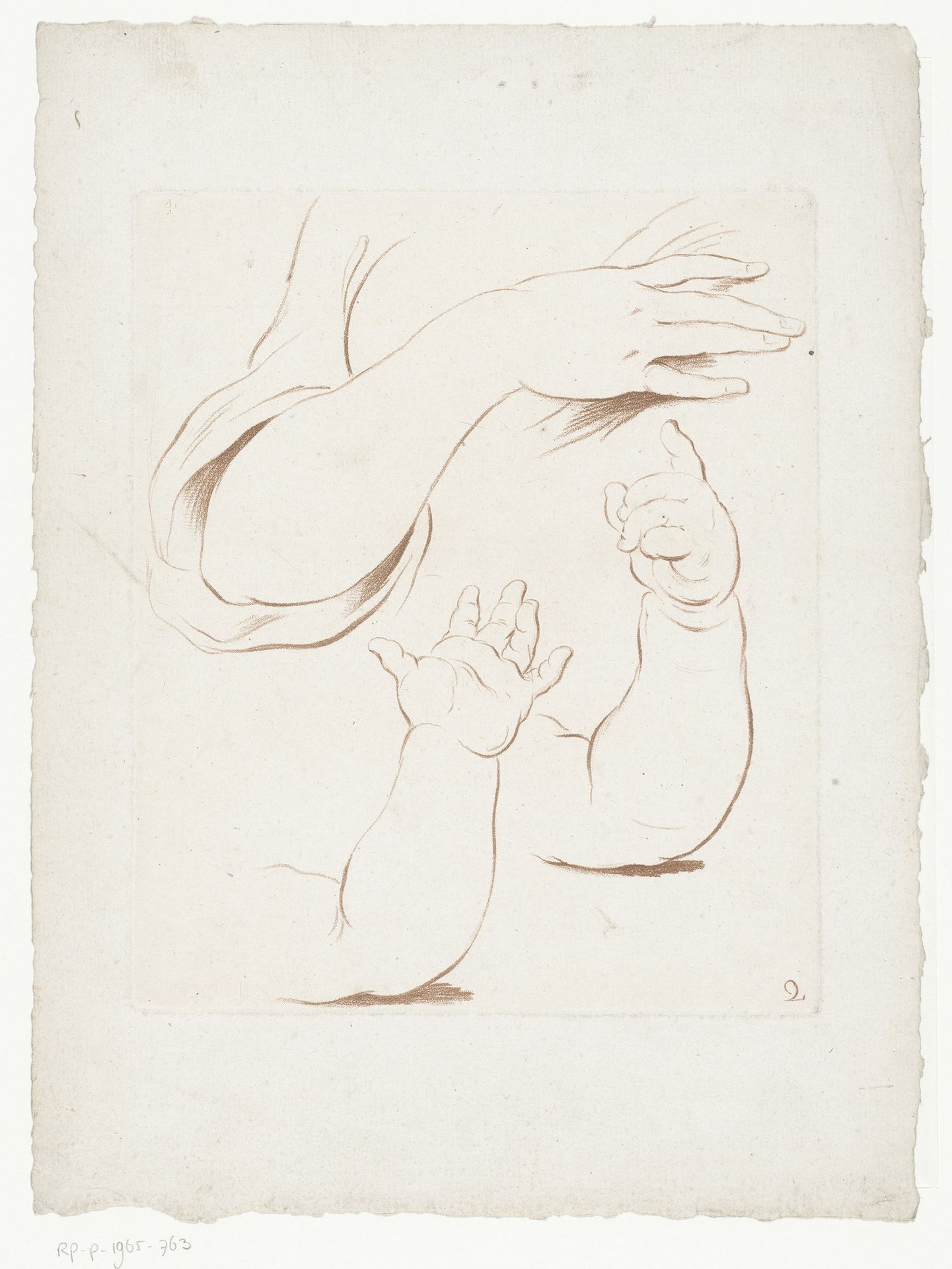
Jean François Janinet created this print, "Three Arms in Various Positions," using etching and aquatint, a popular printmaking technique in the late 18th century. Janinet, a French artist, was working during a period of significant social and political upheaval, including the French Revolution. The rendering of the human body, or even parts of it, carries its own set of cultural and social meanings. Consider, for example, the disembodied arms here. These are studies, a means to understand the form and how it moves, which speaks to the time when anatomy and the body were approached with an increasing scientific interest. It also reflects a society grappling with ideas of individualism and identity. By focusing on isolated body parts, Janinet invites us to contemplate the relationship between the part and the whole. The arms become detached, abstracted, and open to interpretation. The print invites reflection on how we perceive and represent the human form. It underscores the emotional and intellectual weight we assign to even the smallest details.
Drie armen in verschillende posities
1762 - 1814

Jean François Janinet
1752 - 1814Location
RijksmuseumArtwork details
- Medium
- drawing, print, etching
- Dimensions
- height 243 mm, width 203 mm
- Location
- Rijksmuseum
- Copyright
- Rijks Museum: Open Domain
Tags
Comments
Share your thoughts
About this artwork
Jean François Janinet created this print, "Three Arms in Various Positions," using etching and aquatint, a popular printmaking technique in the late 18th century. Janinet, a French artist, was working during a period of significant social and political upheaval, including the French Revolution. The rendering of the human body, or even parts of it, carries its own set of cultural and social meanings. Consider, for example, the disembodied arms here. These are studies, a means to understand the form and how it moves, which speaks to the time when anatomy and the body were approached with an increasing scientific interest. It also reflects a society grappling with ideas of individualism and identity. By focusing on isolated body parts, Janinet invites us to contemplate the relationship between the part and the whole. The arms become detached, abstracted, and open to interpretation. The print invites reflection on how we perceive and represent the human form. It underscores the emotional and intellectual weight we assign to even the smallest details.
Comments
Share your thoughts