1949
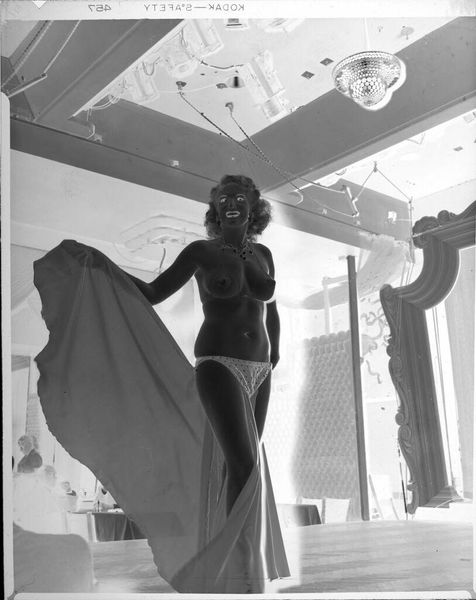
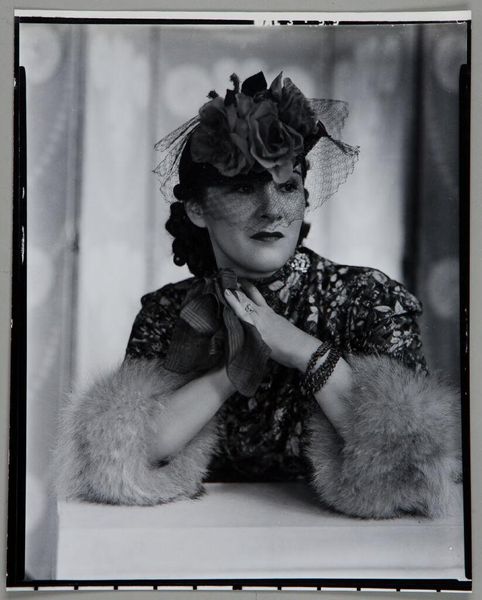
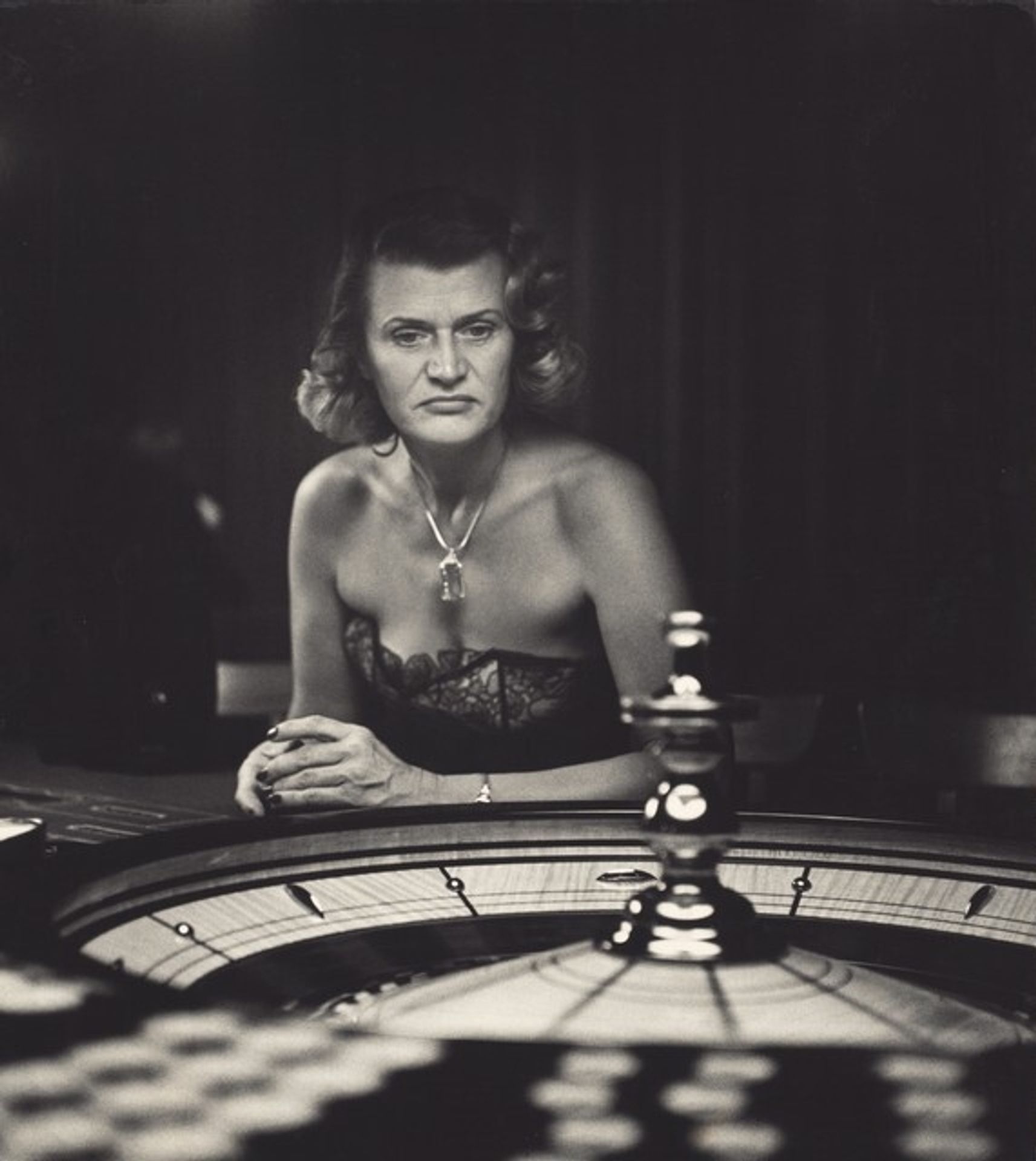
Gambling Woman, Caribe Hilton Hotel, San Juan, Puerto Rico


Listen to curator's interpretation
Curatorial notes
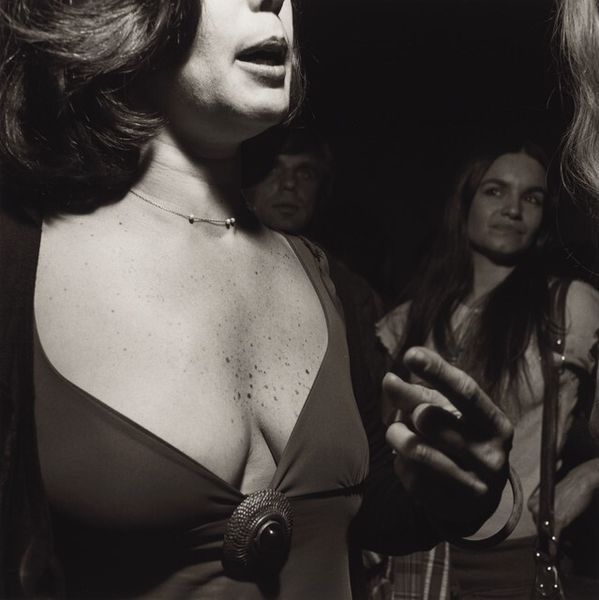
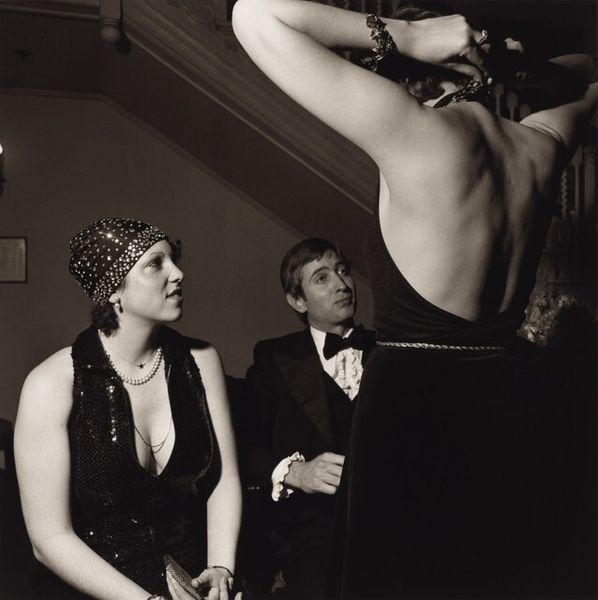
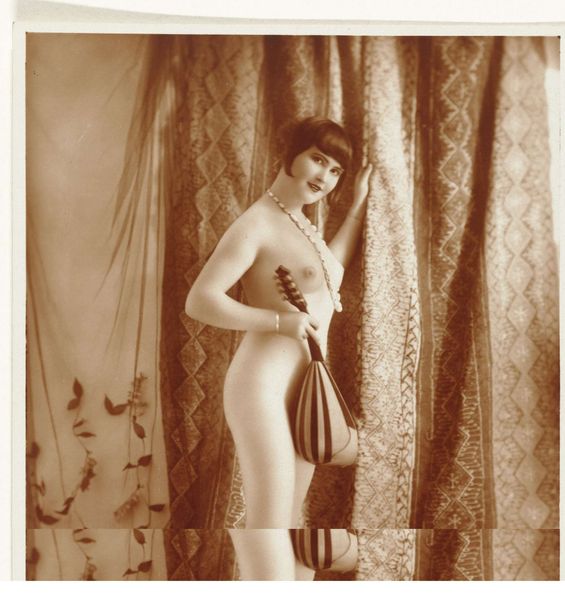
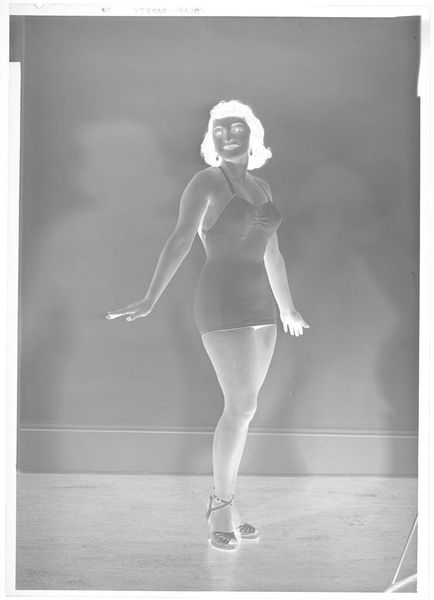
Curator: Let's talk about this gelatin-silver print by Gordon Parks titled "Gambling Woman, Caribe Hilton Hotel, San Juan, Puerto Rico" from 1949. It's quite a striking image, isn't it? Editor: Striking and a bit bleak, actually. She looks like she’s aged ten years in the last spin of that roulette wheel. All that money, all that supposed glamour, rendered completely flat in black and white. Is this supposed to be paradise? Curator: Parks often explored themes of social realism. In this context, the woman, posed at the casino table, becomes a symbol, perhaps, of the anxieties beneath the veneer of luxury and leisure associated with that particular locale and era. Consider how gambling, with its inherent risks and potential for loss, can serve as a metaphor for broader societal uncertainties. Editor: True, but the composition adds to that unease. That almost confrontational stare, the sharp, unforgiving light, it all feels so exposed. I mean, is it just me, or does the roulette table look almost…predatory? All those sharp lines, like teeth. It's more than just documenting; it's an emotional X-ray. Curator: Parks uses monochrome to heighten the drama. Note the stark contrast between the woman's exposed skin and the dark background, a common method to amplify psychological intensity. Symbolically, it might represent the stark realities behind the illusion of luxury or maybe even choices—the gamble, represented here by black and white as two separate colors, for a game with various numbered slots. Editor: I keep thinking about the story behind that look. Maybe she lost big, or maybe she's just realized the whole scene is kind of hollow. I've been there; sometimes the most "exciting" places are also the most soul-crushing. You just want to scream in Technicolor. Curator: Precisely! It's about the disillusionment hidden beneath the shiny surface. Parks captured a very specific mood—a certain ennui that transcends just the immediate subject and place. In that, it transcends even temporal limitations by expressing a perennial social critique. Editor: Well, consider my expectations thoroughly subverted. Who knew a snapshot from a hotel in Puerto Rico could feel so existentially relevant? It kind of makes you rethink where "paradise" truly lies. Curator: It highlights that sometimes the most telling insights come from observing those cracks in the façade. And that photographs aren’t just documentation; they're historical and personal records containing infinite expressive potential.