About this artwork
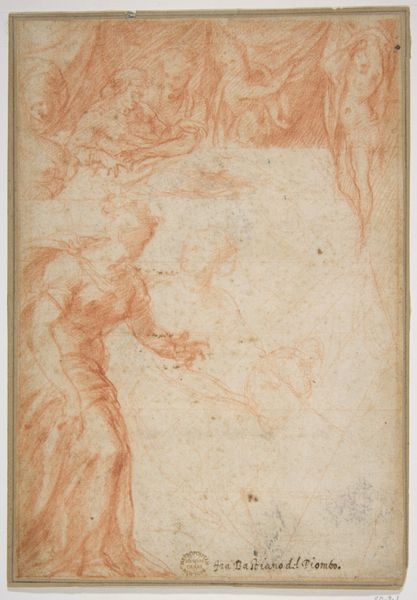
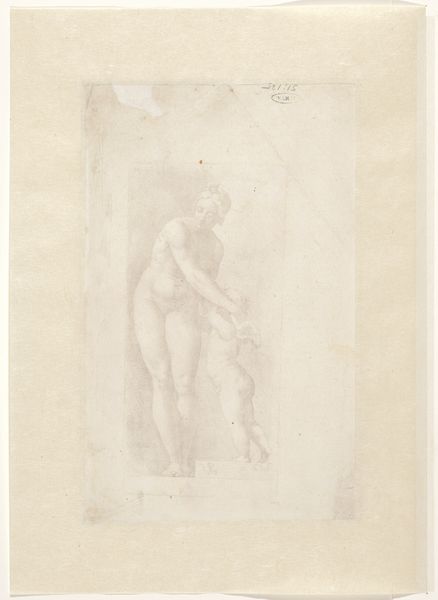
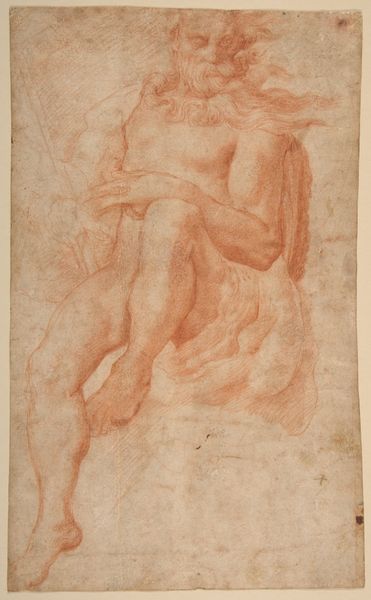
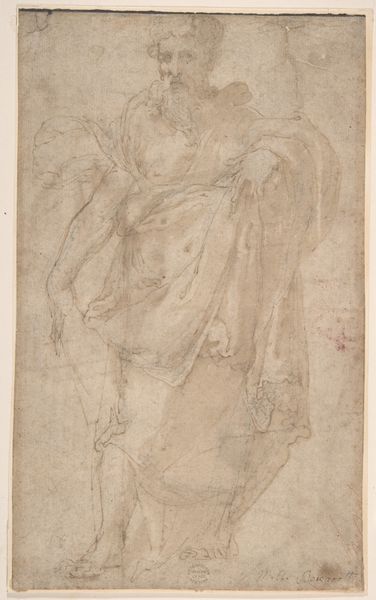
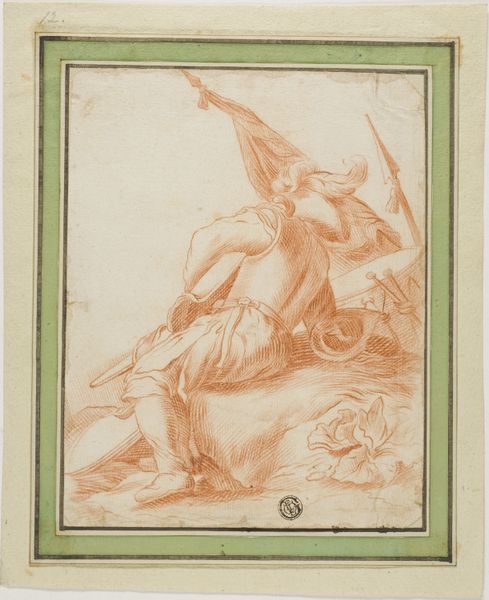
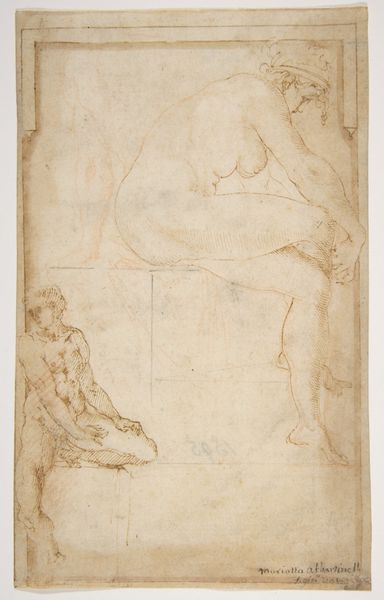
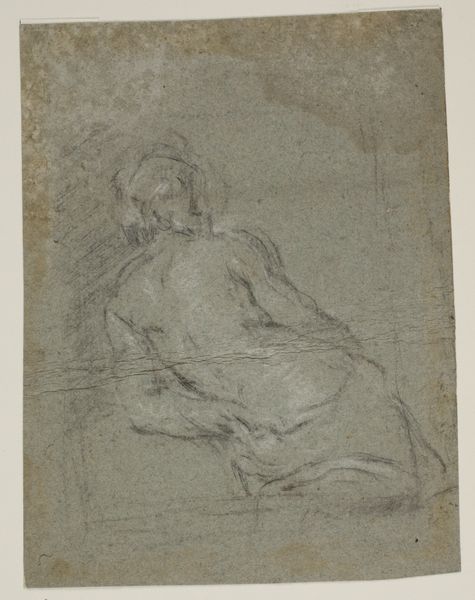
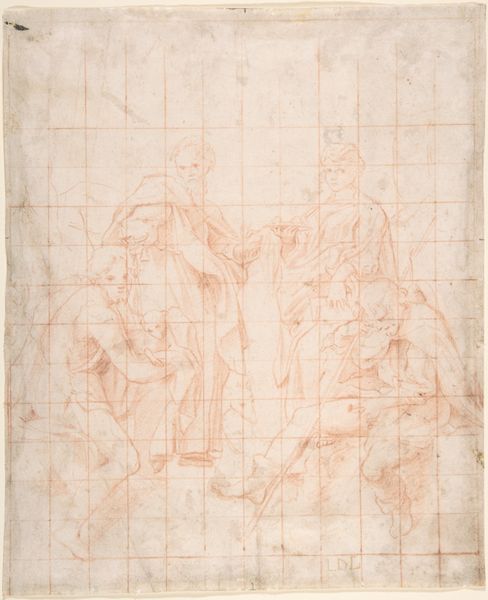
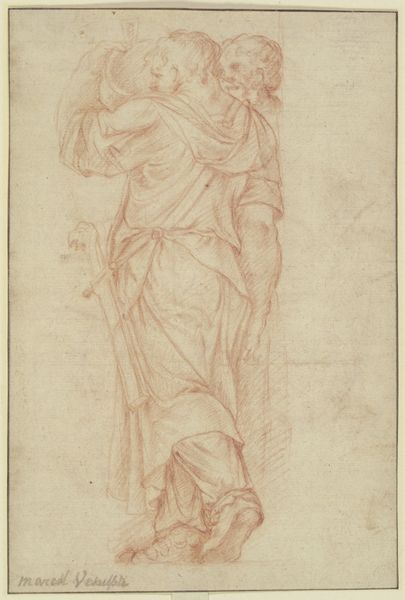
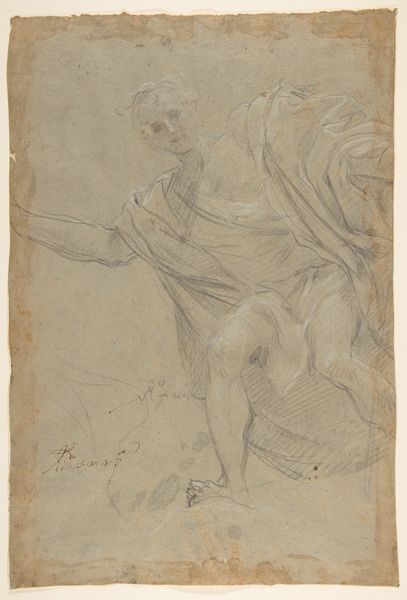
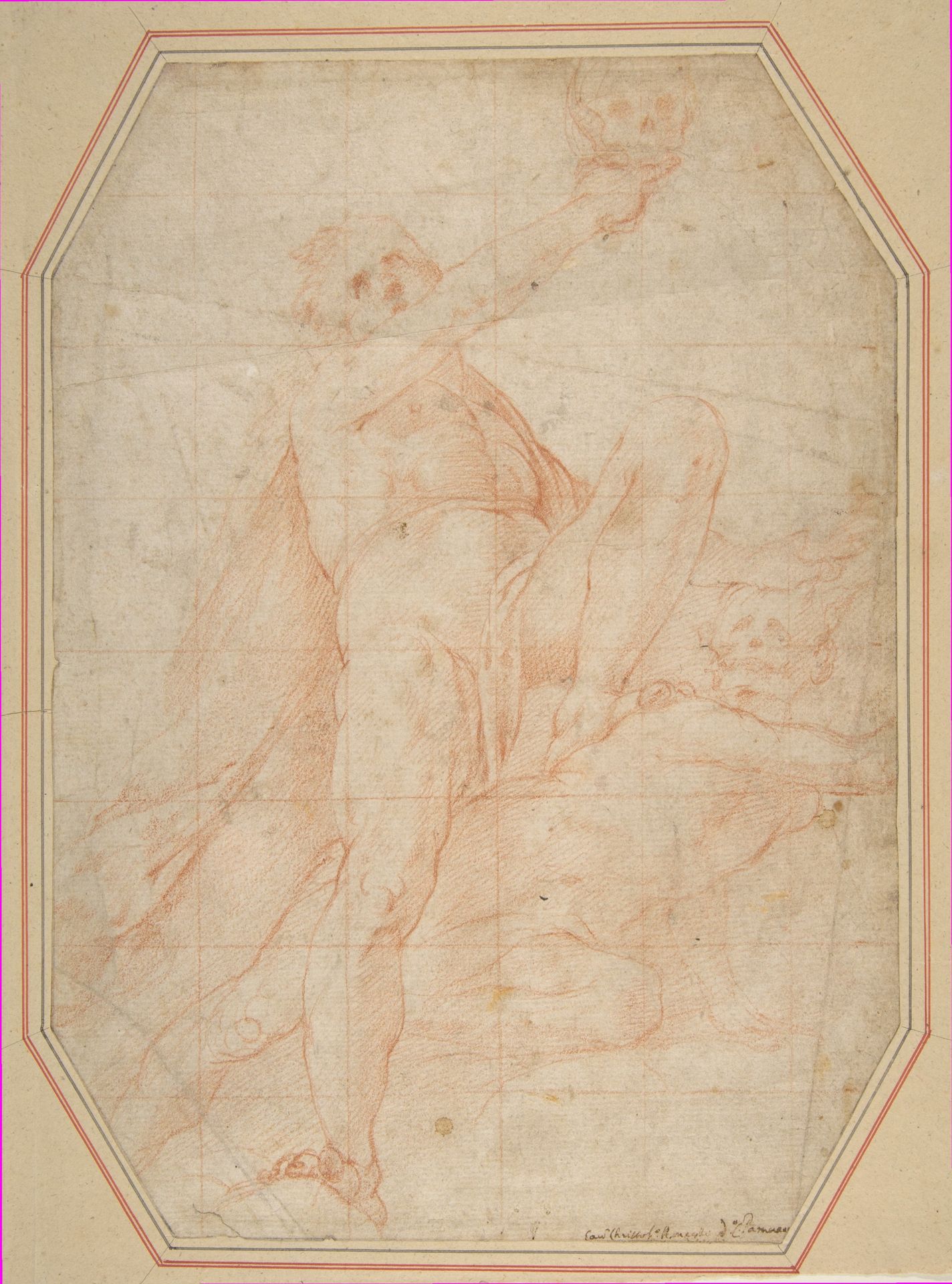
Cristoforo Roncalli, known as Pomarancio, made this red chalk drawing in Italy, sometime in the late 16th or early 17th century. It is a study of the male nude, seen from below on one side, with a figure raising his arm on the other. Drawings like this were essential to the training of artists in the Renaissance and Baroque periods. Academies, often sponsored by wealthy patrons or the church, provided models and instruction to young artists. These institutions formalized artistic training, setting standards for anatomy, composition, and style. They also shaped the social status of the artist, elevating it from skilled craftsman to intellectual. Pomarancio’s drawing reflects these academic concerns, emphasizing anatomical accuracy and dramatic poses. But drawings also served as a form of currency. They were collected and traded among artists and connoisseurs. To understand this drawing better, we might examine the records of academies, the biographies of artists, and the inventories of collectors. Art is always shaped by the social institutions of its time.
Two Nudes Seen from Below (recto); Male Figure with Upraised Arm (verso) 1580 - 1582

Pomarancio (Cristoforo Roncalli)
1553 - 1626
The Metropolitan Museum of Art
Metropolitan Museum of Art, New York, NYArtwork details
- Medium
- drawing, paper, pen
- Dimensions
- 11 9/16 × 8 3/8 in. (29.4 × 21.3 cm)
- Location
- Metropolitan Museum of Art, New York, NY
- Copyright
- Public Domain
Tags
drawing
toned paper
figuration
paper
11_renaissance
pen
italian-renaissance
nude
male-nude
Comments
No comments
About this artwork
Cristoforo Roncalli, known as Pomarancio, made this red chalk drawing in Italy, sometime in the late 16th or early 17th century. It is a study of the male nude, seen from below on one side, with a figure raising his arm on the other. Drawings like this were essential to the training of artists in the Renaissance and Baroque periods. Academies, often sponsored by wealthy patrons or the church, provided models and instruction to young artists. These institutions formalized artistic training, setting standards for anatomy, composition, and style. They also shaped the social status of the artist, elevating it from skilled craftsman to intellectual. Pomarancio’s drawing reflects these academic concerns, emphasizing anatomical accuracy and dramatic poses. But drawings also served as a form of currency. They were collected and traded among artists and connoisseurs. To understand this drawing better, we might examine the records of academies, the biographies of artists, and the inventories of collectors. Art is always shaped by the social institutions of its time.
Comments
No comments