


Curatorial notes
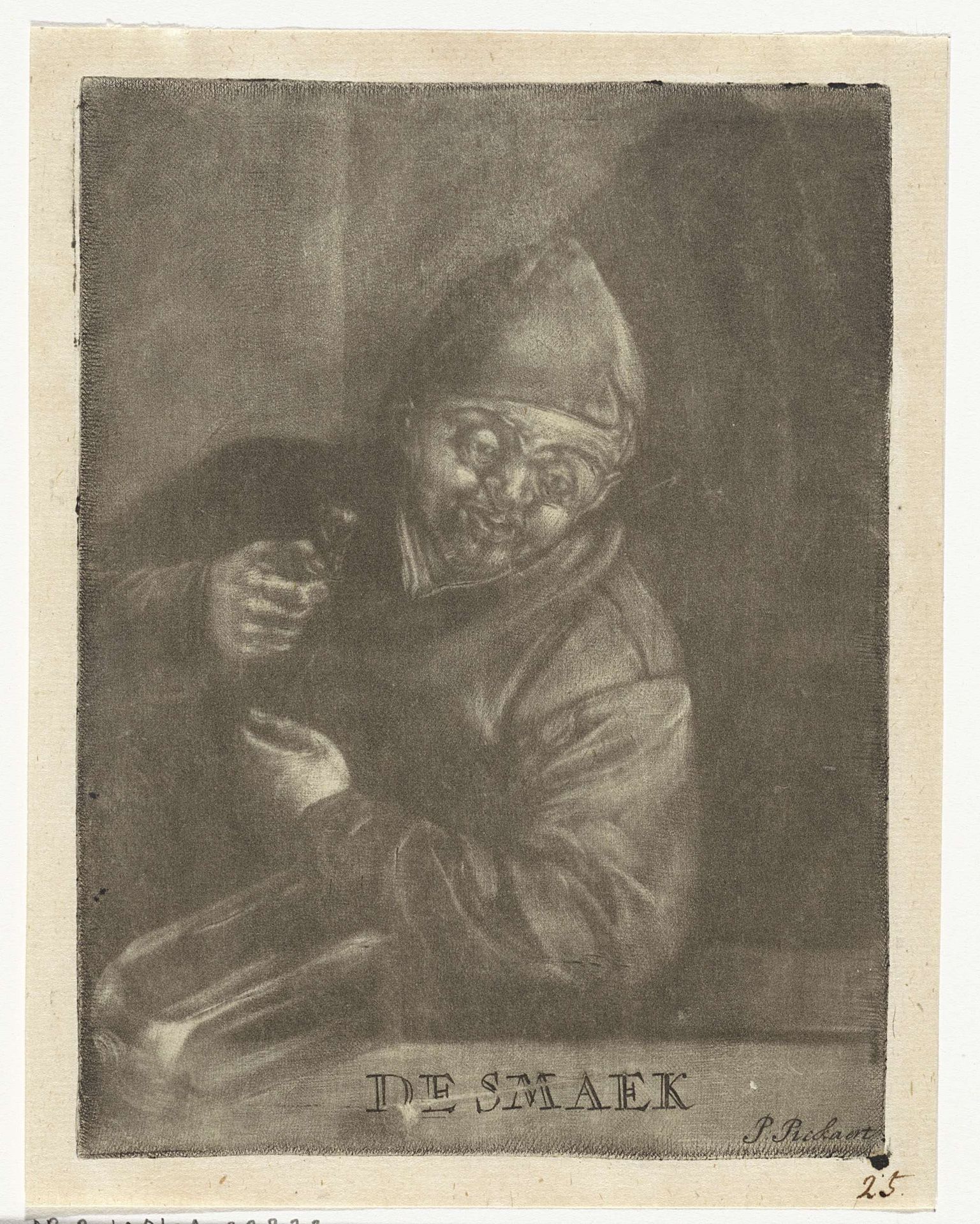
Curator: Here we have “Smaak,” or "Taste", an etching dating from around 1680 to 1715, by Pieter Pickaert. It presents an intriguing figure. Editor: My first impression is… earthy. There’s something quite raw and almost unsettling in the portrayal. The muted tones only amplify this feeling. Curator: The beauty of etchings lies in their production, don't you think? The artist scratches into the plate, each line imbued with deliberate force, and look closely at how the plate tone enhances the effect, capturing minute details, resulting in those nuanced, shaded areas. It speaks of labor, deliberate artistic labor. Editor: Absolutely, and how that labor contributes to its social reading. This feels very much within the tradition of genre painting, but with a slight… unease? Is it supposed to be comical? He almost looks burdened, not joyous, by his tasting. Consider the societal roles expected of those engaged in consumption at that time – what are we meant to glean? Curator: The very choice of etching points to dissemination – it’s about creating multiples, about a visual idea reaching a wider market. The artist clearly considers their target audience in making the product. How do class and context contribute? This allows broader consumption of art to an expanding audience. Editor: And where were these prints displayed? Did they decorate taverns, private homes, artist studios? The placement informs reception. And note how "taste" is depicted not as refinement but a sensory, even primal, act. Perhaps a subtle commentary on overindulgence? This period saw shifts in the understanding of pleasure, virtue and commerce - all intertwined. Curator: It is that tension between display, production, labor and artistic expression. I wonder, what impact did that choice of medium had? Perhaps etching wasn't simply about affordability; did it offer a certain aesthetic quality aligned to the subject? The materials define the end result. Editor: Fascinating perspectives. "Smaak" becomes less about individual experience and more about the socio-cultural forces shaping how we perceive pleasure, what can art, or what should art represent. It goes deeper than immediate aesthetics; It's also a snapshot of the society it reflects. Curator: Absolutely, both the materials and modes of the making offer a deeper level to that snapshot of art’s engagement with society in this era. Editor: And prompts further interrogation into taste and cultural consumption from a modern vantage.