c. 1590 - 1637
Landschap met paard

Egbert Van Panderen
1590 - 1637Location
RijksmuseumListen to curator's interpretation
Curatorial notes
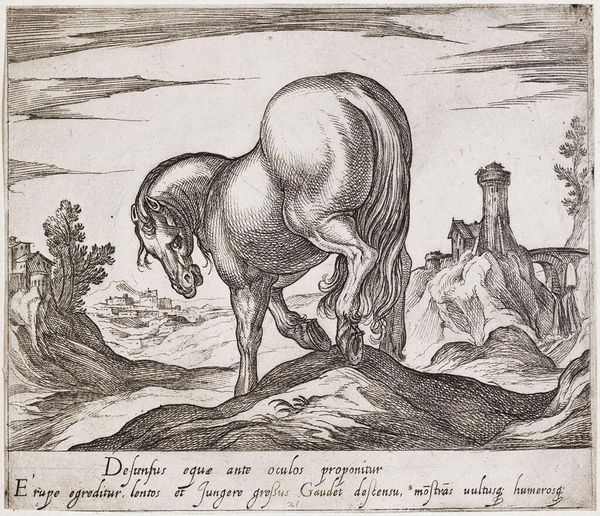
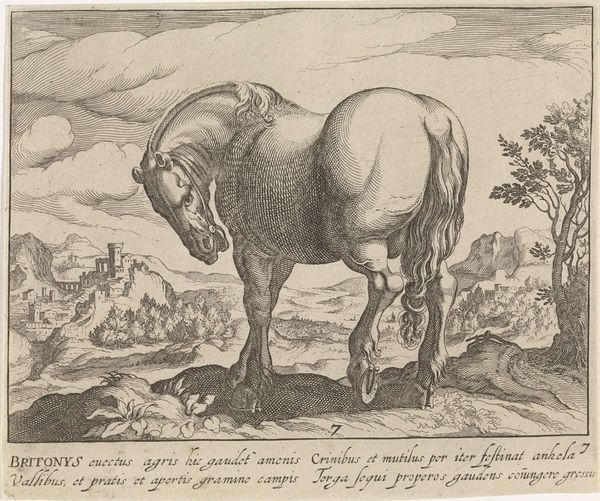
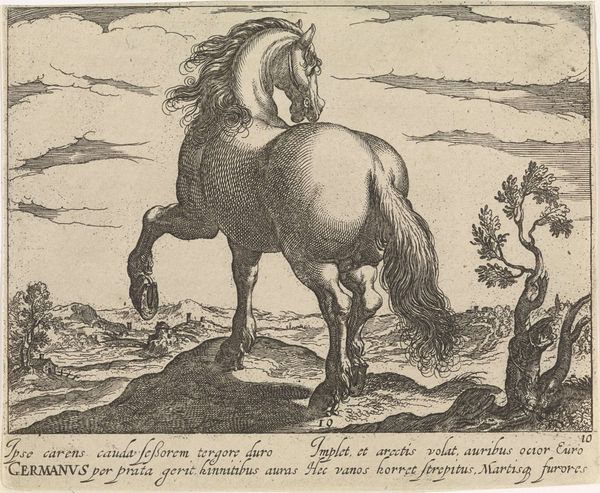
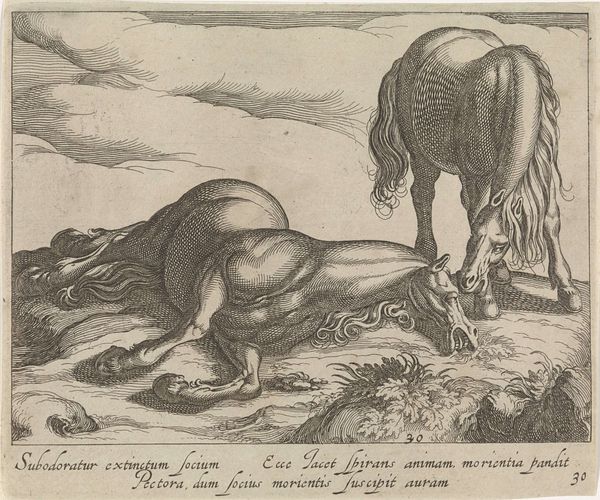
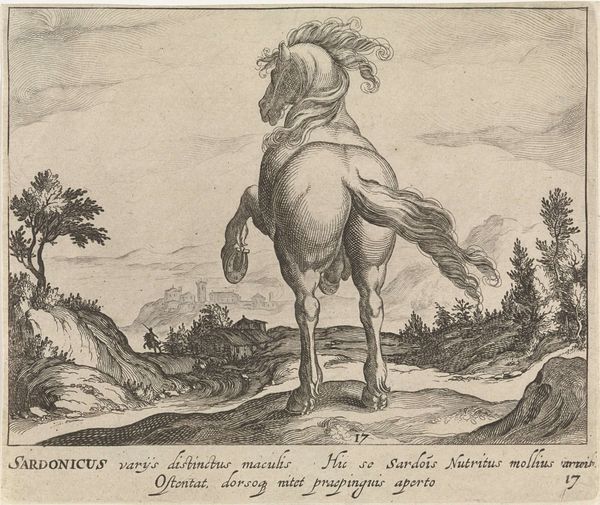
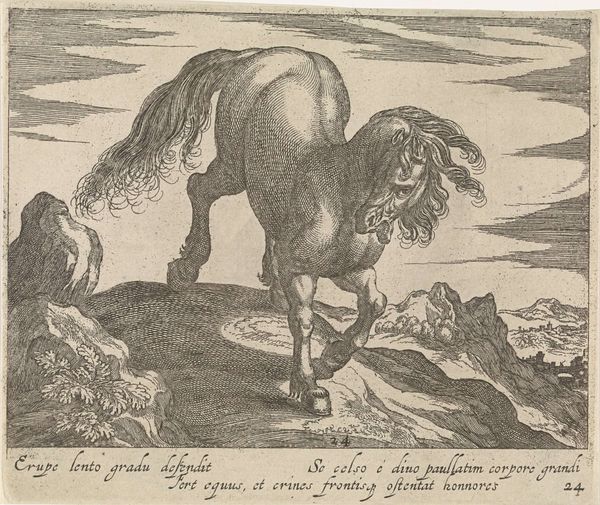
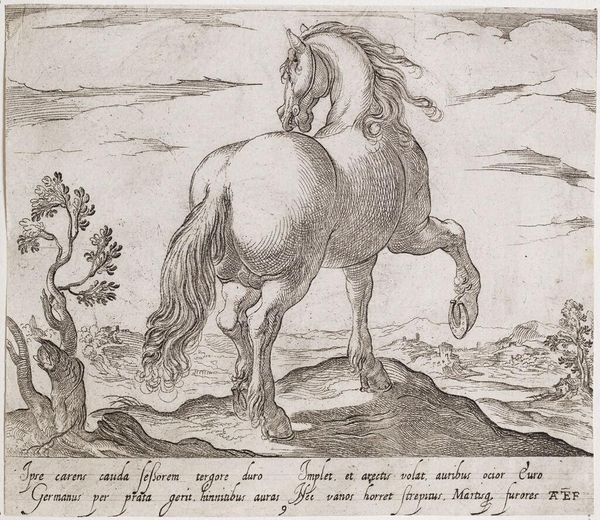
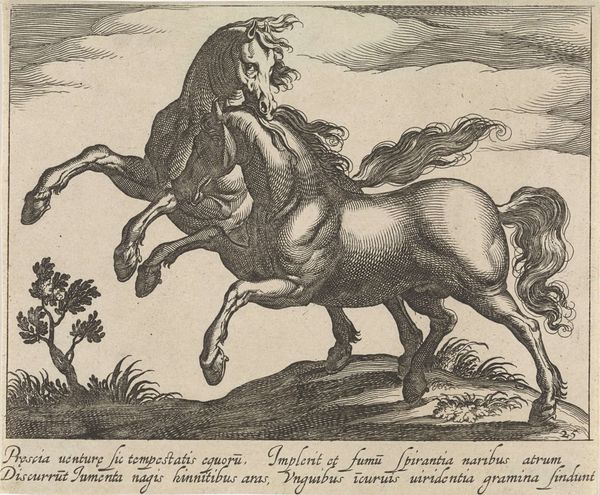
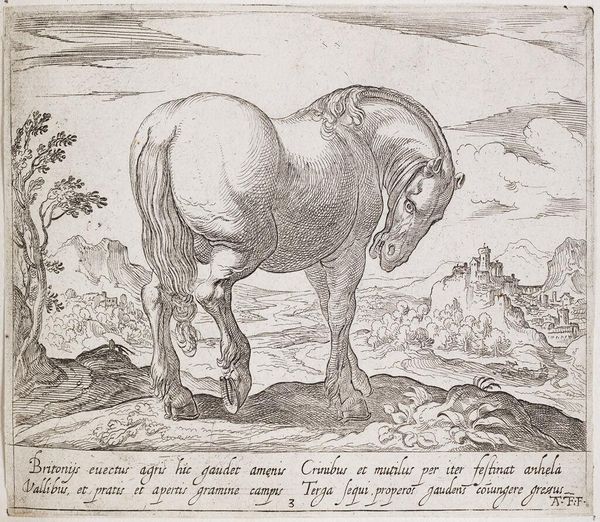
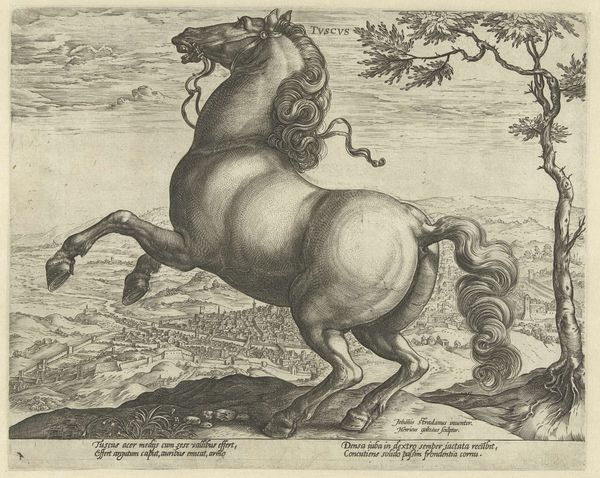
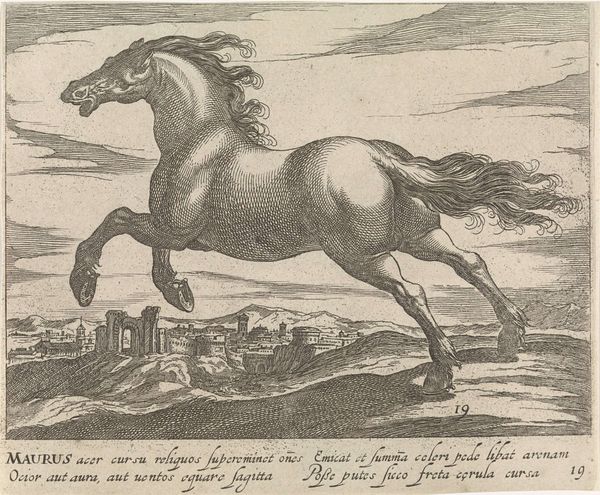
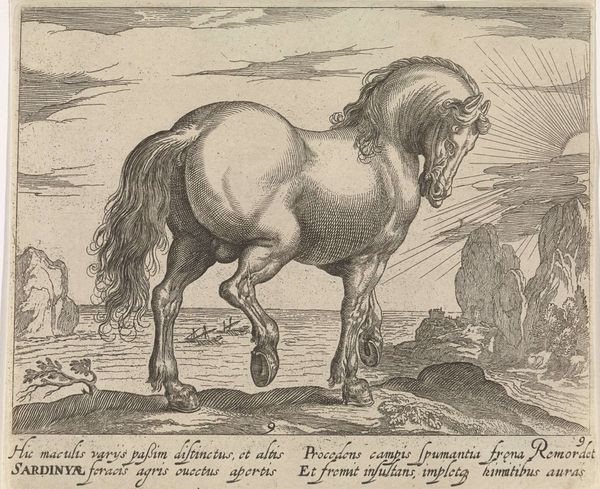
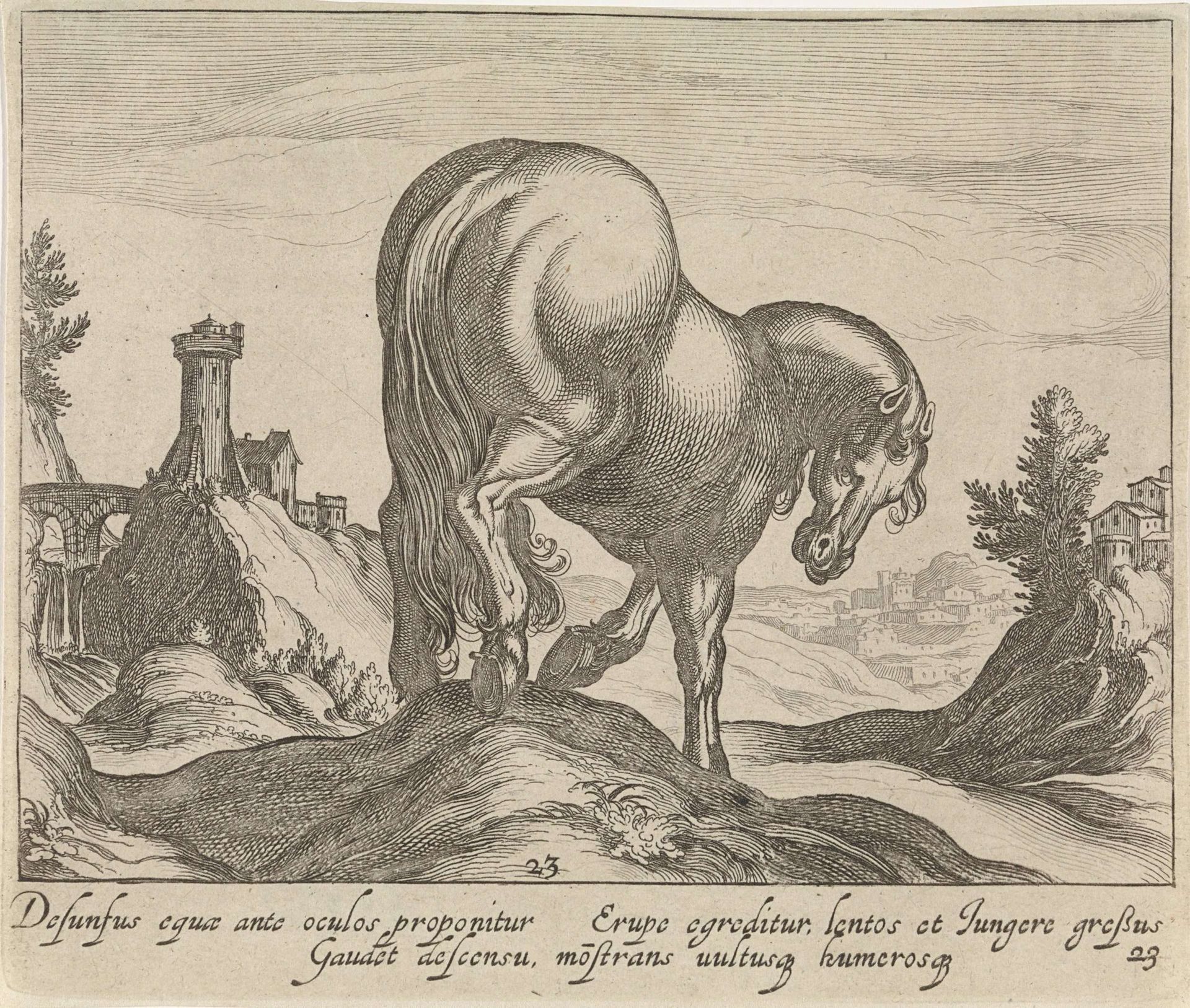
Egbert van Panderen created this print, "Landschap met paard," around the early 17th century, a time when the Dutch Republic was asserting its cultural identity through landscape art. The image captures a horse in a landscape, but it's the horse’s prominent, almost confrontational positioning that commands attention. During this period, the Netherlands was experiencing a surge in equestrian culture, tied to both military power and aristocratic identity. How does Van Panderen play with the relationship between humans and animals, particularly horses, which were often symbols of wealth and power? The horse seems to be burdened, or in deep thought. It is a moving display of vulnerability. The Latin inscription accompanying the image suggests a narrative beyond the visual. What does it mean for the horse to be presented as both a symbol of strength and an object of burden? The landscape itself, with its rolling hills and distant architecture, hints at the broader societal structures within which the horse exists.