painting, oil-paint
#
portrait
#
narrative-art
#
painting
#
oil-paint
#
oil painting
#
group-portraits
#
romanticism
#
genre-painting
Copyright: Public domain
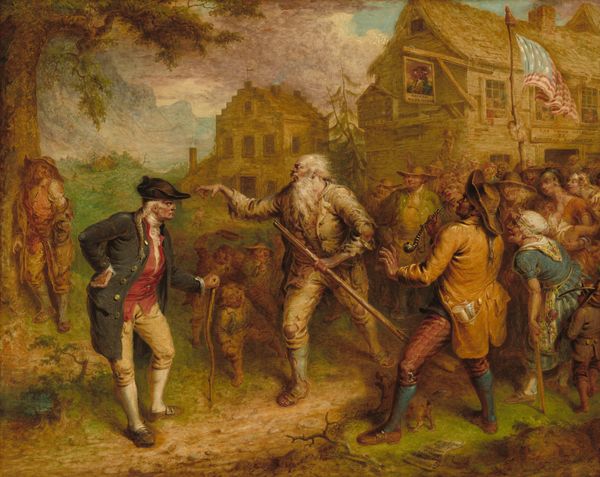
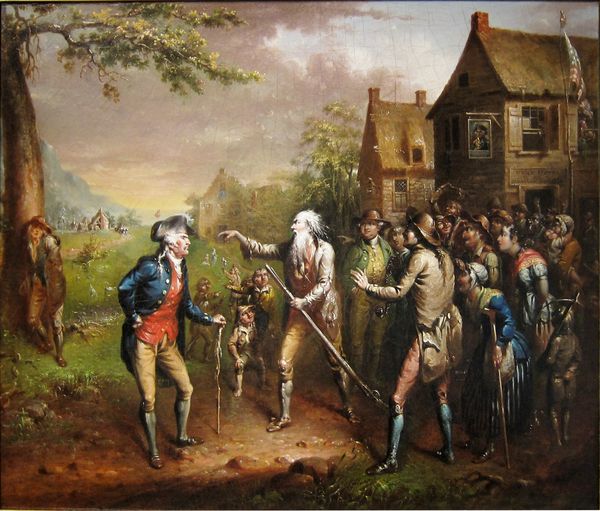
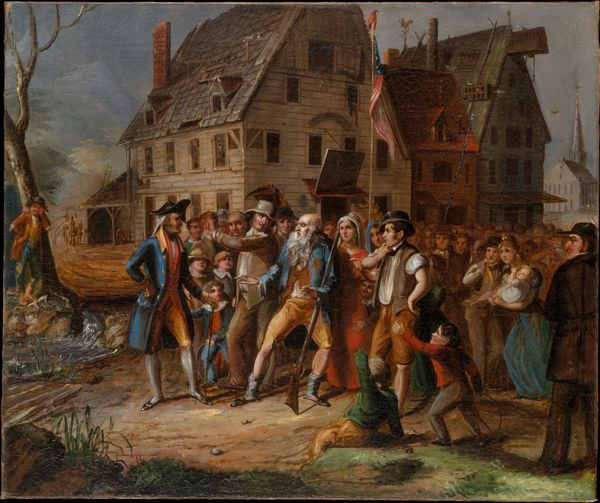
Curator: The figures seem caught between wakefulness and dreaming—a visual representation of indolence. What strikes you most? Editor: The earthy materiality dominates; the brown of the ale seems indistinguishable from the earth and timber itself. I wonder what the precise pigments were, and how the process reflects broader trends in Romantic era production and social life. Curator: John Quidor, in 1839, rendered "Rip Van Winkle and His Companions at the Inn Door of Nicholas Vedder" using oil paint. Note the textures; they give an almost sculptural quality to the forms. The rendering creates a narrative pull; each face and posture speaks to the broader narrative moment. Editor: Fascinating. Note, for example, the specific type of cloth the man reading the paper is using. It tells us a lot about economics and class hierarchies embedded within Quidor’s practice. Moreover, how does his employment of certain production practices intersect with Romanticism’s ethos? Curator: There's an emphasis on individualism; see how each figure has unique features that, in combination, creates an ensemble unified by theme but divergent in portrayal. And, what to say about the landscape? It acts as a backdrop and adds atmosphere with carefully placed structures. Editor: Definitely, however, it is all still filtered through labor; it reflects the romanticism that emerged in a historical situation where nature was increasingly turned into capital. Furthermore, let’s investigate who controlled distribution for Quidor's paints at this time, it would surely give more context. Curator: Certainly a lens, or rather, one material amongst many. Quidor also skillfully deploys light; shadows that contribute to the picture's depth also give some of the people seated an almost allegorical characterization. It elevates it beyond a simple depiction of an idle scene. Editor: To broaden this even more; imagine how the tavern's material structure – wood and mortar – influenced social interactions and alcohol distribution within the community, thus shaping broader material culture. Curator: It’s clear Quidor captured more than just faces and buildings; he encapsulated the mood of a changing landscape through tangible forms. Editor: Indeed; investigating material culture alongside pictorial aesthetics gives richer insight into the nexus of Quidor's creation, even allowing space for deconstruction!
Comments
No comments
Be the first to comment and join the conversation on the ultimate creative platform.
 Collect
 React
React Comment
More like this