

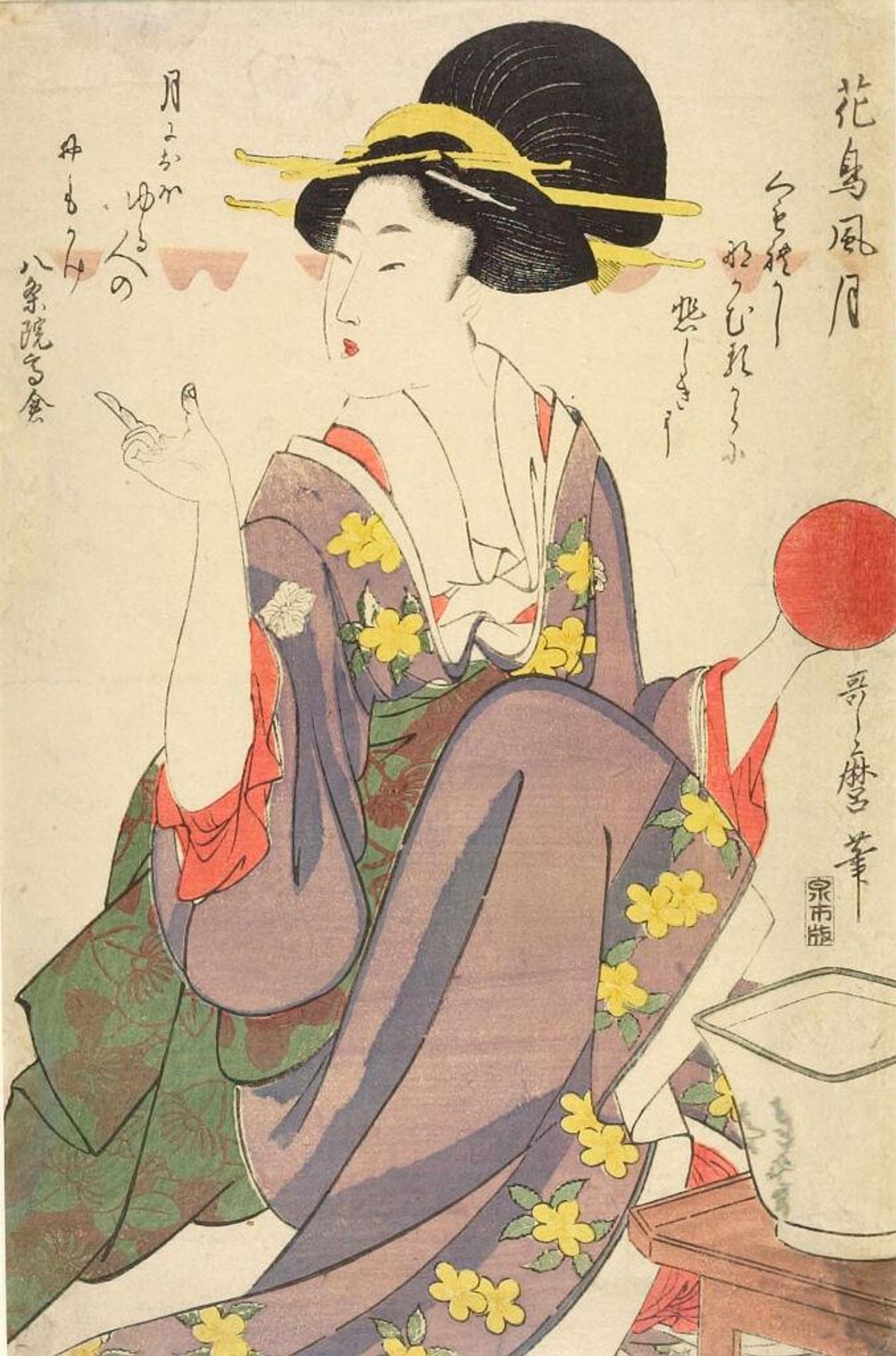
,Ukiyo-e woodblock print in ""Åban"" format; ink and color on paper"
FLOWERS, BIRDS, WINDS AND MOON (KachŠfūgetsu)
Kitagawa Utamaro åå¤å·æéº?"Late Edo period
@kitagawautamaroaaaaeeolateedoperiod
Harvard Art Museums
Harvard Art MuseumsListen to curator's interpretation
Curatorial notes
Editor: So, this is "Flowers, Birds, Winds, and Moon" by Kitagawa Utamaro, from the Late Edo period. The use of color and line creates a sense of refined grace, but what stories are embedded within this image? What do you see in this piece? Curator: I see a portrait deeply enmeshed with the sociopolitical complexities of its time. The woman, likely a courtesan, is not just a pretty face. How might her attire, her gaze, and even the symbolic elements around her reflect the restricted freedoms and societal expectations placed upon women in Late Edo Japan? Editor: That's a perspective I hadn't fully considered. The flowers and moon seem like traditional motifs, but they take on a whole new meaning. Curator: Precisely. Consider how Utamaro uses beauty to subtly address issues of gender and class. It invites us to question the power dynamics at play and to read beneath the surface of the image. Editor: I'm beginning to see the layers. Thanks for encouraging me to look at art as a historical document and cultural commentary. Curator: Indeed. It's through these dialogues that we gain a richer understanding, and can really see art.