About this artwork
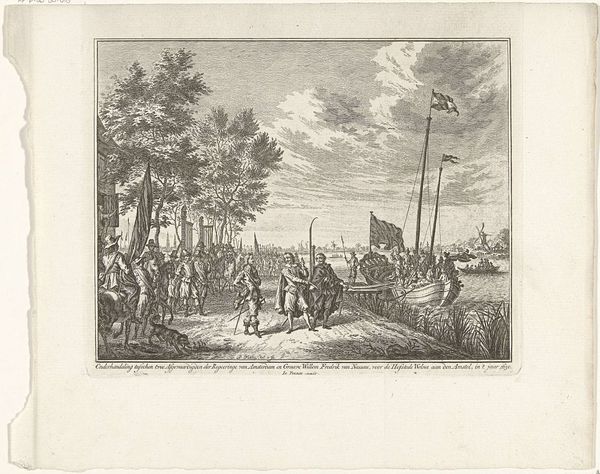
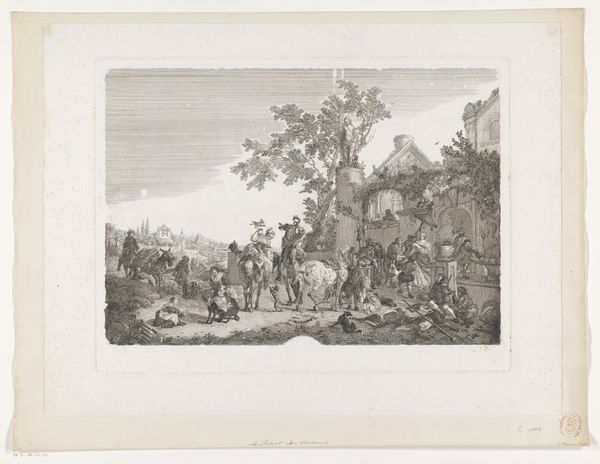
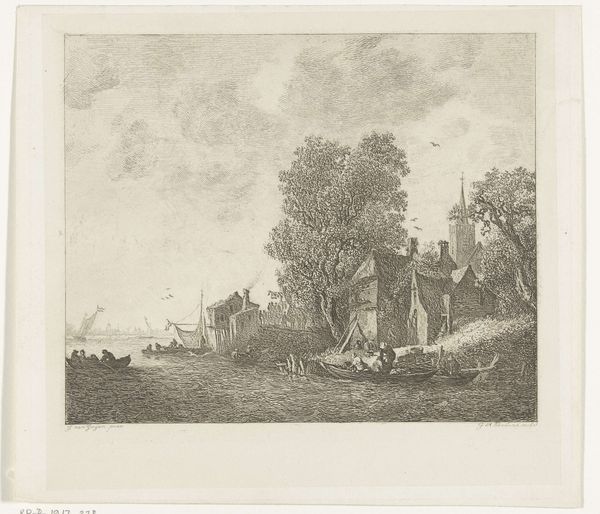
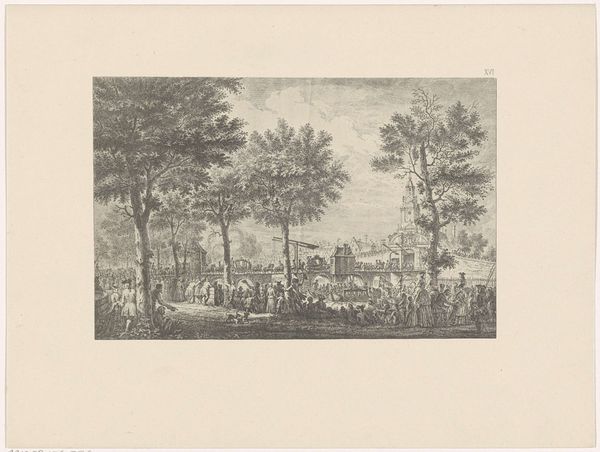
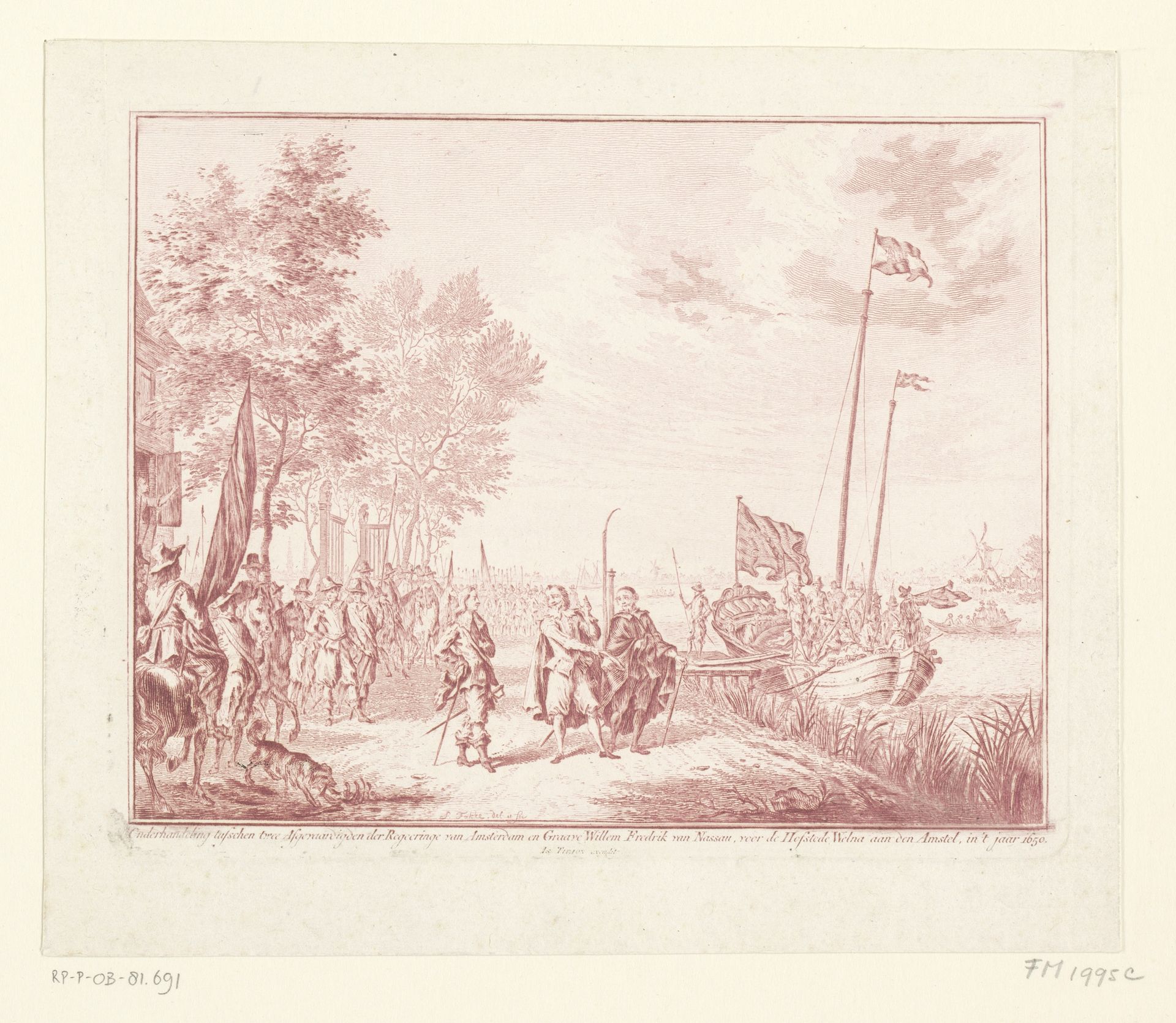
Simon Fokke created this print, "Onderhandeling tussen afgevaardigden van Amsterdam en graaf Willem Frederik bij Hofstede Welna aan de Amstel, 1650," using etching. The artwork is a masterclass in composition, deftly dividing the scene into distinct yet interconnected segments. On the left, a procession of figures advances, while on the right, boats brimming with people dot the river. This division creates a dynamic interplay between land and water, movement and stasis. The figures in the foreground establish a focal point, with their gestures and interactions inviting us to explore deeper into the narrative unfolding across the landscape. Fokke’s use of line is particularly striking; delicate strokes create texture and depth, defining forms with precision. These visual components and cultural codes invite us to interpret its representations of power, negotiation, and social dynamics. Through its formal qualities, this print encourages ongoing interpretation, reflecting the complexities of its historical moment and its lasting impact on our understanding of cultural and philosophical discourse.
Onderhandeling tussen afgevaardigden van Amsterdam en graaf Willem Frederik bij Hofstede Welna aan de Amstel, 1650
1747 - 1759

Simon Fokke
1712 - 1784Location
RijksmuseumArtwork details
- Medium
- print, etching, engraving
- Dimensions
- height 171 mm, width 205 mm
- Location
- Rijksmuseum
- Copyright
- Rijks Museum: Open Domain
Tags
Comments
Share your thoughts
About this artwork
Simon Fokke created this print, "Onderhandeling tussen afgevaardigden van Amsterdam en graaf Willem Frederik bij Hofstede Welna aan de Amstel, 1650," using etching. The artwork is a masterclass in composition, deftly dividing the scene into distinct yet interconnected segments. On the left, a procession of figures advances, while on the right, boats brimming with people dot the river. This division creates a dynamic interplay between land and water, movement and stasis. The figures in the foreground establish a focal point, with their gestures and interactions inviting us to explore deeper into the narrative unfolding across the landscape. Fokke’s use of line is particularly striking; delicate strokes create texture and depth, defining forms with precision. These visual components and cultural codes invite us to interpret its representations of power, negotiation, and social dynamics. Through its formal qualities, this print encourages ongoing interpretation, reflecting the complexities of its historical moment and its lasting impact on our understanding of cultural and philosophical discourse.
Comments
Share your thoughts