silver, metal, sculpture
#
silver
#
baroque
#
metal
#
sculpture
#
ceramic
#
decorative-art
Dimensions: height 20.5 cm, diameter 12 cm
Copyright: Rijks Museum: Open Domain
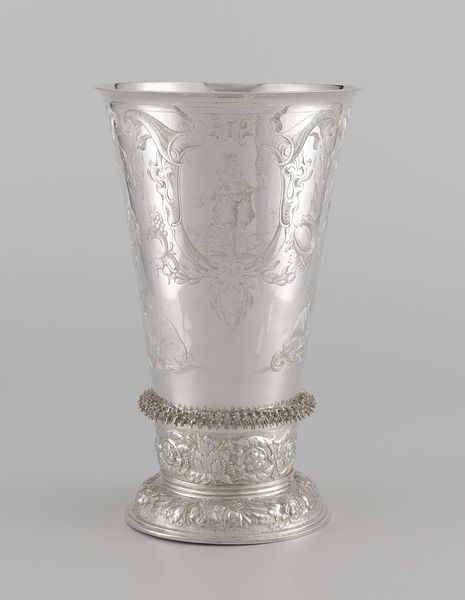
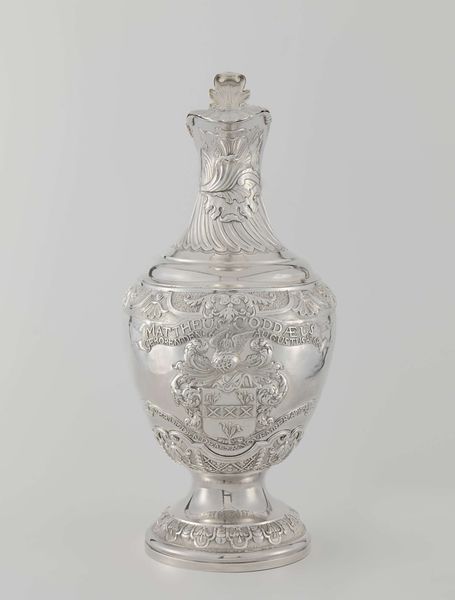
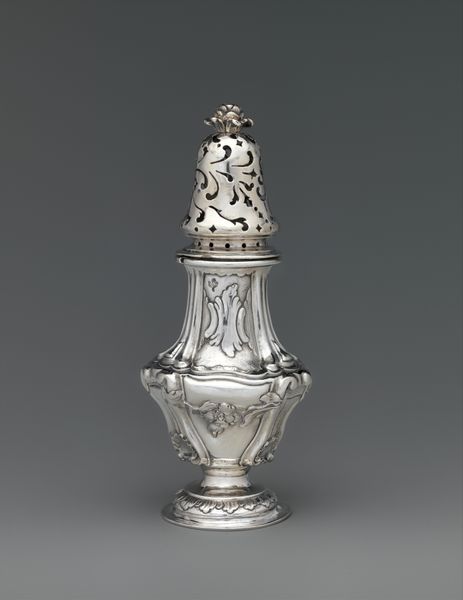
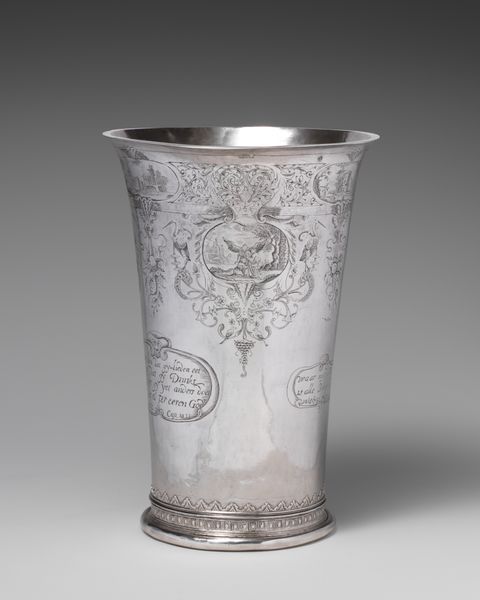
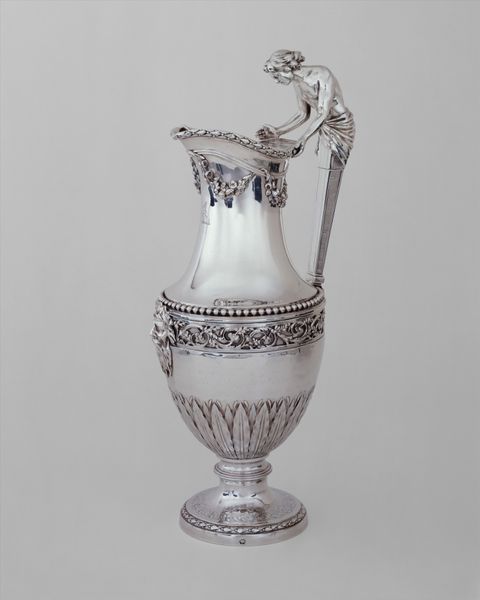
Curator: Here we have a communion set created in 1736 by Dirk Wor. Predominantly crafted from silver, it's an exceptional example of Baroque decorative art. What strikes you first about this piece? Editor: The sheer intricacy is astounding. Every surface seems to be meticulously embellished. The light catches all those curves and flourishes; it creates a lively visual rhythm. There’s definitely a sense of opulence. Curator: That ornamentation speaks to its original context, doesn't it? This wasn’t just a vessel, but a statement of wealth and piety. Silver, as a material, carried significant value, reflecting the patron's status. It signals more than just devotional utility. Consider the labor involved, the artisan’s skill, and the resources necessary to realize such a piece in the 18th century. Editor: Absolutely, and the craftsmanship elevates the material. Look at how Wor shapes the silver, transforming it from a simple metal into an elaborate expression of power, faith, and artistry. The form itself is interesting – that widening curve is typical of Baroque design. It invites the eye upward to a culminating moment. The use of space is balanced by areas with elaborate surface embellishment. Curator: The societal function of objects like these fascinates me. It would have played a crucial role in community rituals. Religious occasions often were heavily impacted by socio-economics. The very act of crafting this communion set represented a financial and cultural commitment within the community. Editor: And we see that commitment expressed through this sophisticated interplay of light, shadow, form, and detailed sculptural elements, all coalescing into a unified visual whole. It’s far more than its simple utility; it embodies aspiration. Curator: Exactly. This piece reflects how intertwined art, craft, labor, and belief were in the 18th century. A singular artifact brimming with so much contextual data. Editor: A harmonious balance, then, between devotion and visual expression, forever etched in silver.
Comments

rijksmuseum over 2 years ago
⋮
Central to the Protestant celebration of the Holy Communion is the remembrance of the Last Supper, when Christ and his disciples gathered for the last time. Christ asked that his suffering and death be commemorated with a communal meal. This is why wine is poured into cups and bread is placed on plates during religious services. This communion set from Dordrecht ranks among the most richly decorated altar plate.


Join the conversation
Join millions of artists and users on Artera today and experience the ultimate creative platform.
 Collect
More like this