1502 - 1532
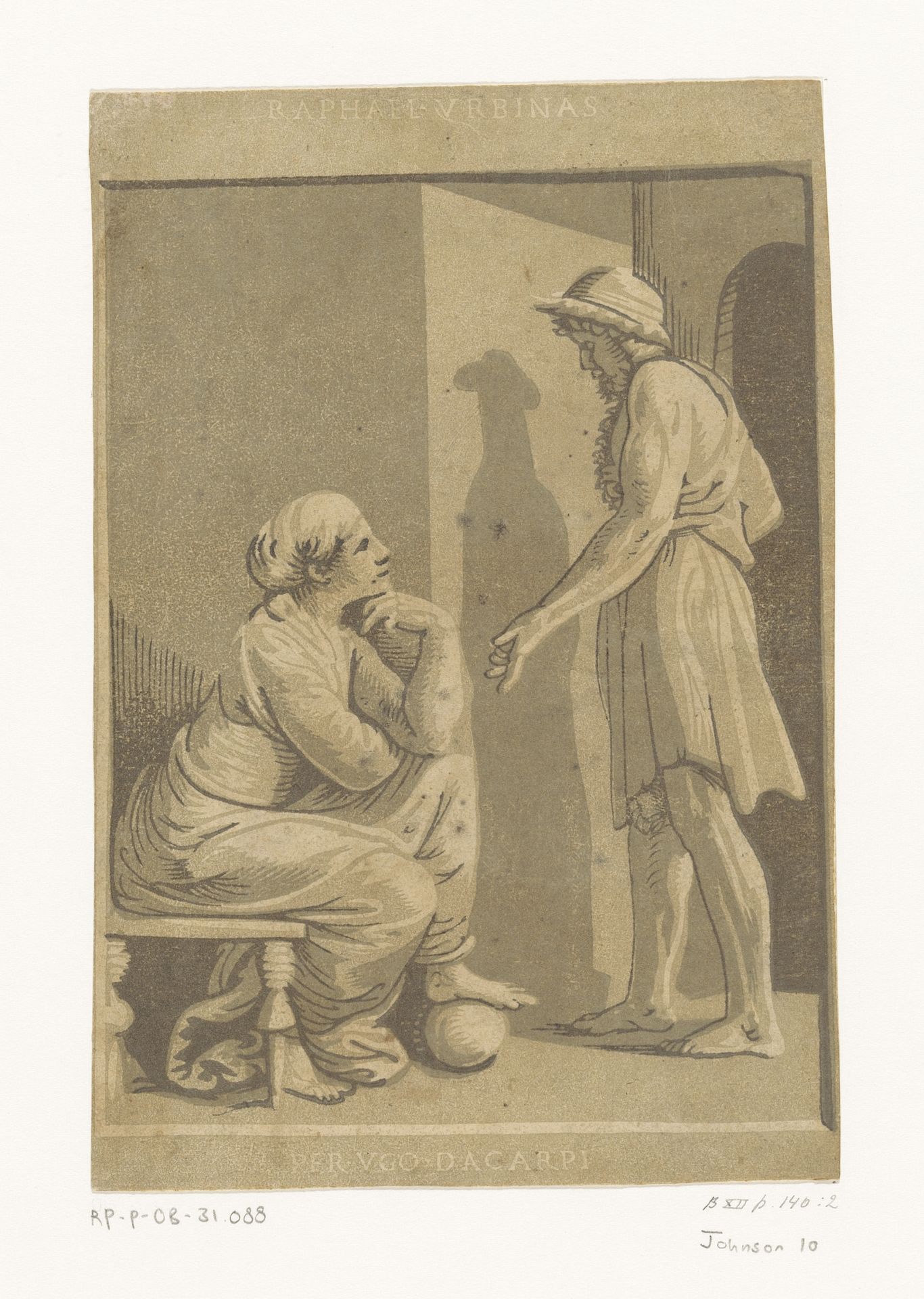
Staande man en zittende vrouw

Listen to curator's interpretation
Curatorial notes
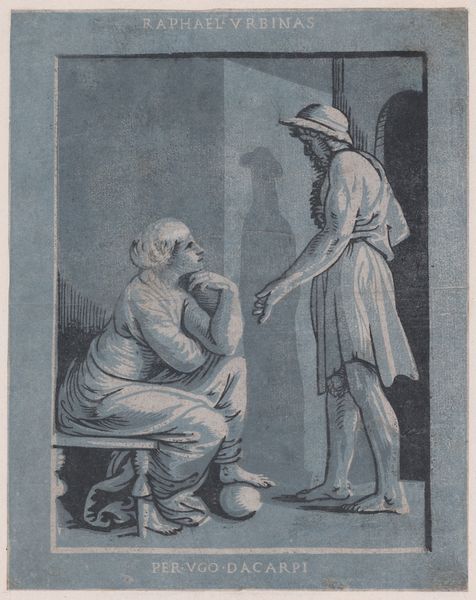
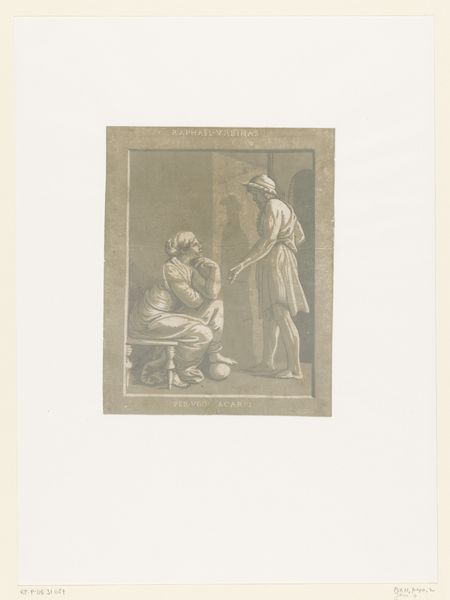
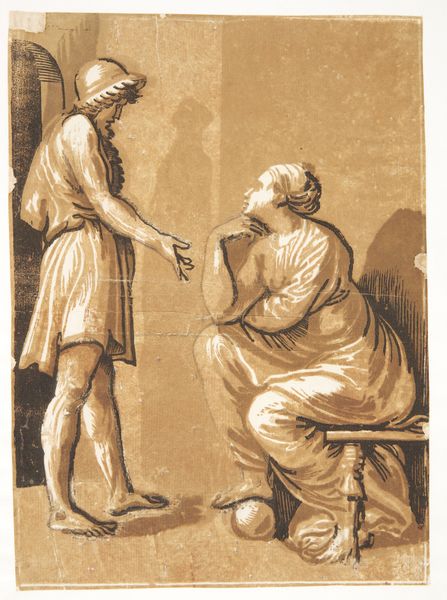
Ugo da Carpi created this chiaroscuro woodcut of a standing man and sitting woman sometime between 1515 and 1520. The pair is set within a domestic interior, but their interaction is mysterious. Is it a scene of contemplation, instruction, or perhaps even confrontation? Notice the striking similarity between the figure’s pose and the pose found in depictions of ancient philosophers. We see the hand-to-cheek gesture, echoing thoughtfulness and contemplation that harkens back to classical antiquity. This gesture is not static, but alive. In different contexts, from ancient sculptures to Renaissance paintings, the gesture speaks to an enduring human quest for knowledge and understanding. Consider, too, the shadow looming on the wall. Shadows often suggest hidden aspects of ourselves. Here, the shadow hints at underlying tensions and unspoken narratives, and the artist invites us to reflect on the psychological undercurrents that shape human interactions. The past is never truly gone; it lives on in our gestures, our symbols, and our subconscious minds.