About this artwork
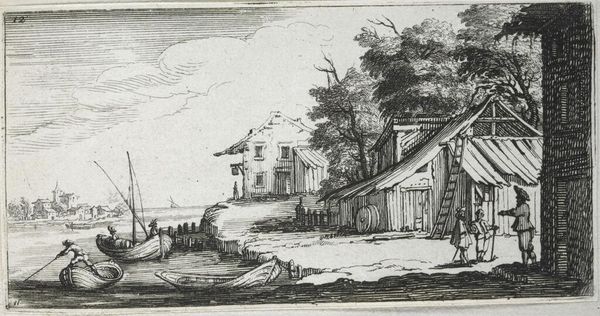
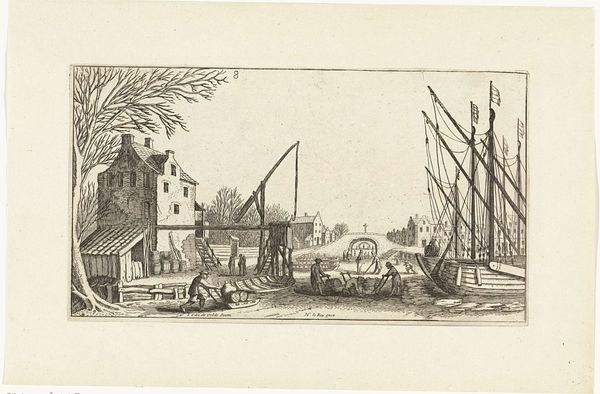
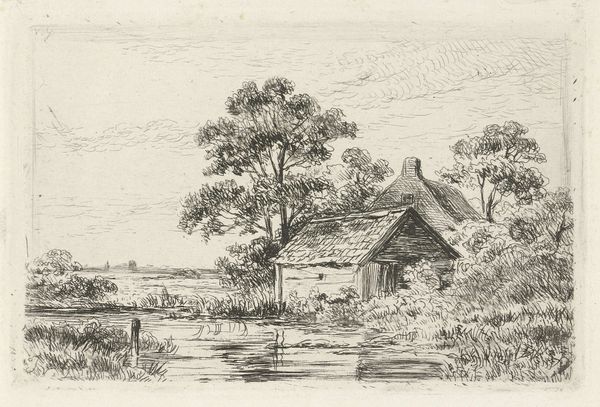
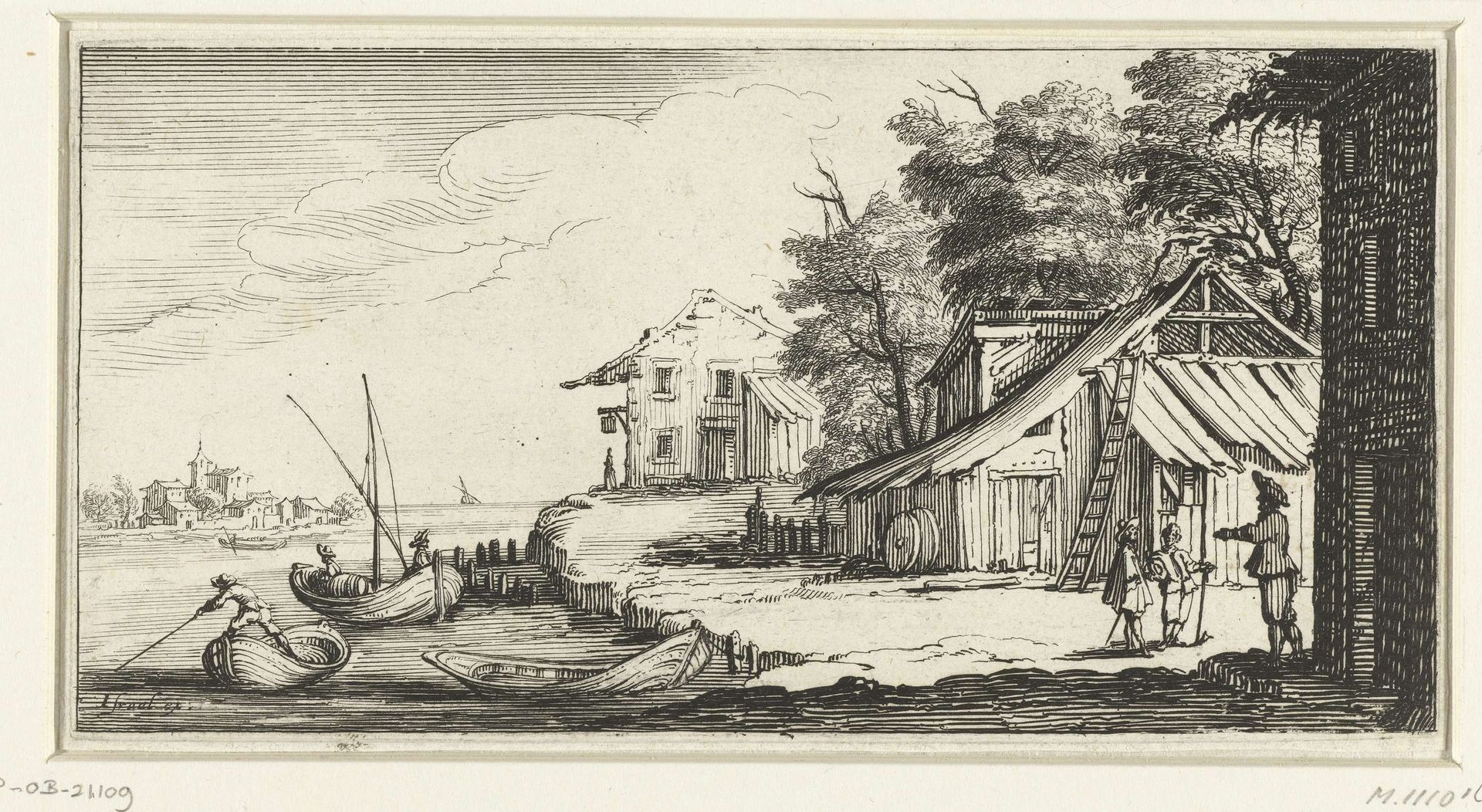
François Collignon created this small etching of a riverscape with houses in the 17th century. The composition divides into distinct zones, from the bustling riverbank to the serene distant horizon. Collignon uses line and form to guide the viewer's eye, beginning with the active foreground where boats and figures are sharply defined, leading back to the softer shapes of the buildings and trees. The buildings have a very horizontal emphasis, which is reinforced by the straight river. Note how the texture is created through varied densities of etched lines, giving depth and contrast to the scene. The dense, dark lines of the building on the right serve to frame the composition and act as a focal point. The etching’s structure, with its contrasting textures and carefully arranged elements, reflects the influence of classical landscape painting, yet the dynamic arrangement also hints at a move towards a more modern, expressive handling of space and form. This piece is less about a literal depiction and more about an exercise in shaping our perception through carefully constructed visual cues.
Landschap met huizen aan een rivier
1630 - 1660

François Collignon
1605 - 1687Location
RijksmuseumArtwork details
- Medium
- print, etching
- Dimensions
- height 81 mm, width 160 mm
- Location
- Rijksmuseum
- Copyright
- Rijks Museum: Open Domain
Tags
Comments
Share your thoughts
About this artwork
François Collignon created this small etching of a riverscape with houses in the 17th century. The composition divides into distinct zones, from the bustling riverbank to the serene distant horizon. Collignon uses line and form to guide the viewer's eye, beginning with the active foreground where boats and figures are sharply defined, leading back to the softer shapes of the buildings and trees. The buildings have a very horizontal emphasis, which is reinforced by the straight river. Note how the texture is created through varied densities of etched lines, giving depth and contrast to the scene. The dense, dark lines of the building on the right serve to frame the composition and act as a focal point. The etching’s structure, with its contrasting textures and carefully arranged elements, reflects the influence of classical landscape painting, yet the dynamic arrangement also hints at a move towards a more modern, expressive handling of space and form. This piece is less about a literal depiction and more about an exercise in shaping our perception through carefully constructed visual cues.
Comments
Share your thoughts