photography, gelatin-silver-print
#
portrait
#
contemporary
#
black and white photography
#
photography
#
black and white
#
gelatin-silver-print
#
monochrome photography
#
genre-painting
#
monochrome
#
monochrome
Dimensions: image: 31.8 × 45.4 cm (12 1/2 × 17 7/8 in.) sheet: 40.6 × 50.5 cm (16 × 19 7/8 in.)
Copyright: National Gallery of Art: CC0 1.0
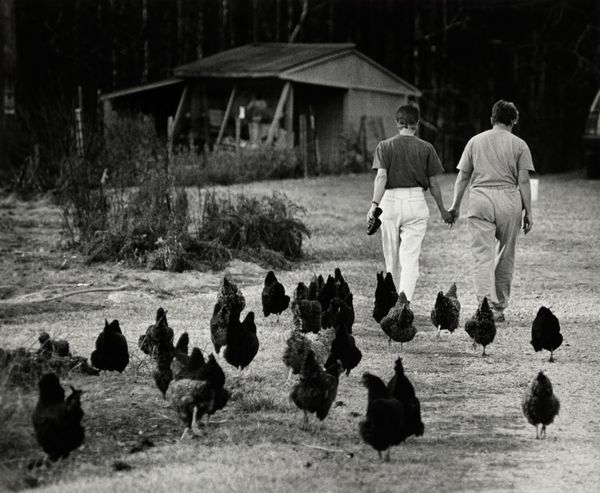
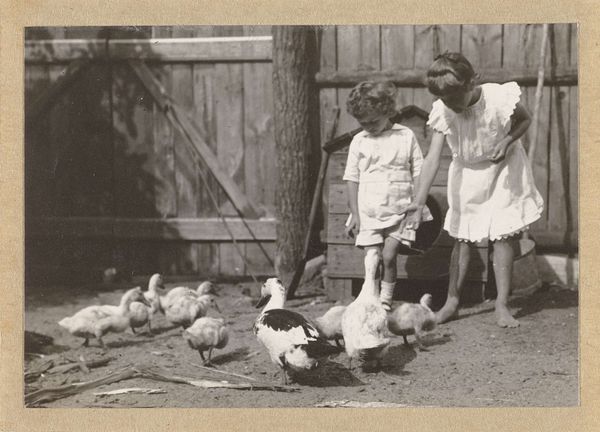
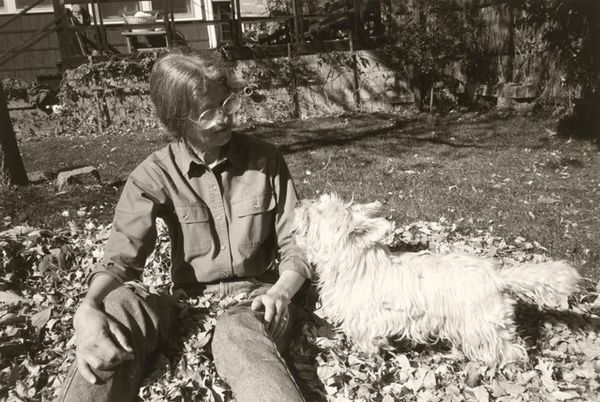
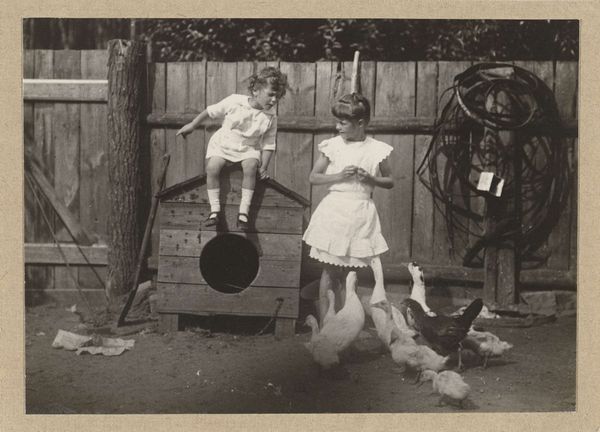
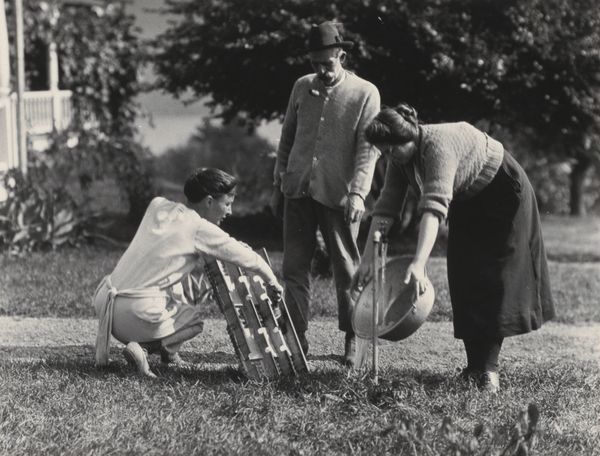
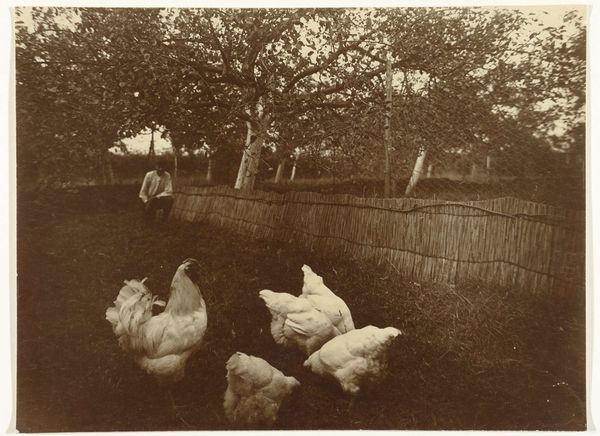
Editor: Nancy Andrews created this gelatin-silver print titled "Jean Mills and Carol Eichelberger, no. 2" in 1993. It's a black and white photograph of two people squatting in what looks like a yard, surrounded by chickens. It feels like a very intimate glimpse into their lives. What do you see in this piece, from your perspective? Curator: Well, at first glance, it's easy to see this as a simple scene, almost a genre painting from an earlier era. But I think Andrews is doing something more complex. Consider the period: the early 90s. What sociopolitical forces were at play concerning the representation of women, and in particular, queer women, in public imagery? Editor: Hmm, I guess representations were often limited or stereotyped, right? So, how does this photo challenge that? Curator: Precisely! Andrews, by choosing such an everyday, almost mundane scene, resists sensationalizing or exoticizing her subjects. The act of photographing women engaged with their environment, particularly one historically linked to domesticity and sustenance, reframes their visibility outside traditional heterosexual norms. Editor: So the public role of art here is about creating visibility for marginalized experiences? Curator: Absolutely. And it also subtly questions our assumptions. Why are we drawn to this image? What expectations do we bring to it, and how does Andrews' work disrupt those expectations by presenting a slice of life, devoid of spectacle? Consider also, who gets to be documented and whose stories are considered worthy of representation in museum spaces? Editor: I hadn't thought about it that way. I was just focusing on the surface, the chickens, the setting... Curator: Exactly! And that initial reaction is valid, but thinking about the institutional context gives it more meaning, don't you agree? Editor: Yes, totally. It’s more than just a picture of people with chickens, it’s a political act in its own way. I’ll never look at photography the same way again. Curator: Wonderful! Analyzing these works helps you examine how images function in constructing societal norms. It changes your point of view and adds another element for interpreting other artworks.
Comments
No comments
Be the first to comment and join the conversation on the ultimate creative platform.
 Collect
 React
React Comment
More like this