About this artwork
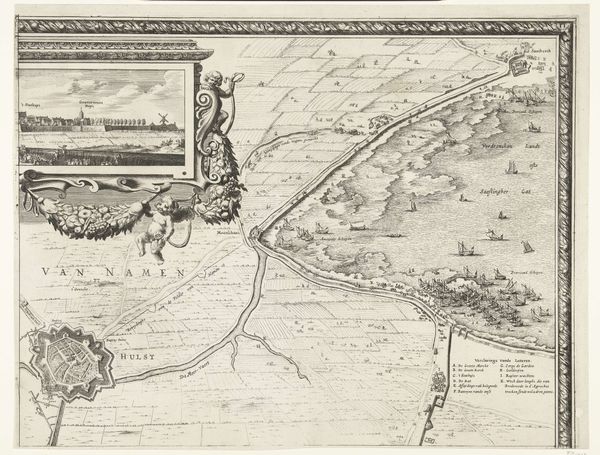
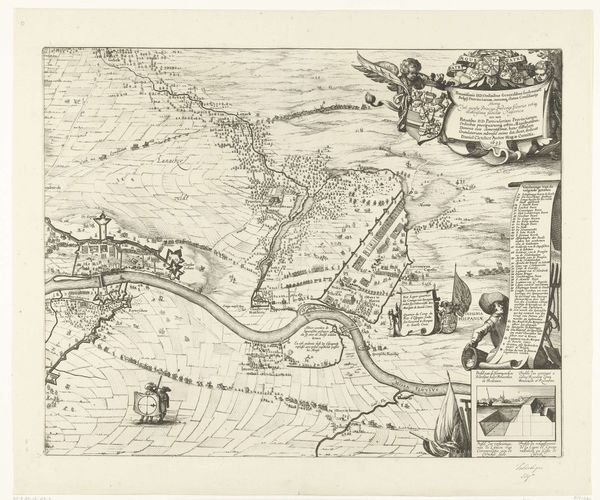
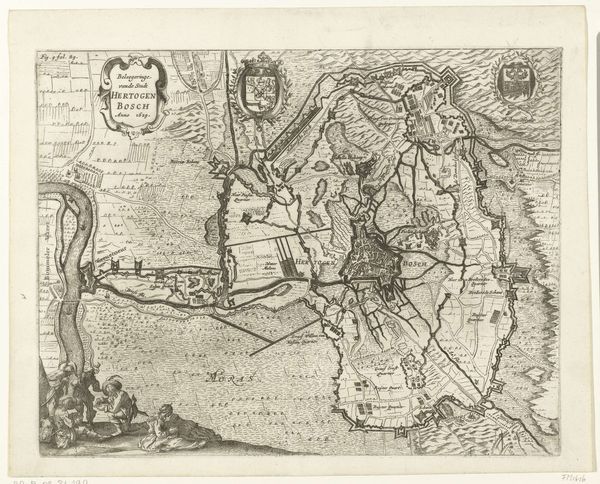
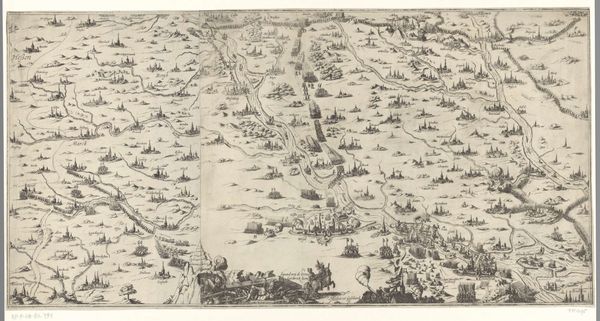
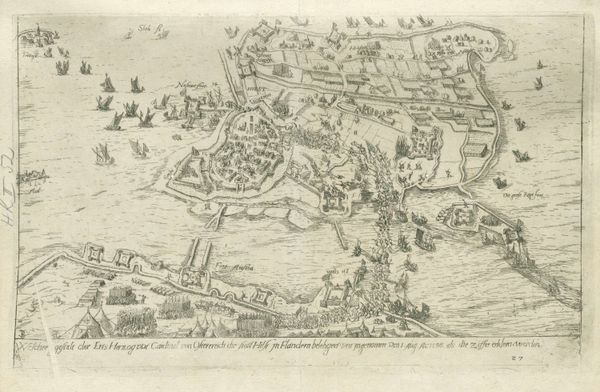
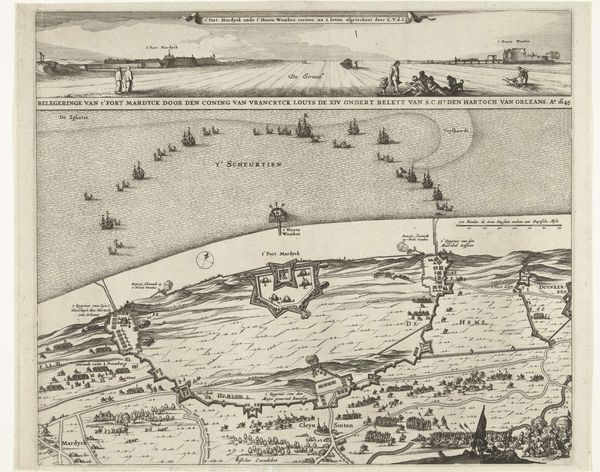
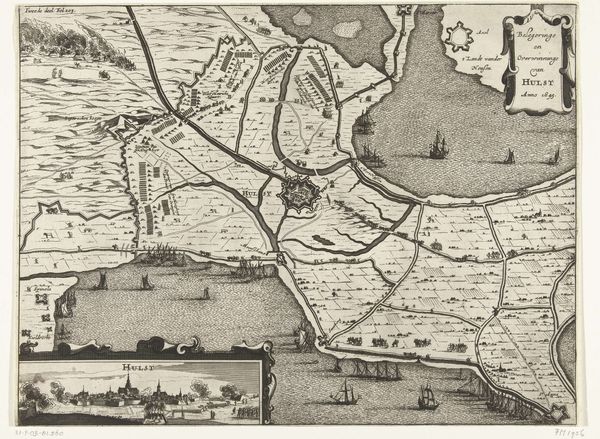
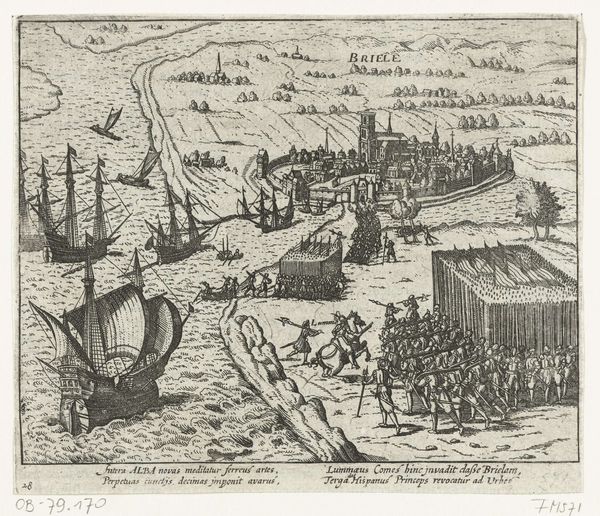
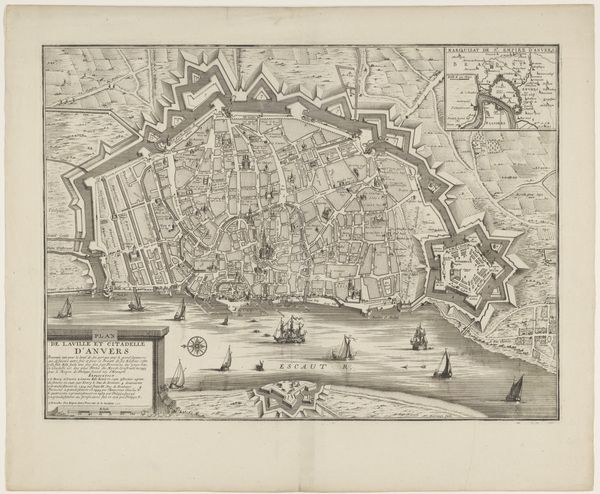
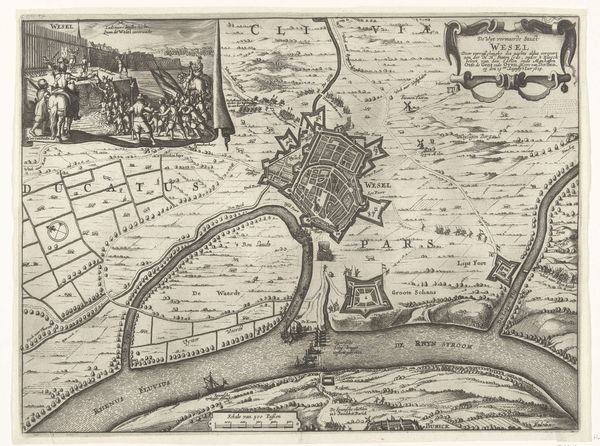
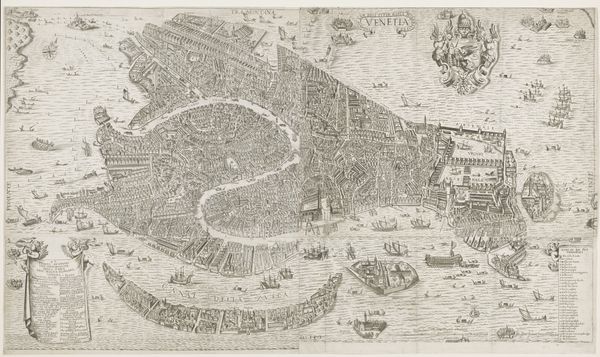
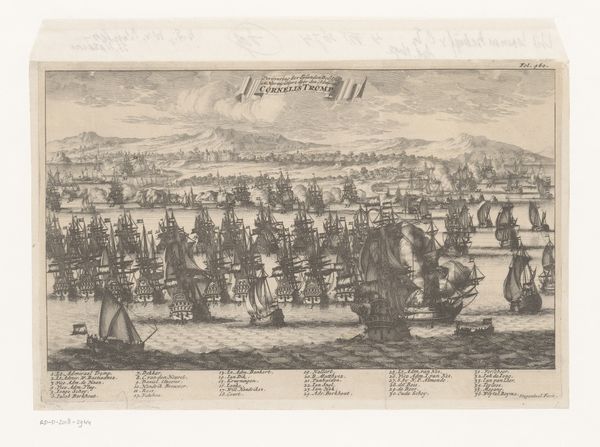
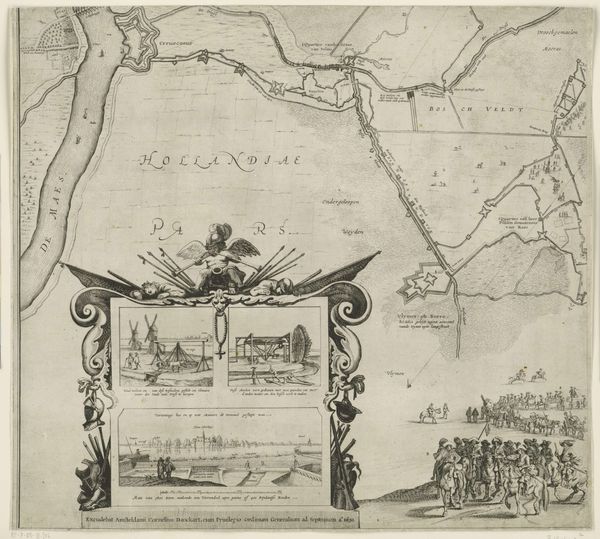
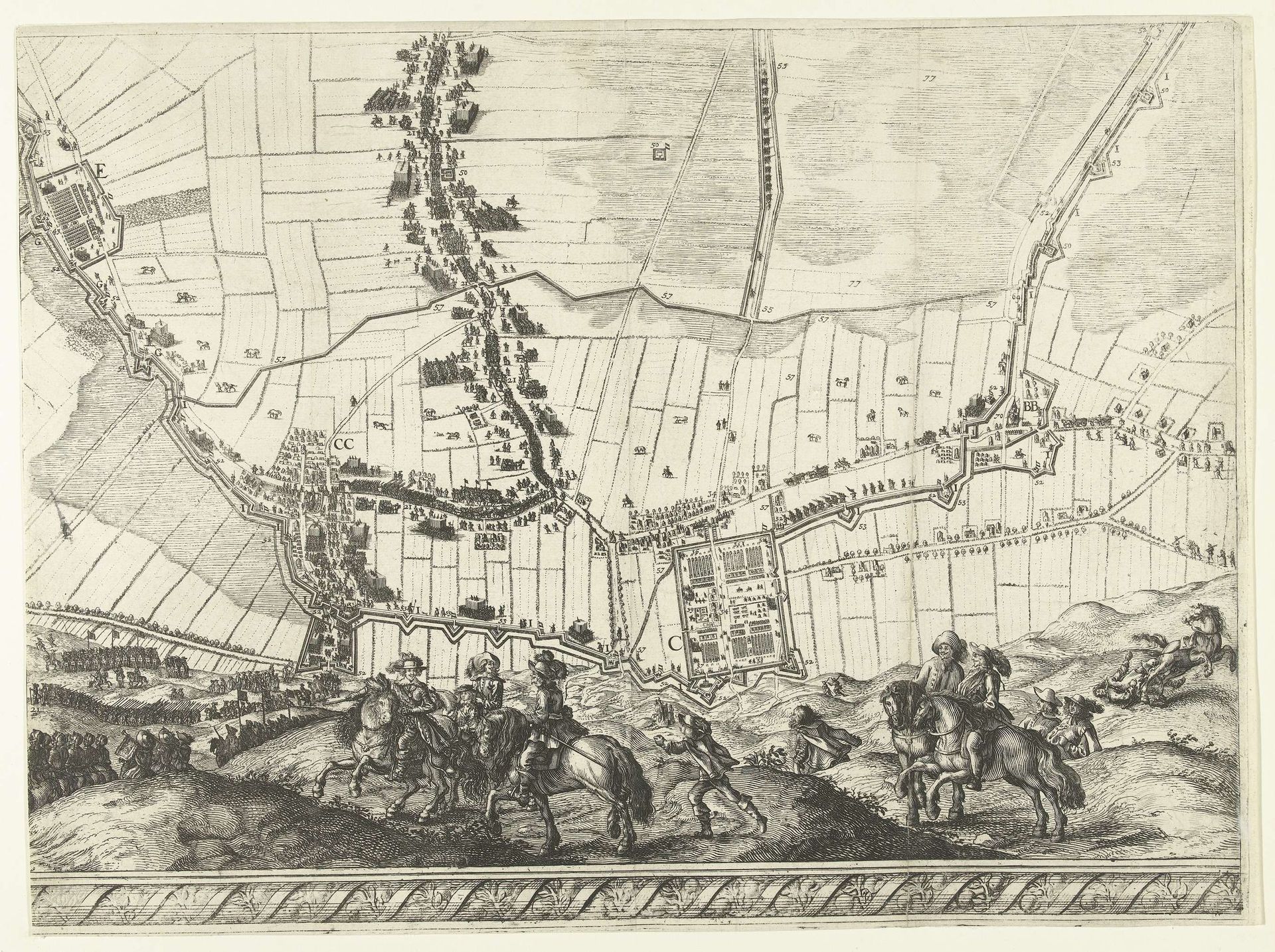
Balthasar Florisz. van Berckenrode's etching from 1637 meticulously maps the siege of Breda, presenting a bird's-eye view dominated by fortifications and orderly landscapes. These symbols of military order and civic planning reflect the Dutch Republic's aspirations to control and rationality. This careful arrangement of space, reminiscent of Roman military camps, speaks to a deeply rooted human desire to impose order on chaos. Think of the Roman grid layouts, or even earlier, the structured city plans of ancient Mesopotamia. Each iteration reflects a culture's attempt to define and defend its territory. Here, the siege is not just a military event; it's a theater of power, where the landscape itself becomes a tool of domination. The image resonates with a primal human impulse: the will to control, to protect, and to expand. This etching is more than a historical document; it is a mirror reflecting humanity's enduring ambitions and anxieties.
Beleg van Breda (blad middenonder), 1637
1637

Balthasar Florisz. van Berckenrode
1592 - 1645Location
RijksmuseumArtwork details
- Medium
- print, engraving
- Dimensions
- height 400 mm, width 540 mm
- Location
- Rijksmuseum
- Copyright
- Rijks Museum: Open Domain
Tags
Comments
Share your thoughts
About this artwork
Balthasar Florisz. van Berckenrode's etching from 1637 meticulously maps the siege of Breda, presenting a bird's-eye view dominated by fortifications and orderly landscapes. These symbols of military order and civic planning reflect the Dutch Republic's aspirations to control and rationality. This careful arrangement of space, reminiscent of Roman military camps, speaks to a deeply rooted human desire to impose order on chaos. Think of the Roman grid layouts, or even earlier, the structured city plans of ancient Mesopotamia. Each iteration reflects a culture's attempt to define and defend its territory. Here, the siege is not just a military event; it's a theater of power, where the landscape itself becomes a tool of domination. The image resonates with a primal human impulse: the will to control, to protect, and to expand. This etching is more than a historical document; it is a mirror reflecting humanity's enduring ambitions and anxieties.
Comments
Share your thoughts