
Curatorial notes
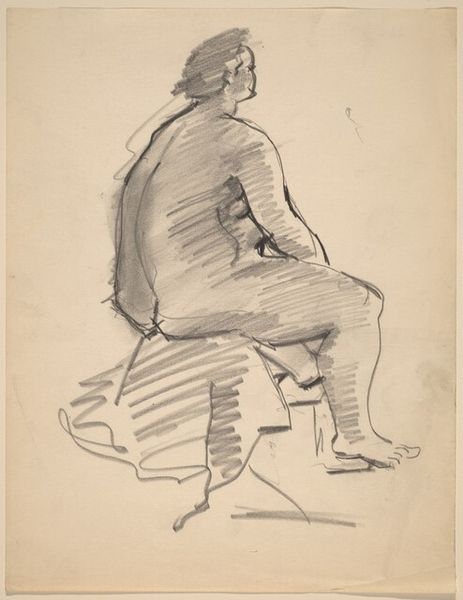
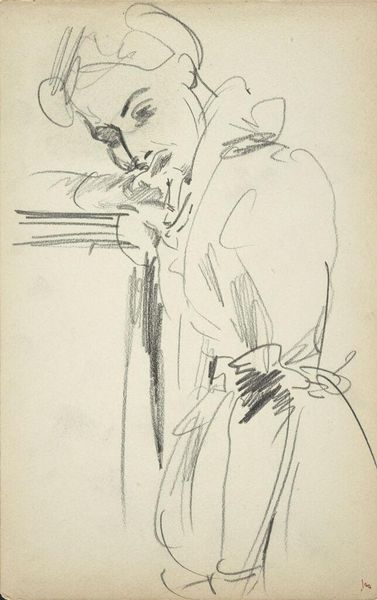
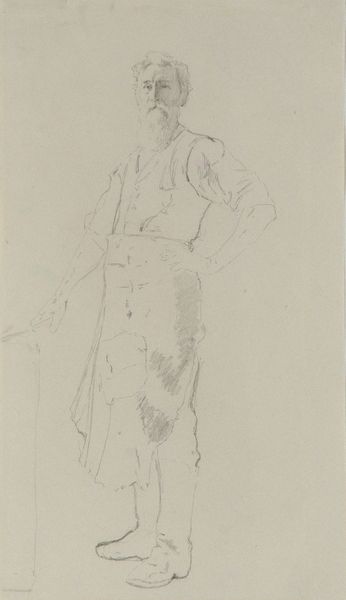
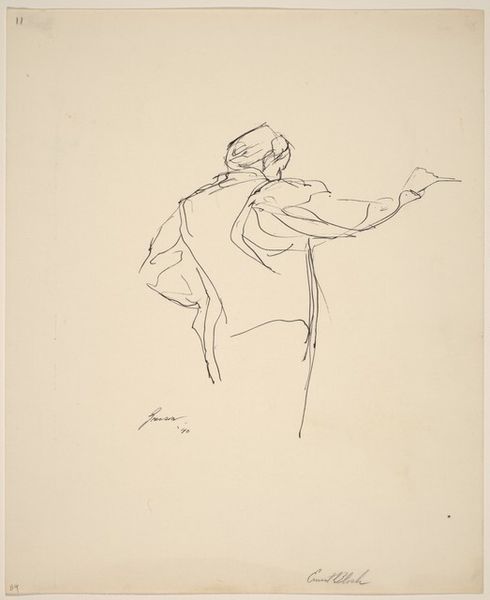
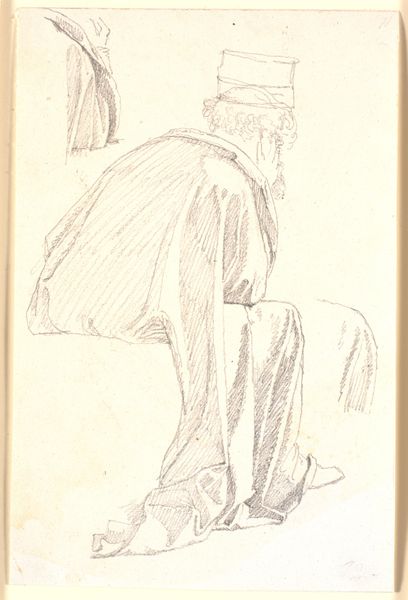
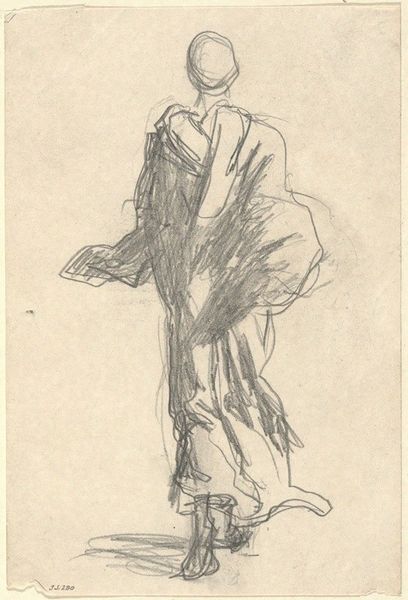
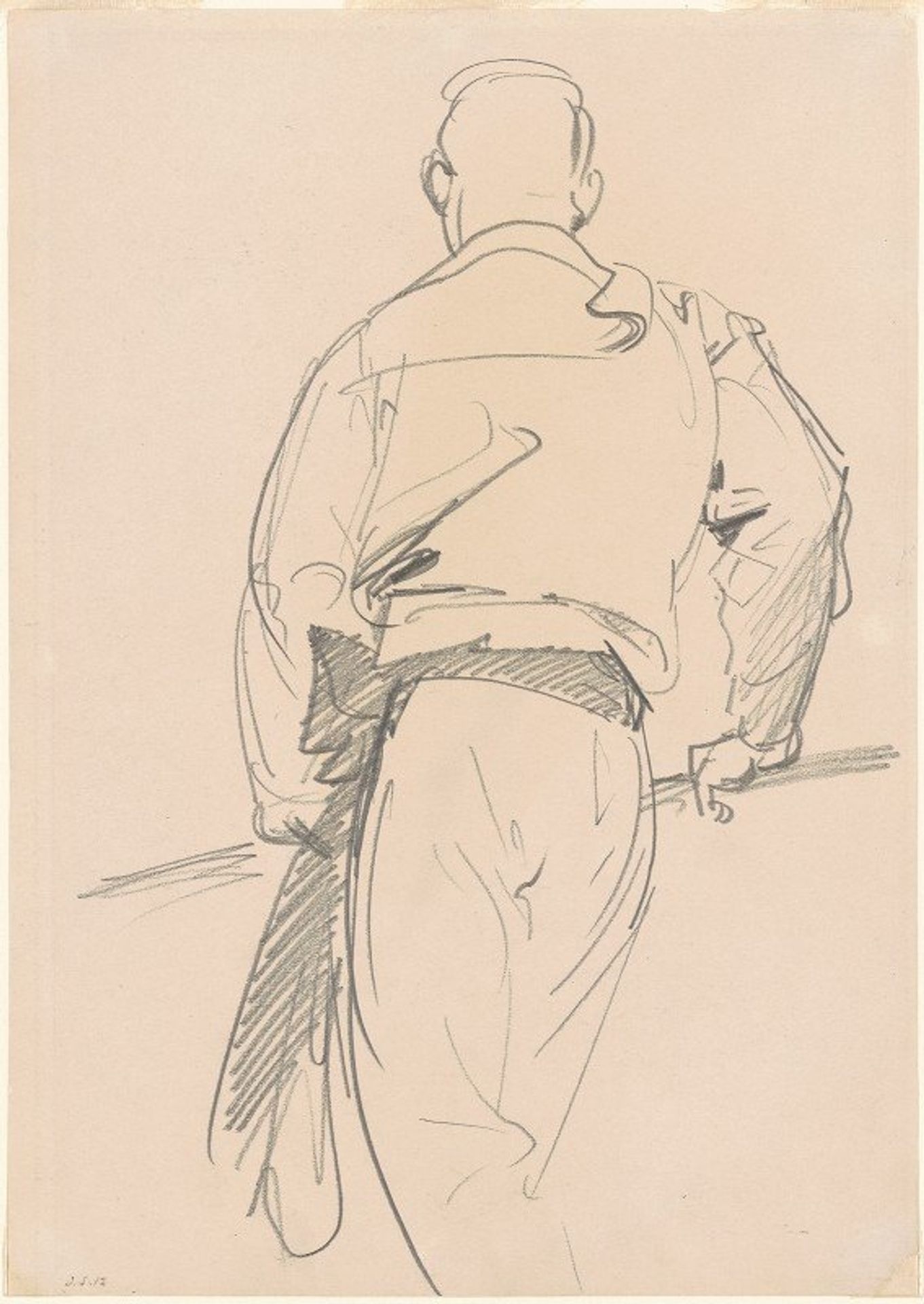
Curator: Ah, this pencil drawing feels so wonderfully fleeting. It’s titled "Gondolier, Venice," created by John Singer Sargent around 1912. Editor: It's interesting how Sargent captures this figure from behind, offering us, the viewers, a rather objective viewpoint. Immediately, the light seems gentle, almost melancholic, hinting at something deeper than just a portrait. Curator: Exactly! I see it as Sargent attempting to capture a soul, even with just a quick sketch. There’s a certain… empathy, perhaps? Venice itself was changing rapidly, and maybe he felt like this old way of life was fading. That quiet resignation in the gondolier's posture is heartbreakingly beautiful. Editor: Absolutely. Looking through the lens of critical race theory, the image prompts questions about labor, class, and the commodification of Venetian culture for tourism. The gondolier becomes a symbol, not just of Venice, but of a particular type of work and its place within the broader economic and social structures. Who is the gondolier, really, beyond this aesthetic scene? Curator: Well, beyond the symbol, I think Sargent really saw something special in him, this everyday individual, and felt the impulse to memorialize the moment. You know, art isn’t always grand statements—sometimes, it's a quiet hello. Editor: It's true, and there’s certainly a palpable intimacy achieved by the use of simple pencil strokes. I wonder, though, whether we risk romanticizing that intimacy. What would a truly equitable portrait of Venice look like, one that takes into account the full range of human experience? Curator: Ah, now you're asking the big questions! Maybe that's what Sargent hoped for when he decided to leave the subject with its back turned. A symbol for viewers to project onto. In either case, this quick sketch makes one wonder what else might have captured Sargent's creative gaze during that visit to Venice. Editor: This drawing reminds us that every artistic gesture—every observation and every absence—carries social weight and prompts new inquiry, urging us to engage more thoughtfully with representation and its politics.