1867 - 1885
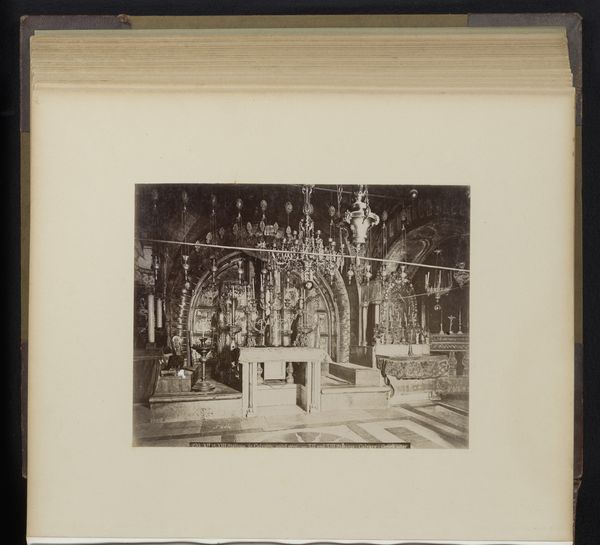
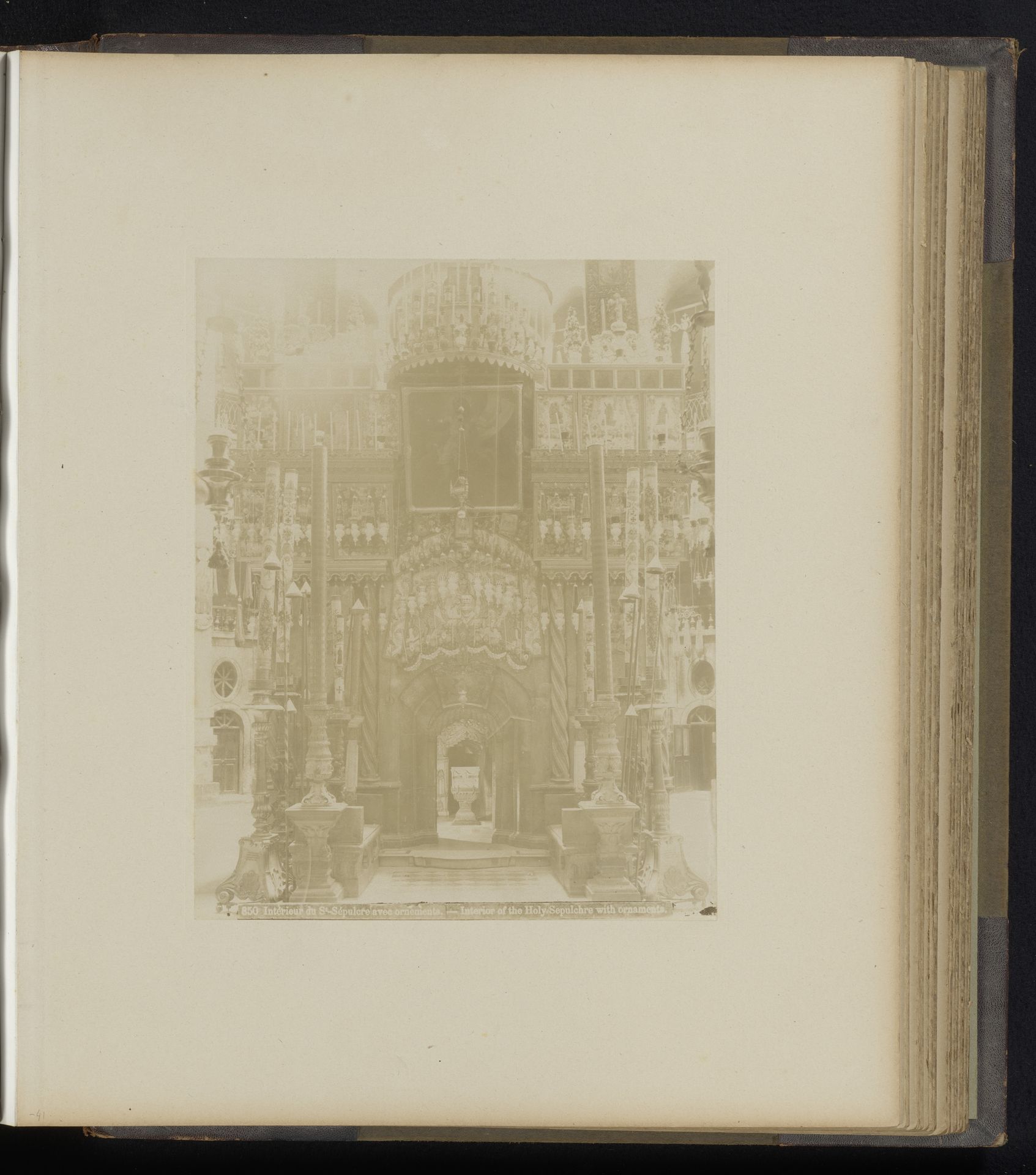
Interieur van de Heilig Grafkerk in Jeruzalem

Félix Bonfils
1831 - 1885Location
RijksmuseumListen to curator's interpretation
Curatorial notes
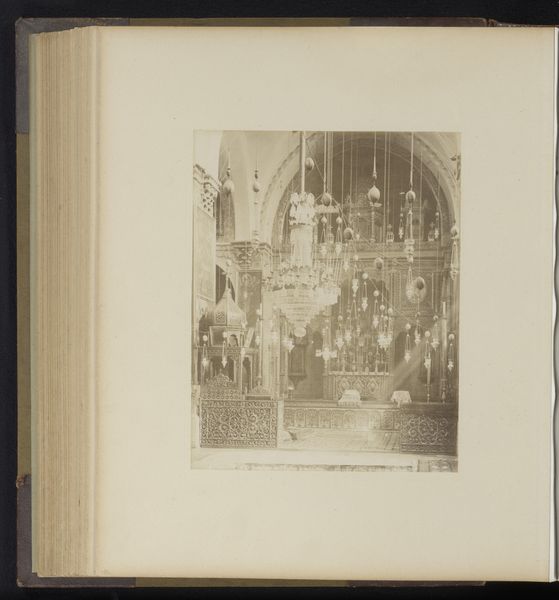
Curator: Before us is "Interior of the Church of the Holy Sepulchre in Jerusalem," an albumen print created between 1867 and 1885 by Félix Bonfils. Editor: The architectural details here feel almost oppressively ornate. It’s dizzying, yet undeniably powerful. The tonal range in the print is quite subtle; it lends the whole image an otherworldly feel. Curator: Indeed. Bonfils, along with other photographers of his time, catered to a growing European interest in the Holy Land. These images served not just as documentation, but also as powerful symbols of colonial presence and cultural fascination. Editor: Notice how Bonfils frames the central opening; he employs symmetry that leads the eye directly to that shadowy interior, almost like a stage set. This meticulous construction adds a dramatic and sacred element to the depiction. Curator: Absolutely. The Church of the Holy Sepulchre is incredibly significant—believed by many Christians to be the site of Jesus' crucifixion and resurrection. By capturing this interior, Bonfils wasn’t simply creating art; he was also producing a kind of relic. Editor: I’m captivated by the variations in textures—the smooth surfaces contrasted with the intricate carvings. Bonfils skillfully captures this diversity using light and shadow. This approach highlights the elaborate craftsmanship. Curator: Furthermore, the sale and distribution of these photographs allowed a broad audience to experience a space most could never visit. It fueled a visual culture centered around religious and historical tourism. Editor: The photograph offers a striking glimpse into another time; it's so compelling to analyze how the photographer carefully constructed the composition, utilizing elements of light and shadow. Curator: Reflecting on it, Bonfils gave access and simultaneously participated in shaping perceptions of a sacred place through the very act of representing it. Editor: It is an invitation to view not only an edifice of faith but to contemplate the mechanics behind our perception.