About this artwork
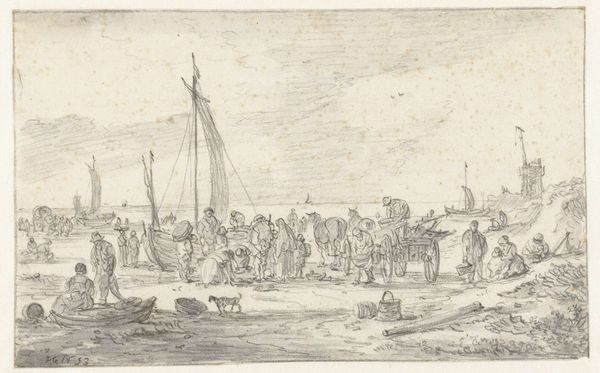
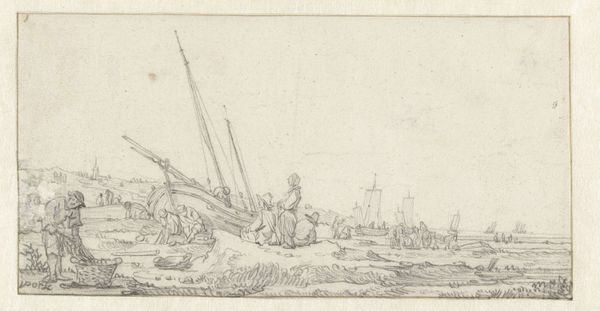
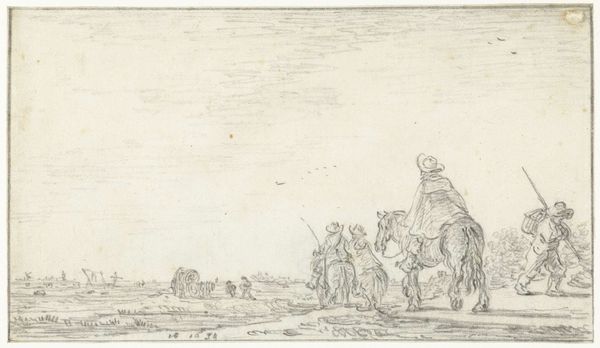
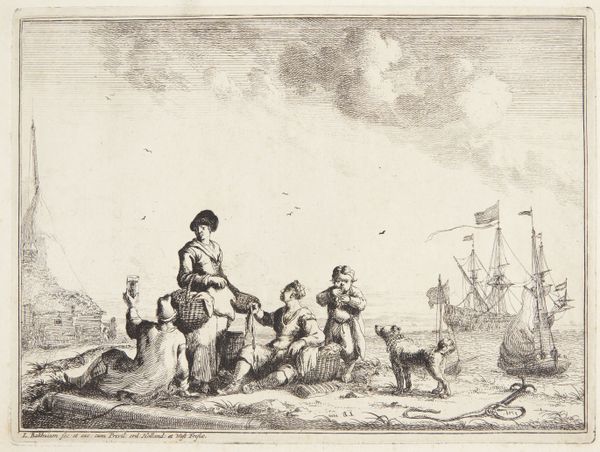
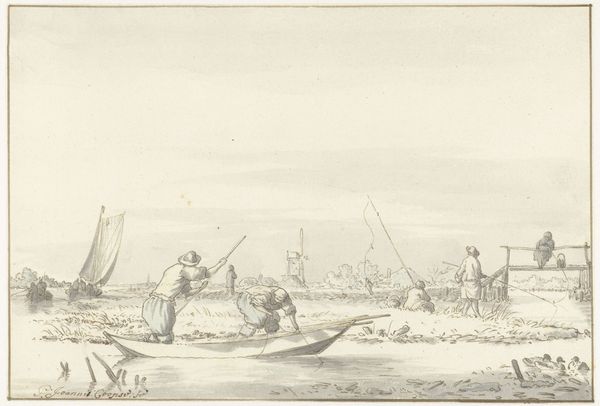
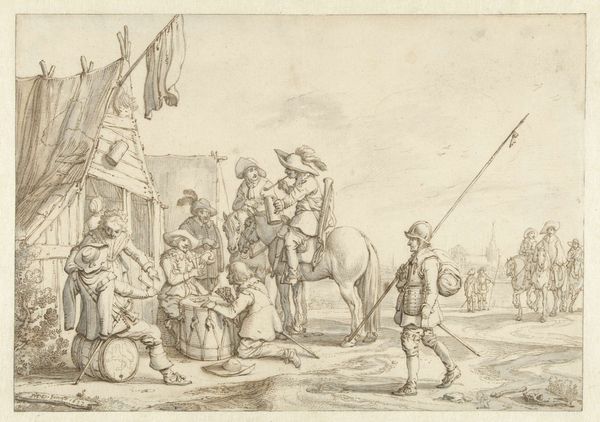
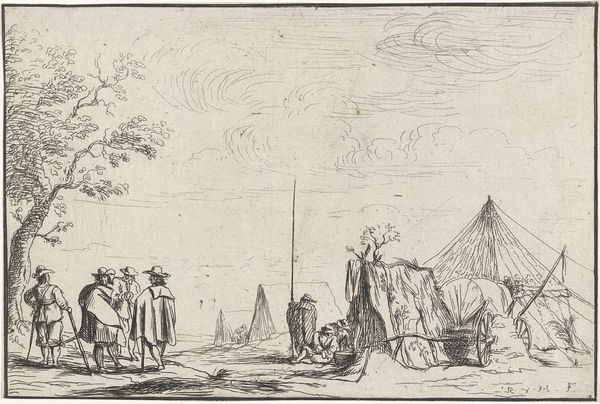
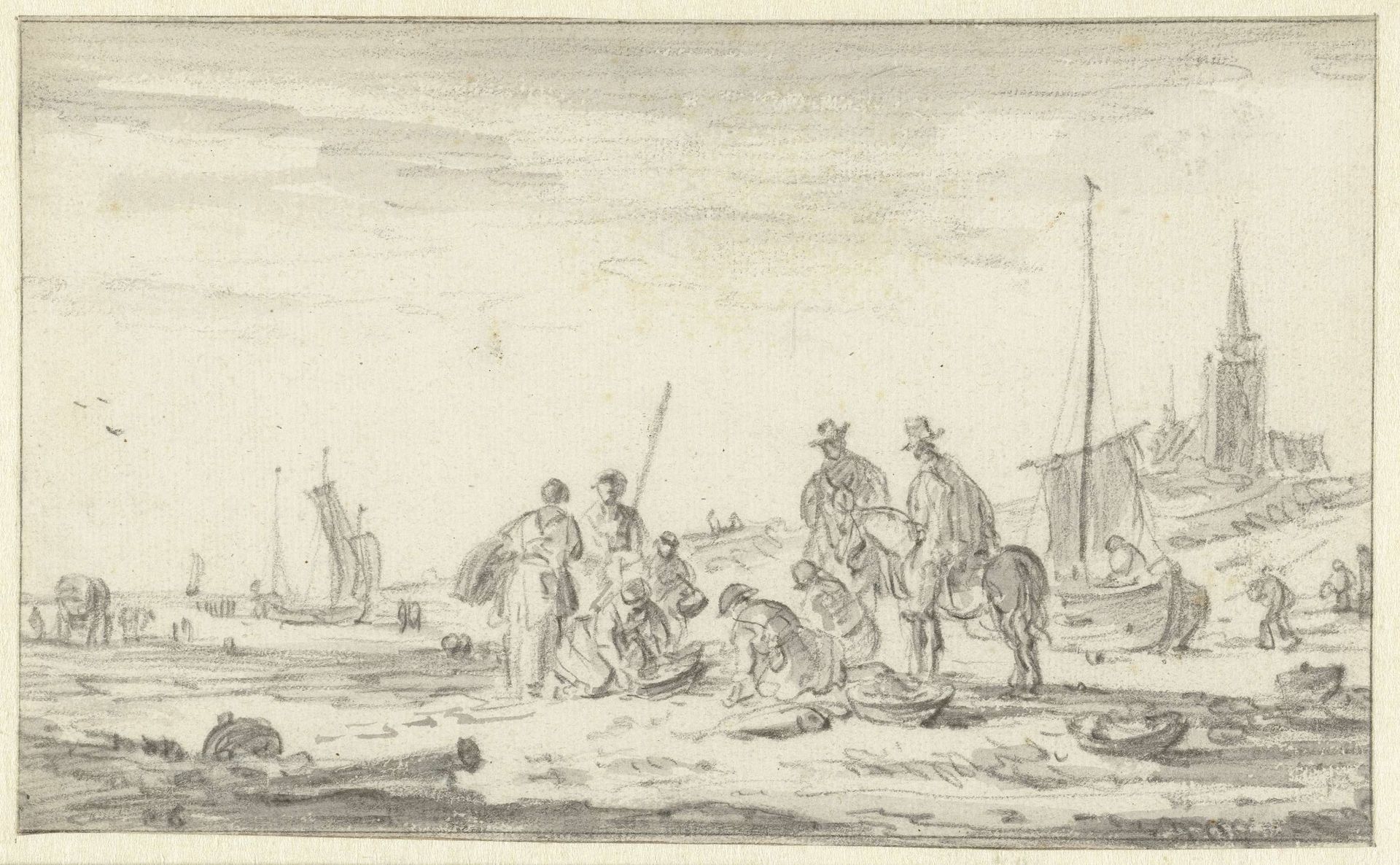
Jan van Goyen made this drawing of fishers and riders on the beach at Scheveningen in the Netherlands in the mid-17th century. It portrays a bustling coastal scene, capturing the daily life and social contrasts of the time. The drawing depicts a blend of social classes. Fisherfolk are sorting their catch, while mounted figures, possibly merchants or local dignitaries, observe the scene. Van Goyen's choice to include both groups hints at the economic and social hierarchy within Dutch society during its Golden Age. The church in the background underscores the importance of religion in daily life. The artwork provides us with insights into the maritime economy and social dynamics of the Dutch Golden Age. Further research into local Scheveningen history, the Dutch fishing industry, and class structures of the time could enrich our understanding. Art historians look at an artwork like this as a cultural artifact, reflecting the values and conditions of its time.
Vissers en ruiters op het strand van Scheveningen
1648 - 1652

Jan van Goyen
1596 - 1656Location
RijksmuseumArtwork details
- Medium
- drawing, pencil
- Dimensions
- height 112 mm, width 183 mm
- Location
- Rijksmuseum
- Copyright
- Rijks Museum: Open Domain
Tags
Comments
Share your thoughts
About this artwork
Jan van Goyen made this drawing of fishers and riders on the beach at Scheveningen in the Netherlands in the mid-17th century. It portrays a bustling coastal scene, capturing the daily life and social contrasts of the time. The drawing depicts a blend of social classes. Fisherfolk are sorting their catch, while mounted figures, possibly merchants or local dignitaries, observe the scene. Van Goyen's choice to include both groups hints at the economic and social hierarchy within Dutch society during its Golden Age. The church in the background underscores the importance of religion in daily life. The artwork provides us with insights into the maritime economy and social dynamics of the Dutch Golden Age. Further research into local Scheveningen history, the Dutch fishing industry, and class structures of the time could enrich our understanding. Art historians look at an artwork like this as a cultural artifact, reflecting the values and conditions of its time.
Comments
Share your thoughts