About this artwork
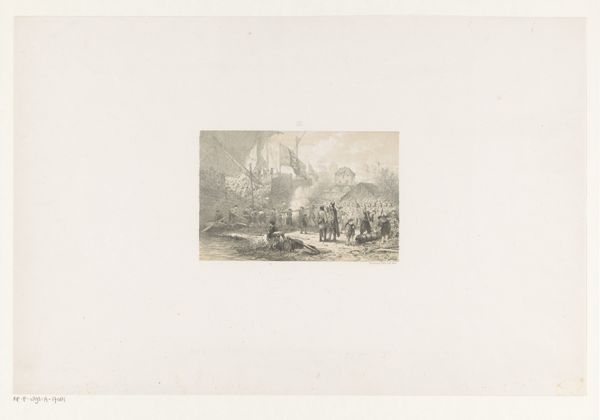
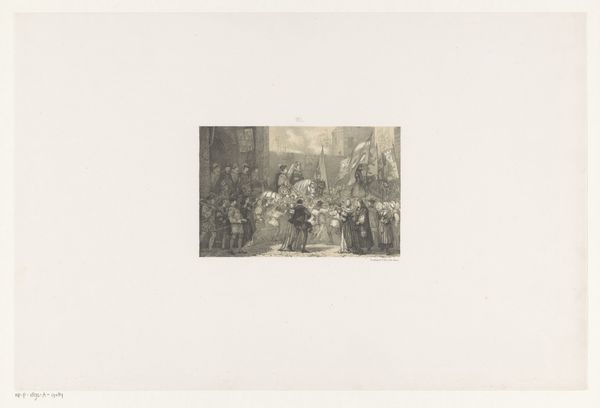
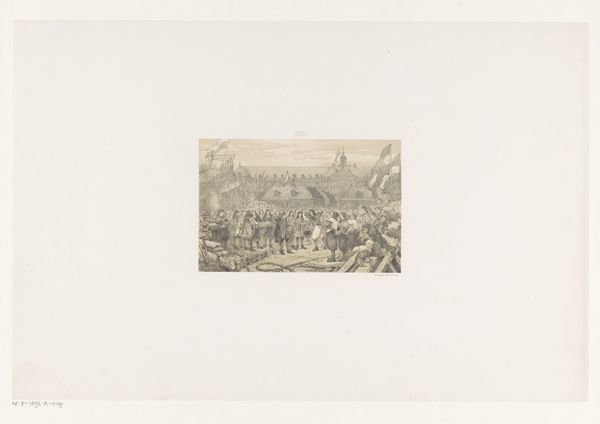
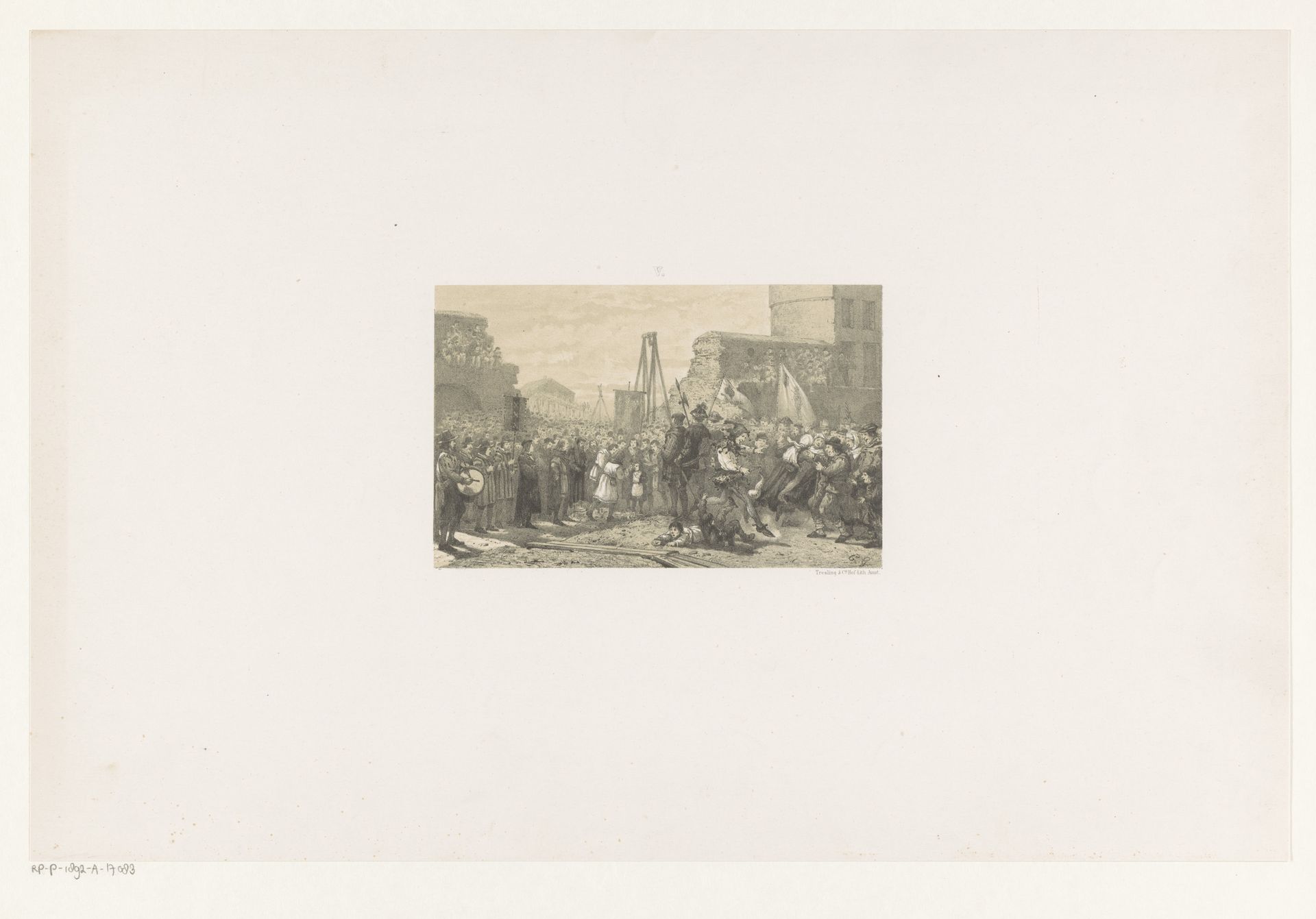
Johan Conrad Greive created this print, ‘Laying the first stone of the Sint Antonispoort’, using etching and drypoint techniques. The composition divides the scene into distinct zones: the dense crowd, the architectural backdrop, and the open sky above. The figures are rendered with meticulous detail, each face and garment contributing to the overall texture of the scene. Greive's use of line is particularly striking; he varies the weight and density of the lines to create a sense of depth and to differentiate between foreground and background elements. The contrast between the solid, weighty forms of the architecture and the more fluid, dynamic rendering of the crowd introduces a play of oppositions. This interplay might be seen as a reflection on the relationship between civic structures and the populace they serve, or even as a metaphor for the tensions inherent in urban development. The print invites us to consider how an image, through its formal elements, can encapsulate complex social and historical narratives.
Leggen van de eerste steen van de Sint-Antonispoort
1876

Johan Conrad Greive
1837 - 1891Location
RijksmuseumArtwork details
- Medium
- print, etching
- Dimensions
- height 354 mm, width 535 mm
- Location
- Rijksmuseum
- Copyright
- Rijks Museum: Open Domain
Tags
Comments
Share your thoughts
About this artwork
Johan Conrad Greive created this print, ‘Laying the first stone of the Sint Antonispoort’, using etching and drypoint techniques. The composition divides the scene into distinct zones: the dense crowd, the architectural backdrop, and the open sky above. The figures are rendered with meticulous detail, each face and garment contributing to the overall texture of the scene. Greive's use of line is particularly striking; he varies the weight and density of the lines to create a sense of depth and to differentiate between foreground and background elements. The contrast between the solid, weighty forms of the architecture and the more fluid, dynamic rendering of the crowd introduces a play of oppositions. This interplay might be seen as a reflection on the relationship between civic structures and the populace they serve, or even as a metaphor for the tensions inherent in urban development. The print invites us to consider how an image, through its formal elements, can encapsulate complex social and historical narratives.
Comments
Share your thoughts