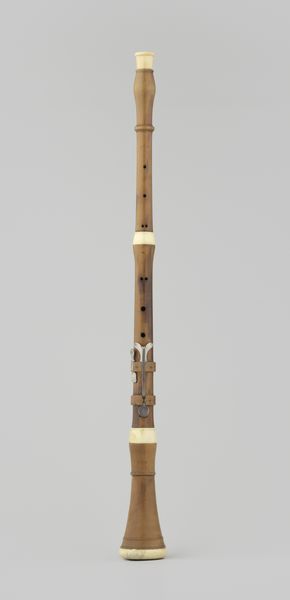
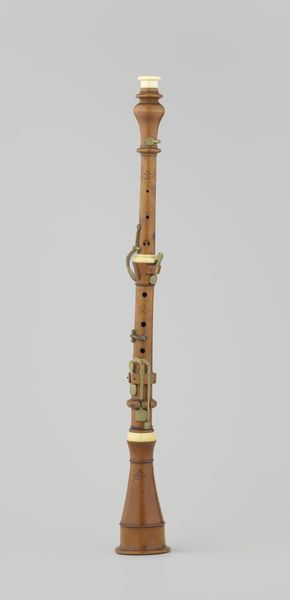
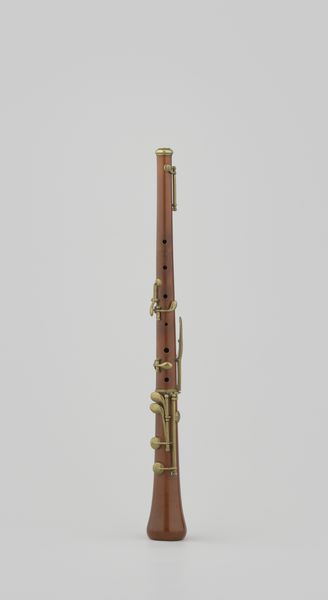
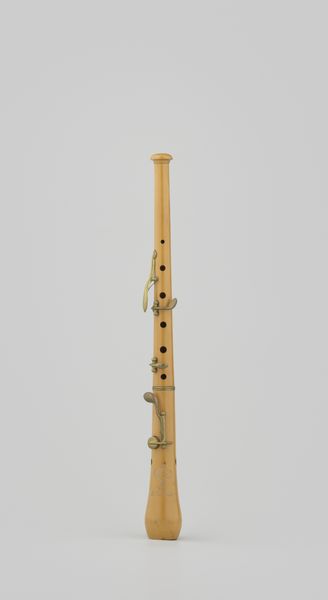
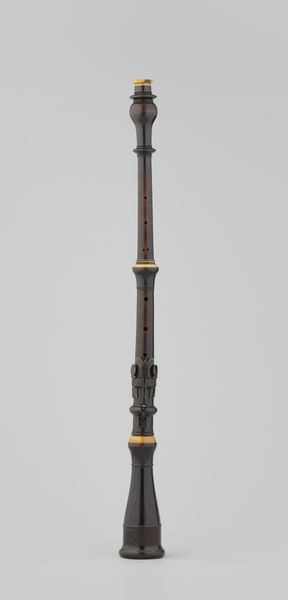
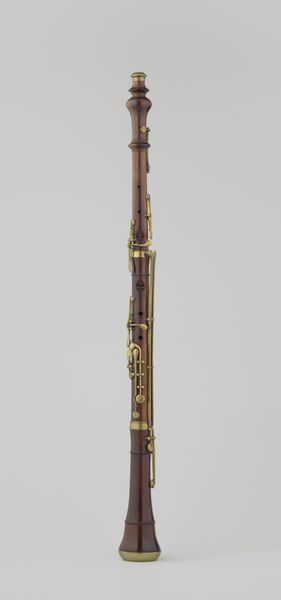
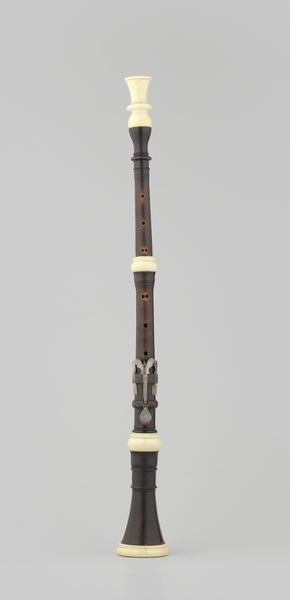
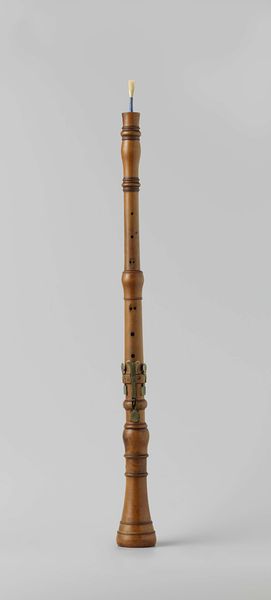
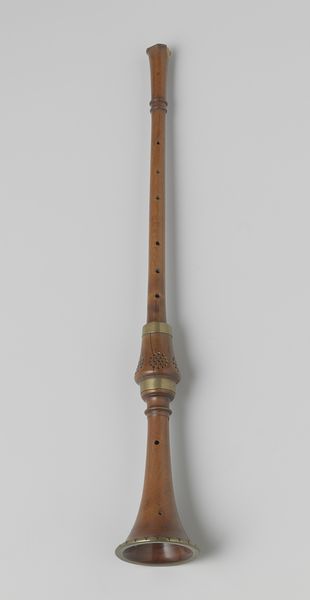
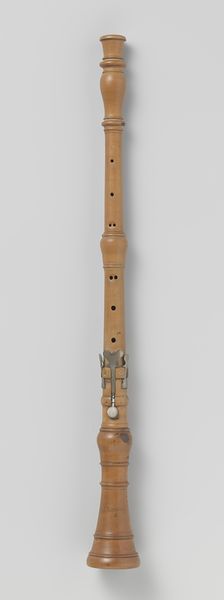
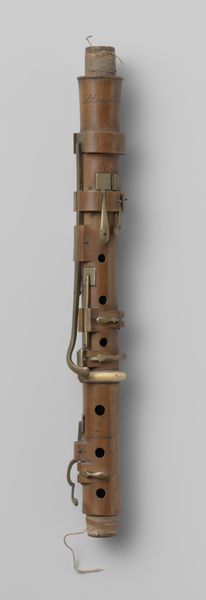
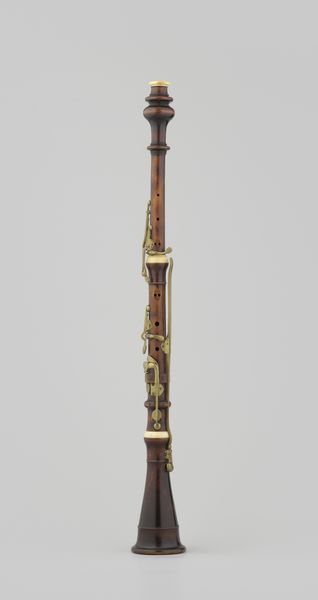
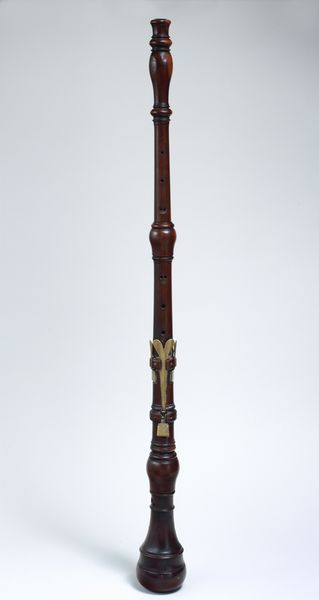
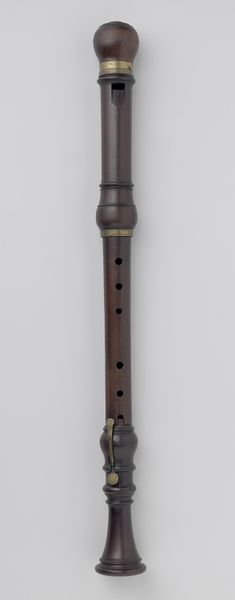
Dimensions: length 56.3 cm, diameter 2.7 cm, diameter 6.1 cm
Copyright: Rijks Museum: Open Domain
Editor: So here we have a wooden oboe, circa 1800, crafted by Christian Gottlob Lederer. Its elegant simplicity really strikes me. How do you interpret its place within the cultural context of the time? Curator: It's interesting to consider what this oboe *represents*, not just what it *is*. Early 19th century music was often deeply entwined with social and political life. Who would have owned this? Was it for private entertainment within the aristocracy or commissioned by a budding symphony looking to establish itself in a competitive, patronage-driven environment? How does this specific object mirror larger trends in musical performance? Editor: That's a fascinating point. It wasn't just about the music itself but about social status and political maneuvering as well. Does the relative simplicity of the instrument indicate anything about its potential owner? Curator: Possibly. A simpler oboe might imply broader accessibility, used in civic bands or less affluent settings. Consider also how musical instrument construction influenced broader craft guilds and economies. The creation of such instruments also served as cultural markers of what we value as a society and as expressions of power. Editor: It's eye-opening to think about the network of socio-political influences wrapped up in what seems like a simple musical instrument. Curator: Exactly. Studying this oboe gives insight into patronage systems, musical movements, and even the social lives of people from that era. Editor: I definitely see the oboe differently now - a window into a complex historical landscape. Curator: Precisely. And understanding those contexts greatly enhances the understanding and appreciation of the art itself.
Comments

rijksmuseum over 2 years ago
⋮
The oboe originated in 17th-century France. Dutch instrument makers immediately started making copies of these first French exemplars. In Amsterdam, Richard Haka started producing French hautbois (a name corrupted to oboe) already in 1680. Oboes were made of hardwoods – like boxwood, ebony, fruitwoods – and ivory. The keys were made of brass or, for fancier instruments, of silver.


Join the conversation
Join millions of artists and users on Artera today and experience the ultimate creative platform.
 Collect
More like this