About this artwork
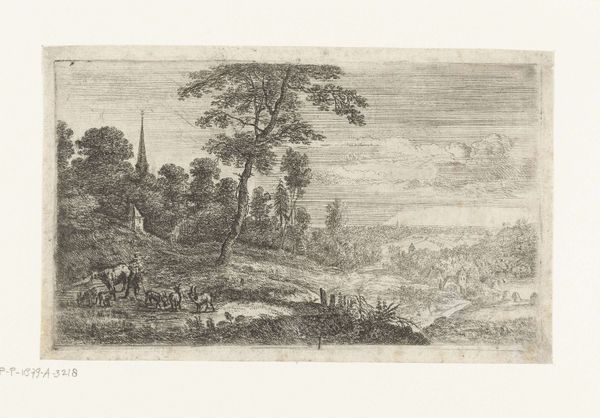
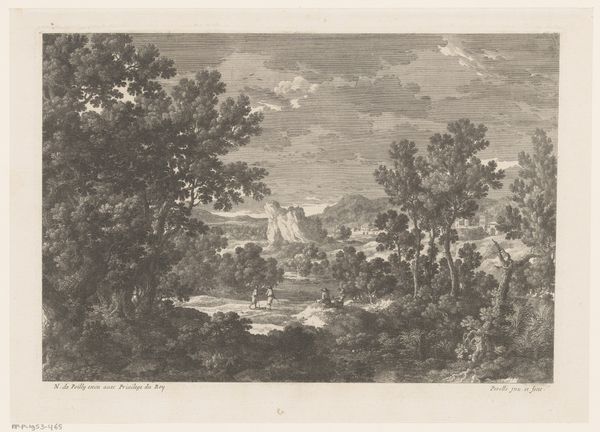
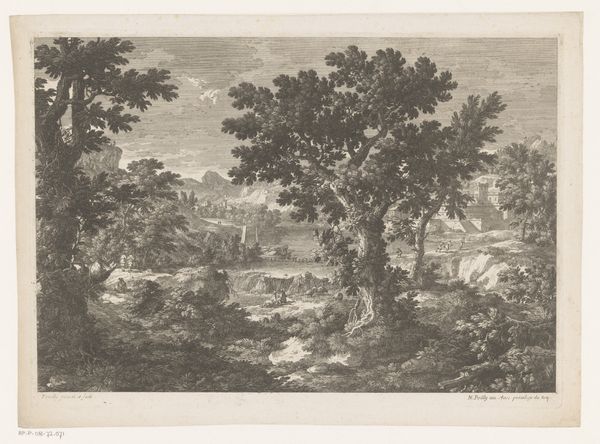
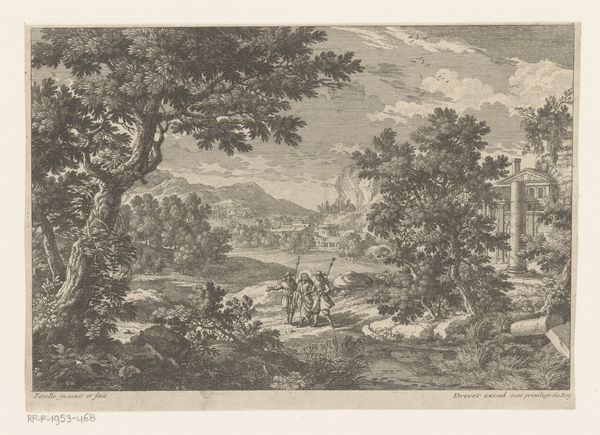
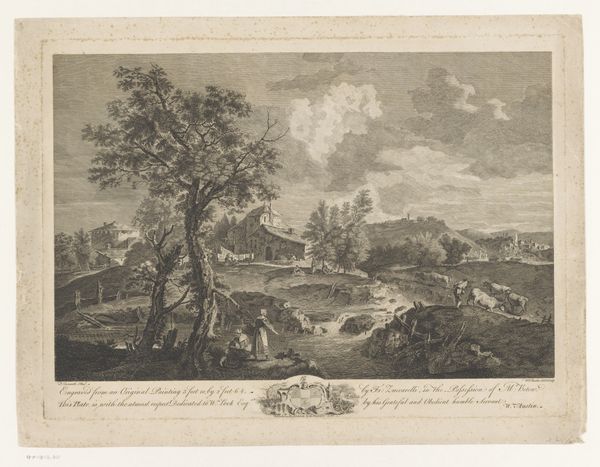
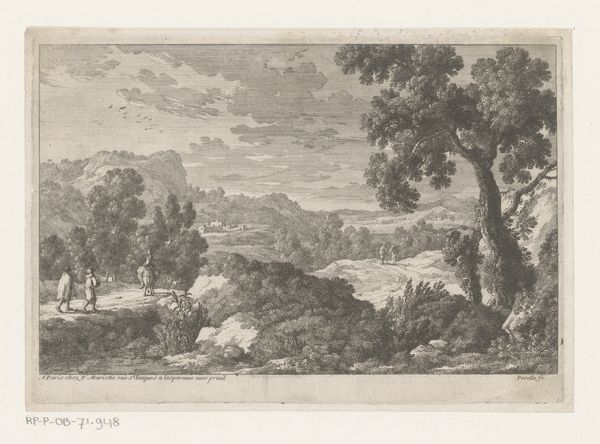
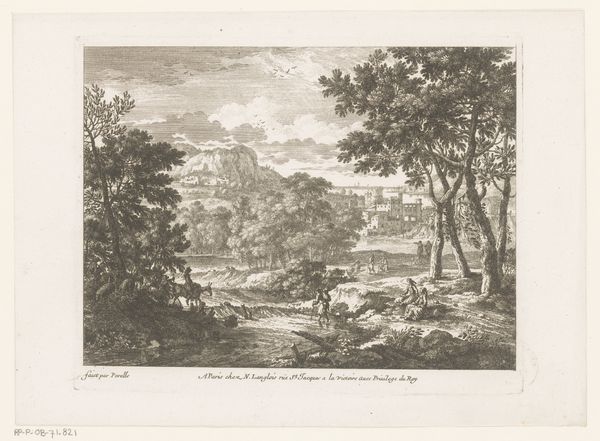
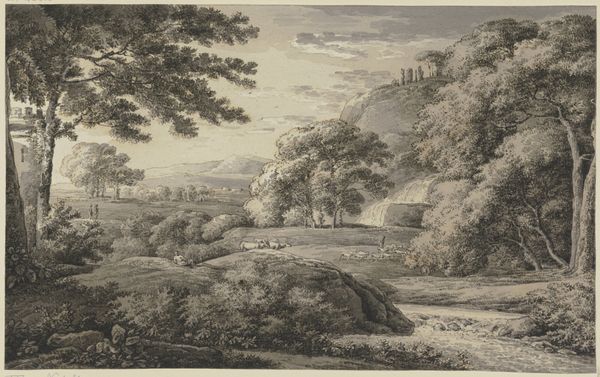
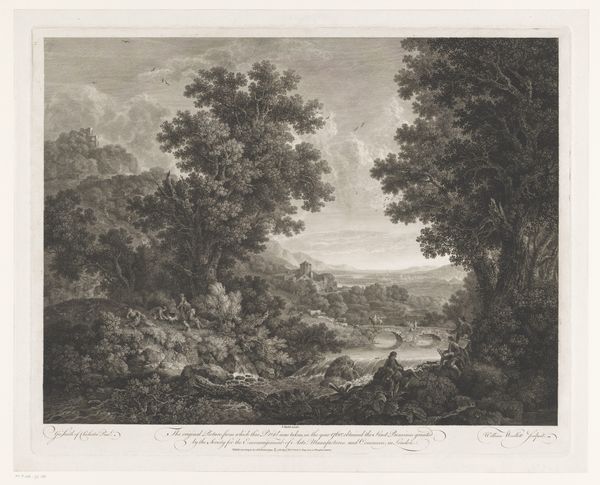
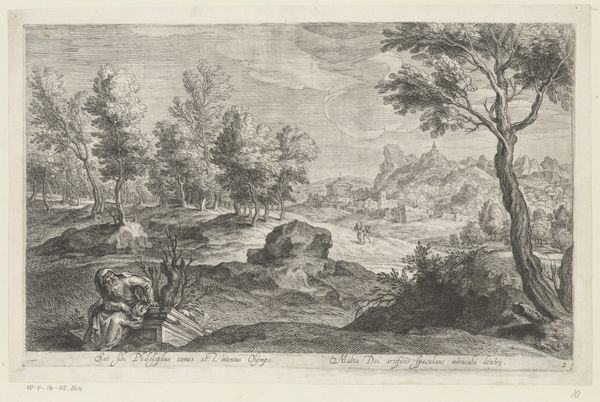
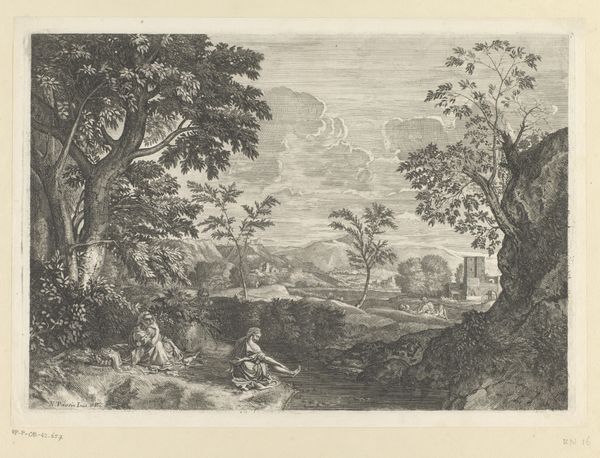
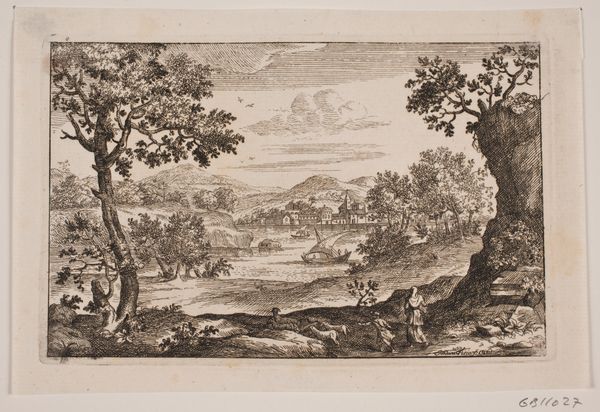
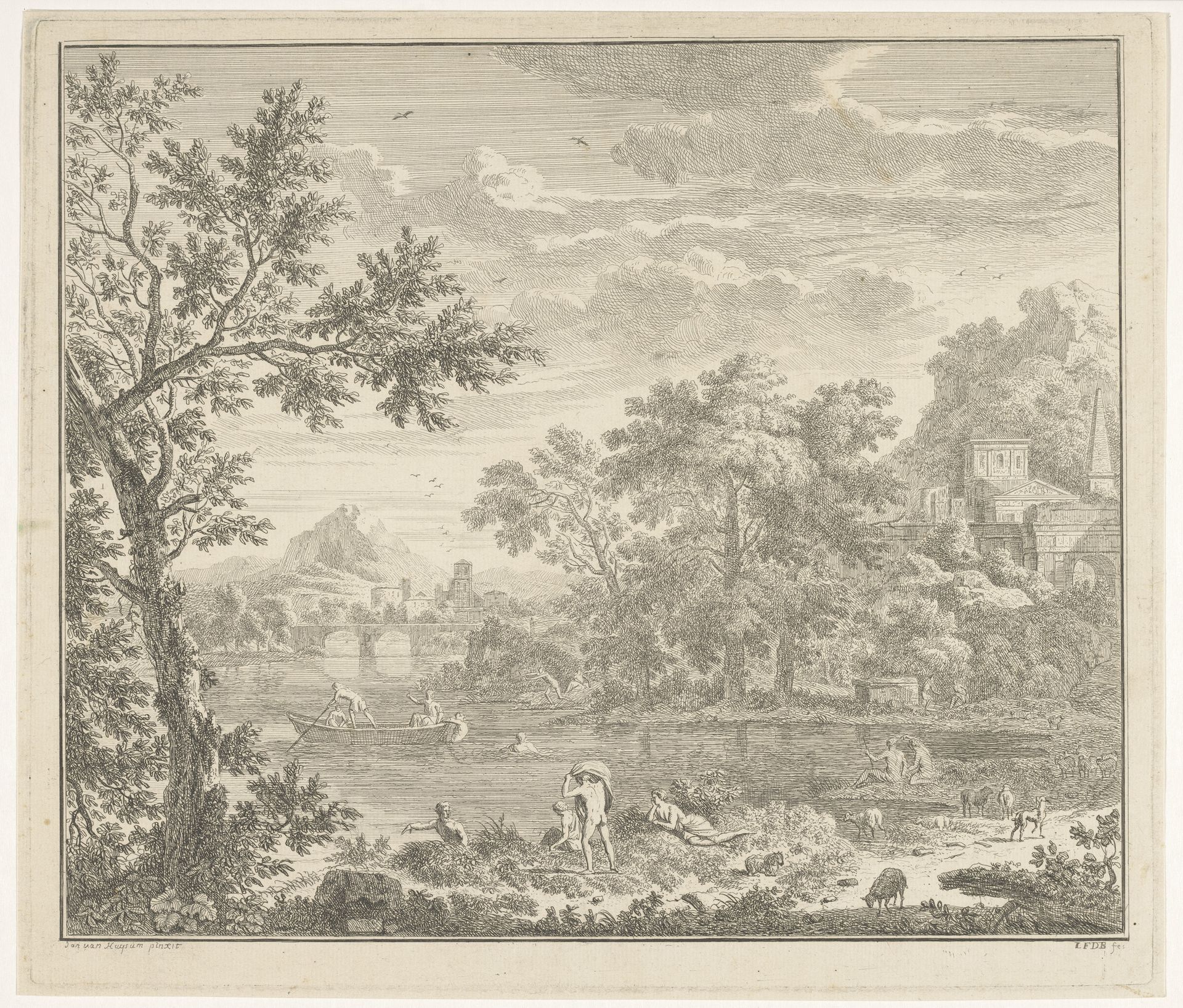
Louis Fabritius Dubourg etched this "Arcadian Landscape with Bathing People," sometime in the 18th century. It presents a scene suffused with classical motifs. The most striking of these is Arcadia itself, representing an idealized vision of pastoral life, reminiscent of ancient Greece and Rome. Bathing figures populate the scene, evoking a sense of innocence and harmony with nature. This harks back to classical depictions of nymphs and gods frolicking in idyllic settings. Such imagery is a recurrent theme throughout art history. Consider how similar motifs appear in Renaissance paintings, celebrating nature and the human form. But the pastoral ideal has not always signified innocence; it has been reimagined to represent longing, loss, and even political critique. The collective memory of Arcadia taps into our shared desire for a simpler existence. These symbols, charged with emotional and psychological weight, engage viewers on a deep, subconscious level. Like cultural echoes, they resurface, evolve, and take on new meanings across time.
Arcadisch landschap met badende mensen
1713 - 1775

Louis Fabritius Dubourg
1693 - 1775Location
RijksmuseumArtwork details
- Medium
- etching
- Dimensions
- height 275 mm, width 320 mm
- Location
- Rijksmuseum
- Copyright
- Rijks Museum: Open Domain
Tags
Comments
Share your thoughts
About this artwork
Louis Fabritius Dubourg etched this "Arcadian Landscape with Bathing People," sometime in the 18th century. It presents a scene suffused with classical motifs. The most striking of these is Arcadia itself, representing an idealized vision of pastoral life, reminiscent of ancient Greece and Rome. Bathing figures populate the scene, evoking a sense of innocence and harmony with nature. This harks back to classical depictions of nymphs and gods frolicking in idyllic settings. Such imagery is a recurrent theme throughout art history. Consider how similar motifs appear in Renaissance paintings, celebrating nature and the human form. But the pastoral ideal has not always signified innocence; it has been reimagined to represent longing, loss, and even political critique. The collective memory of Arcadia taps into our shared desire for a simpler existence. These symbols, charged with emotional and psychological weight, engage viewers on a deep, subconscious level. Like cultural echoes, they resurface, evolve, and take on new meanings across time.
Comments
Share your thoughts