drawing, ceramic, ink
#
portrait
#
drawing
#
ceramic
#
figuration
#
ink
#
coloured pencil
#
modernism
Copyright: Jean Cocteau,Fair Use
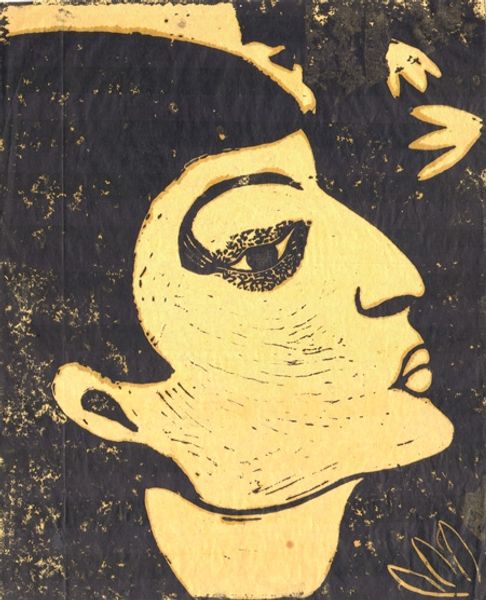
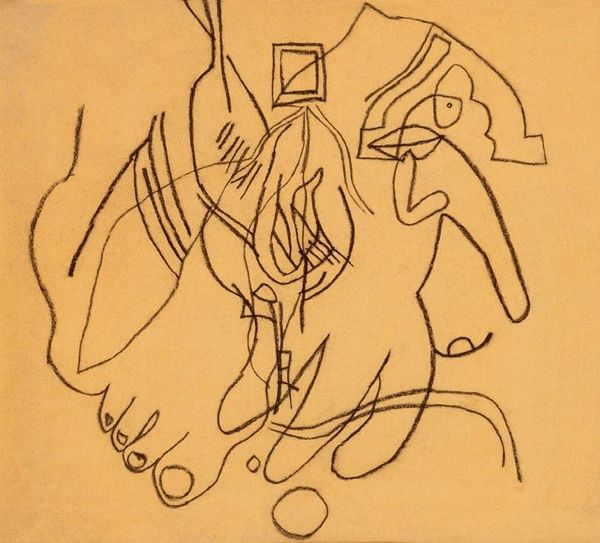
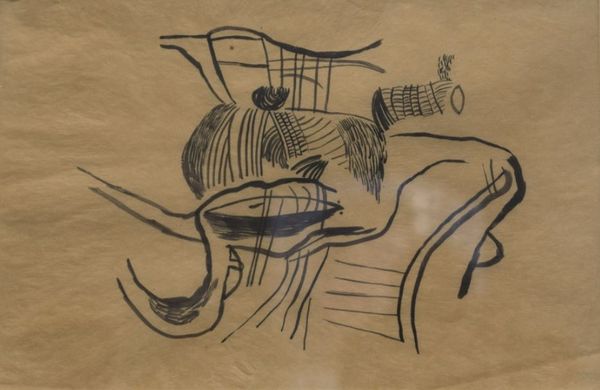
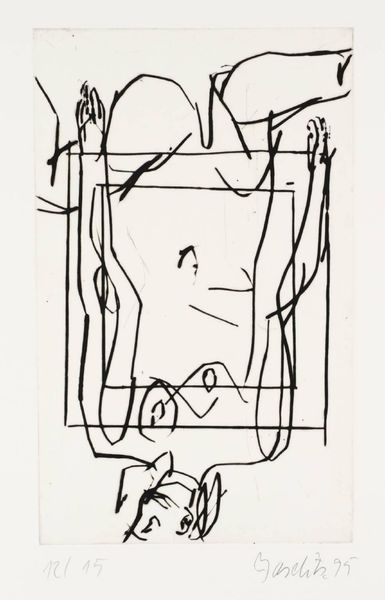
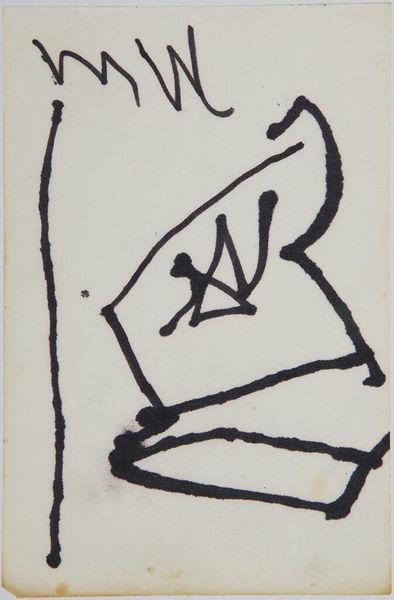
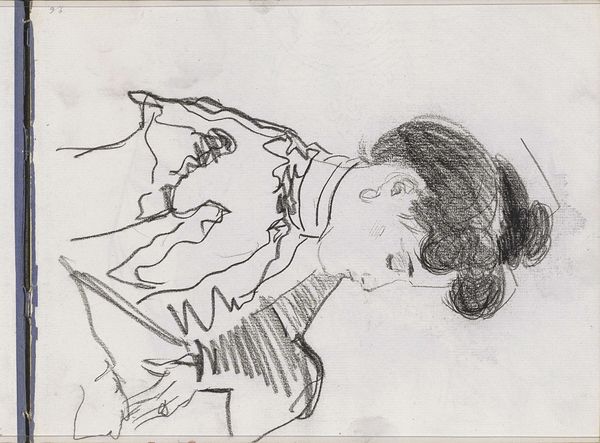
Editor: So this is "CHÈVRE-PIED BLEU PROFIL GAUCHE," a drawing by Jean Cocteau, made with ink and coloured pencil on ceramic. It feels immediately mythological, something ancient brought to life. What do you see in this piece? Curator: I see the enduring power of archetypes. Look at the figure—the "chèvre-pied," or goat-foot. Cocteau deliberately invokes the satyr, a being steeped in symbolism across cultures. Consider its roots in Greek mythology, linked to Dionysus, revelry, but also a raw, untamed nature. It's not simply a decorative choice, it’s cultural memory. Editor: I see that now! The connection to Dionysus makes sense, with the hints of revelry. The drawing itself is very simple; is there a specific significance in its execution? Curator: Absolutely. Cocteau's minimalist lines emphasize the essential, stripping away detail to reveal the core essence of the satyr archetype. Think of the enduring appeal of simple pictograms or icons—they tap into something primal. And what do you make of the "sun" in the top left corner of the drawing? Editor: Is it meant to juxtapose enlightenment and chaos through this figure? Or simply show how the mythological creatures are symbols in their own right? Curator: Perhaps both interpretations have validity, simultaneously encapsulating duality. Also consider Cocteau's choice of rendering this on ceramic, a durable and commonplace medium. It bridges the divide between the everyday and the eternal, infusing the familiar with symbolic depth. What did you glean from observing this piece? Editor: That mythological characters persist because their archetypes still live within our contemporary popular imagination, taking various new shapes and forms over the centuries! Curator: Precisely! Symbols constantly evolve, shape-shifting yet eternally relevant.
Comments
No comments
Be the first to comment and join the conversation on the ultimate creative platform.
 Collect
 React
React Comment
More like this