About this artwork
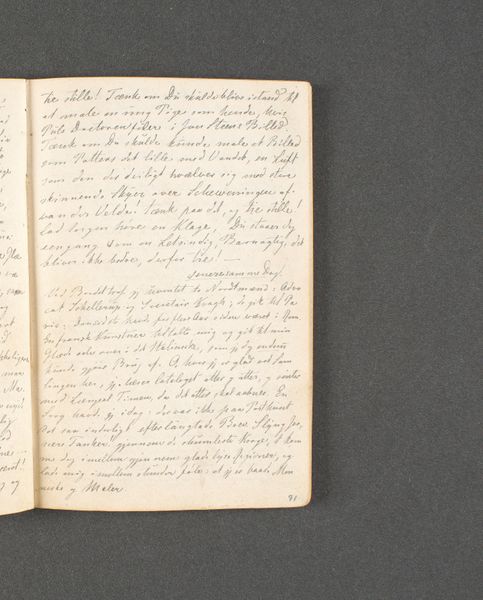
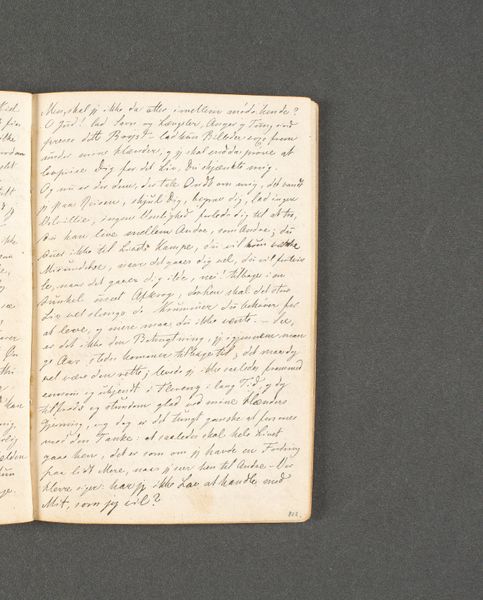
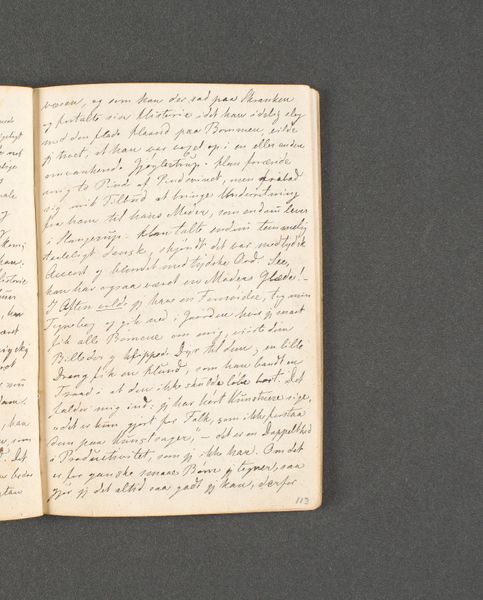
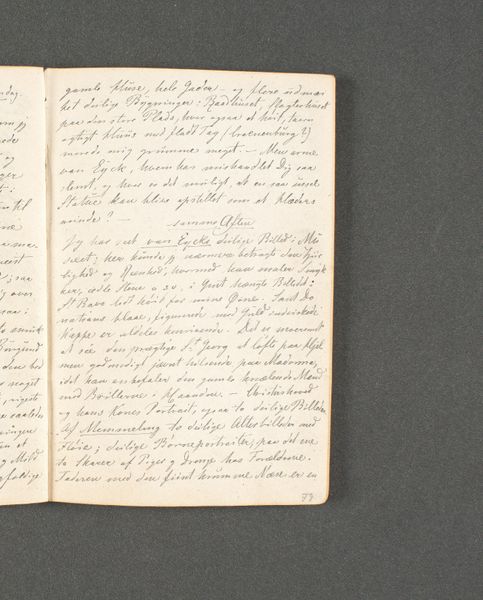
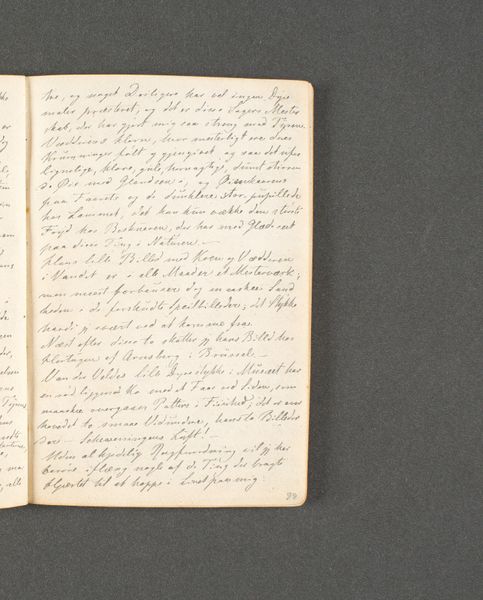
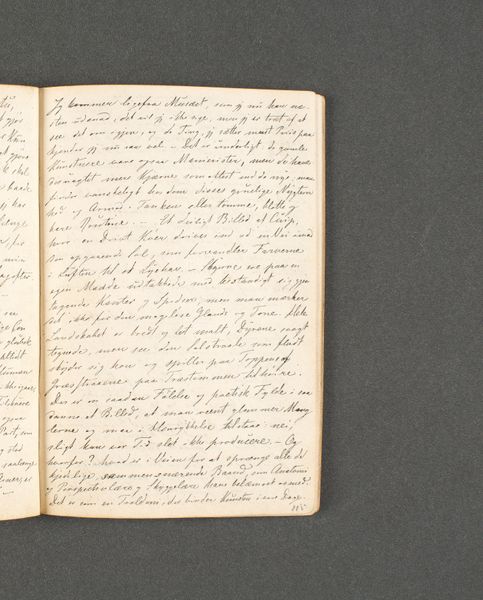
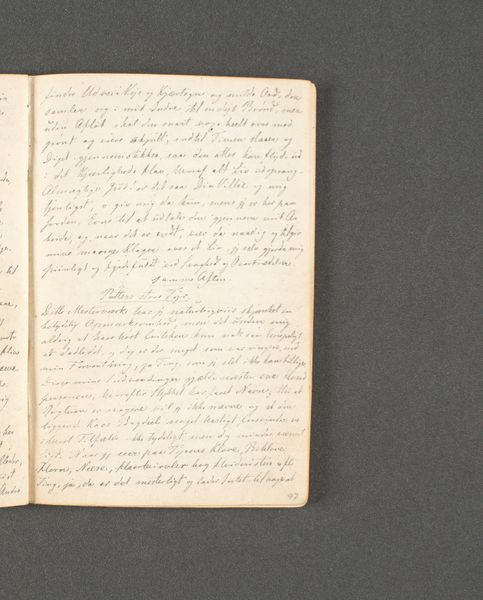
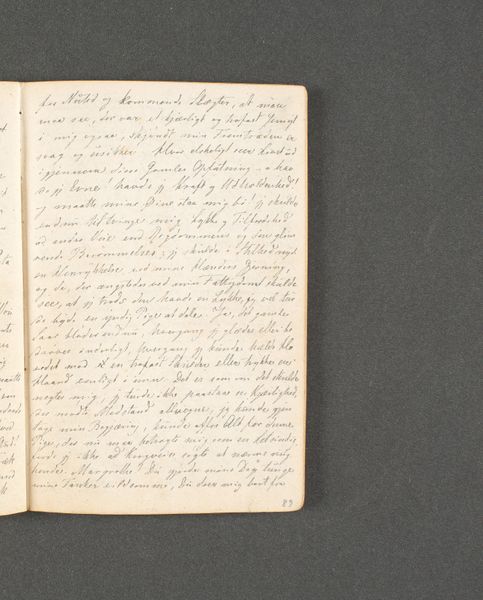
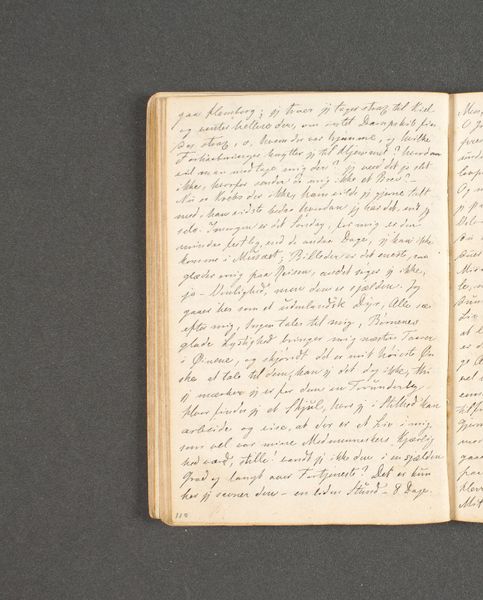
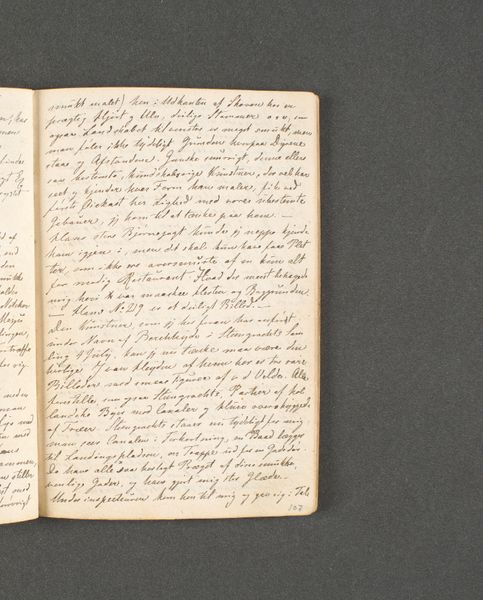
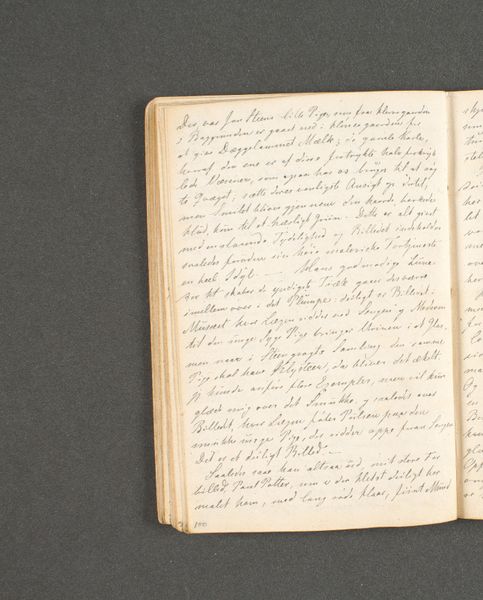
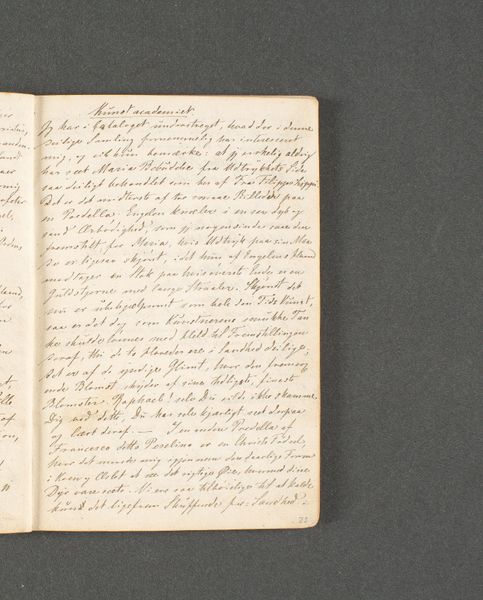
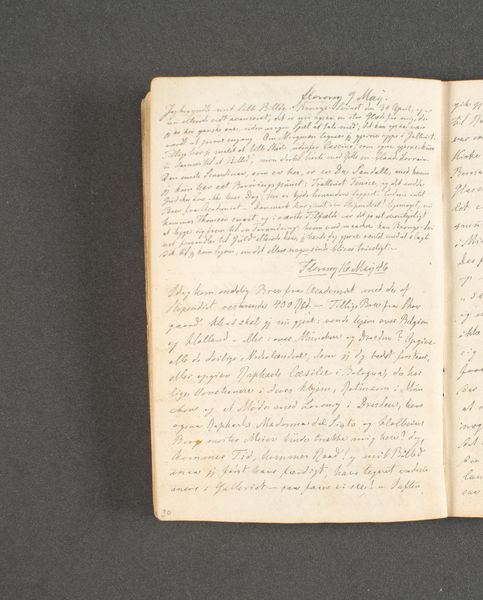
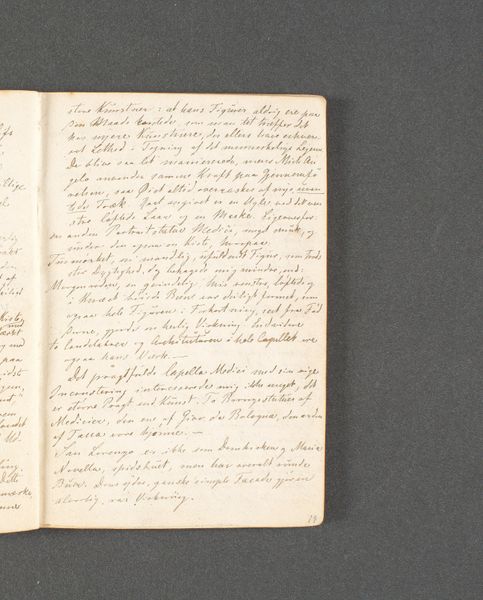
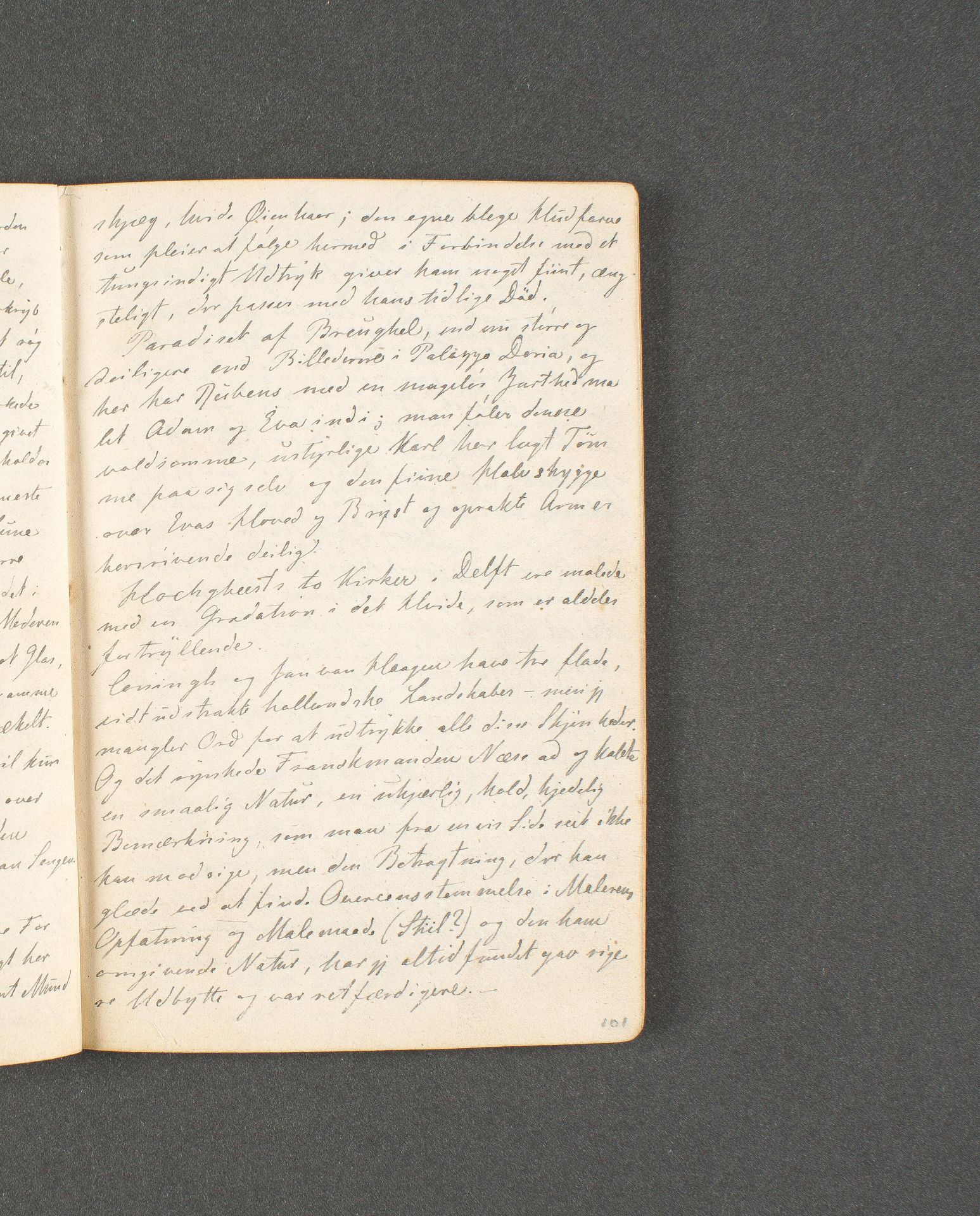
Editor: So, this is "Rejsedagbog. Haag" a page from a travel journal by Johan Thomas Lundbye, made in 1846 with ink on paper. It gives me a very personal impression, almost like I'm looking at someone's private thoughts. What do you see in this piece? Curator: Immediately, I'm struck by how the script itself functions as image. Handwriting, especially from this period, carried immense personal and cultural weight. Consider the act of journaling – a very Romantic pursuit. What symbols do you think Lundbye's choice of handwriting might convey to someone familiar with the cultural associations of script? Editor: I suppose, given its neatness but also the flourishes, it hints at both careful observation and artistic flair? A desire to capture not just information, but feeling. Curator: Precisely. The pressure of the pen, the size and slant of the letters. Look at how the lines are so closely packed. This could speak to urgency, perhaps even a certain intensity of experience, crammed onto the page. It's a very intimate record. The act of recording a journey transformed into an art object. Editor: It really does bridge the gap between text and art. It's more than just documentation. Curator: Indeed. Think about the cultural memory embedded within the practice of handwriting itself. Before typewriters and computers, penmanship was a key form of self-expression, a direct extension of one's personality. What this image triggers now and how it may have read in 1846 are likely distinct experiences. Editor: It’s interesting to think about the shift in the way we perceive handwriting now versus then. A lost art that this work brings to the fore. Curator: Exactly! The layers of meaning are almost palimpsestic, aren't they? Something both lost and retained through looking at this page.
Rejsedagbog. Haag
1846


Artwork details
- Medium
- drawing, paper, ink
- Dimensions
- 131 mm (height) x 89 mm (width) (bladmaal)
- Location
- SMK - Statens Museum for Kunst
Tags
Comments
Share your thoughts
About this artwork
Editor: So, this is "Rejsedagbog. Haag" a page from a travel journal by Johan Thomas Lundbye, made in 1846 with ink on paper. It gives me a very personal impression, almost like I'm looking at someone's private thoughts. What do you see in this piece? Curator: Immediately, I'm struck by how the script itself functions as image. Handwriting, especially from this period, carried immense personal and cultural weight. Consider the act of journaling – a very Romantic pursuit. What symbols do you think Lundbye's choice of handwriting might convey to someone familiar with the cultural associations of script? Editor: I suppose, given its neatness but also the flourishes, it hints at both careful observation and artistic flair? A desire to capture not just information, but feeling. Curator: Precisely. The pressure of the pen, the size and slant of the letters. Look at how the lines are so closely packed. This could speak to urgency, perhaps even a certain intensity of experience, crammed onto the page. It's a very intimate record. The act of recording a journey transformed into an art object. Editor: It really does bridge the gap between text and art. It's more than just documentation. Curator: Indeed. Think about the cultural memory embedded within the practice of handwriting itself. Before typewriters and computers, penmanship was a key form of self-expression, a direct extension of one's personality. What this image triggers now and how it may have read in 1846 are likely distinct experiences. Editor: It’s interesting to think about the shift in the way we perceive handwriting now versus then. A lost art that this work brings to the fore. Curator: Exactly! The layers of meaning are almost palimpsestic, aren't they? Something both lost and retained through looking at this page.
Comments
Share your thoughts