drawing, pencil
#
portrait
#
pencil drawn
#
drawing
#
pencil sketch
#
charcoal drawing
#
figuration
#
form
#
pencil drawing
#
pencil
#
portrait drawing
#
northern-renaissance
#
nude
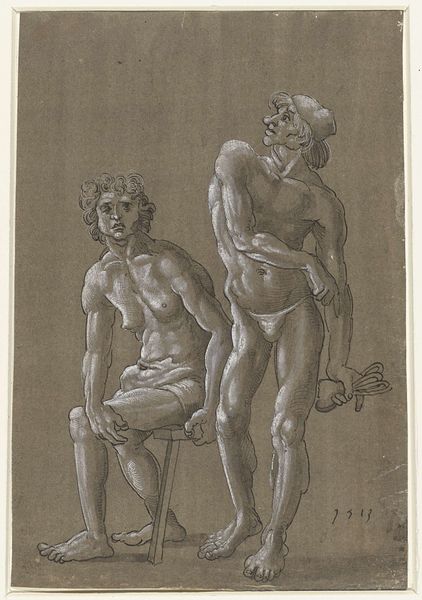
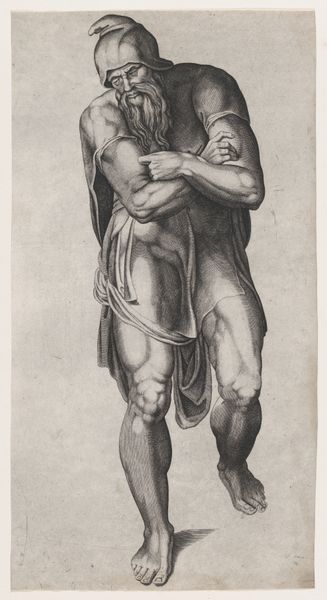
Dimensions: height 214 mm, width 144 mm
Copyright: Rijks Museum: Open Domain
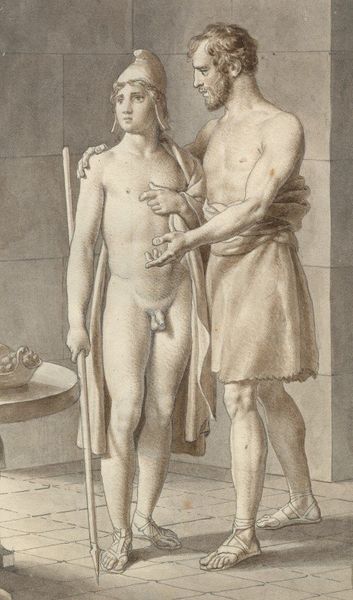
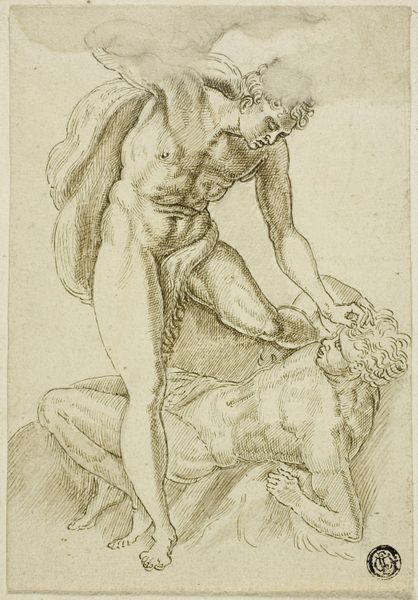
Wolfgang Huber drew these two nude youths using chalk on paper, sometime in the first half of the 16th century. It's a study, not a finished work. The artist used white chalk to create highlights on the figures, and black chalk for the shading. The choice of materials and processes has a direct influence on the drawing's appearance. Chalk allows for soft, gradual transitions between light and shadow, creating a sense of volume and depth. The artist's hand is evident in the marks and lines on the paper. In the details of the figures, the chalk shows a range of tones and textures, making them seem more lifelike. Huber was part of the German Renaissance, a time of significant artistic and intellectual change. The Renaissance saw a renewed interest in classical art and learning. The artist's careful observation and attention to anatomy reflect this influence, also tied to the rise of a wealthy merchant class and a growing interest in secular subjects. By considering the materials, processes, and context, we can better understand this drawing and its place in art history.
Comments
No comments
Be the first to comment and join the conversation on the ultimate creative platform.
 Collect
 React
React Comment
More like this