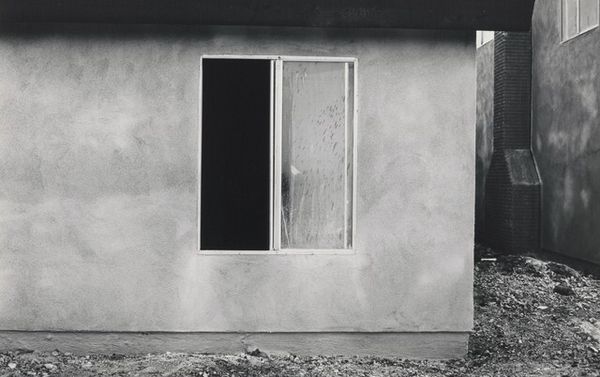
1983
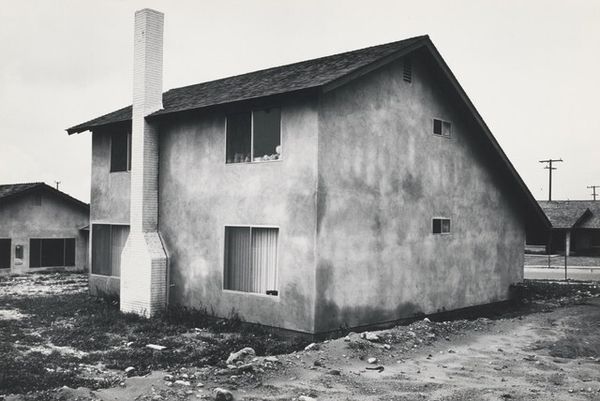
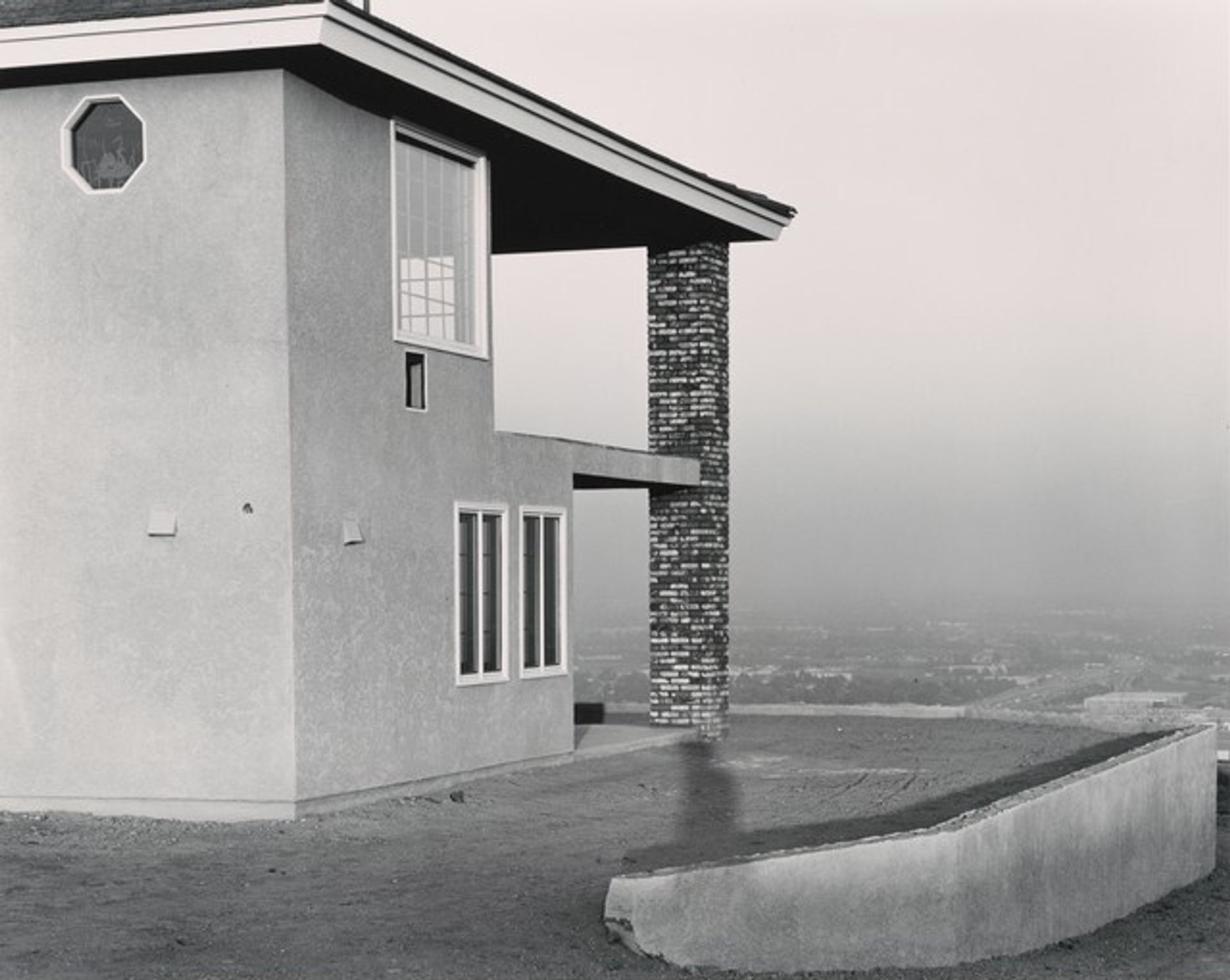
Inversion Layer, Chino Hills, California


Listen to curator's interpretation
Curatorial notes
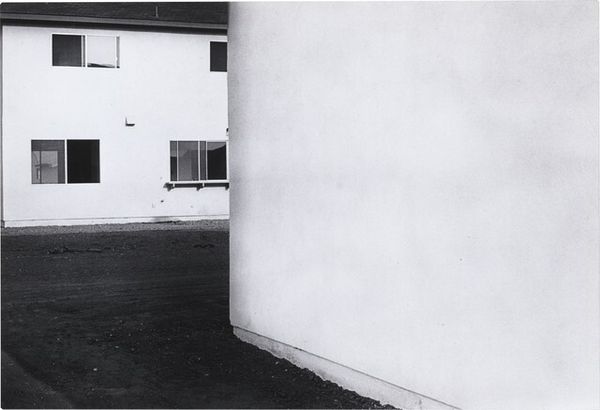
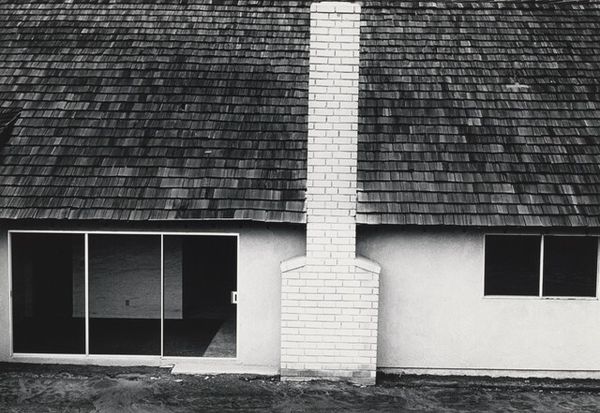
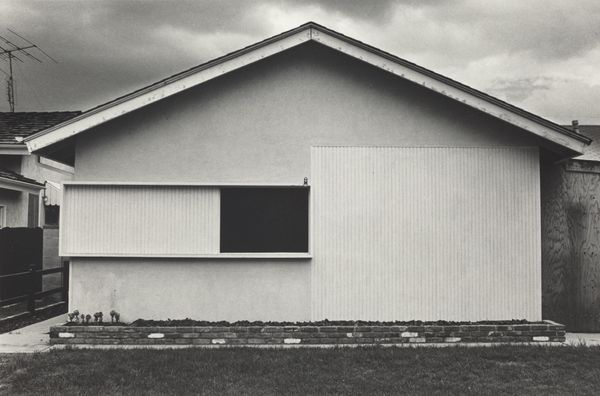
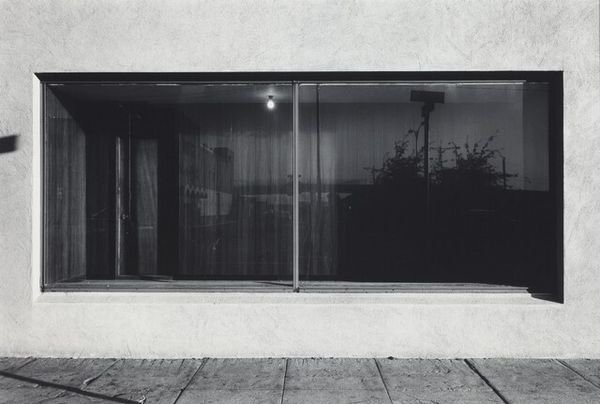
Editor: We're looking at Joe Deal's "Inversion Layer, Chino Hills, California" from 1983, a black and white photograph. There's something stark about the geometry of the house against the hazy landscape. What draws your eye when you look at this piece? Curator: Immediately, I'm struck by the layering. Not just of the visible landscape, but of meaning itself. Think of the "inversion layer"—it's a real atmospheric phenomenon, a trapping of pollution. What does that symbolize when placed against the backdrop of the idealized Californian dream home? Editor: So, it's not just a landscape, it's a commentary? Curator: Precisely! Look at the harsh geometry of the building, juxtaposed against the soft, almost ethereal background. Consider the historical context. This photograph was taken during a period of intense suburban expansion and environmental concern. Does that brick pillar look substantial or fragile to you? Editor: Fragile, now that you mention it. It doesn't seem to quite belong there. Like a relic or marker. Curator: A marker of what? Perhaps of unsustainable aspiration? And the fog, blurring the background – is it beautiful or ominous? The artist is asking us to consider the price of progress. Look at the formal garden with almost nothing growing inside. What could that mean? Editor: That's… heavy. I initially just saw an interesting composition, but the symbolism is so much more layered. Curator: Visual images embed cultural memory and project aspirations. Deal captures the cultural zeitgeist – a collective psychological tension. Editor: I'll definitely look at similar photographs differently now. There's a story behind the surface. Curator: Precisely. Now the real journey to understand the image begins.