

1901 - 1910
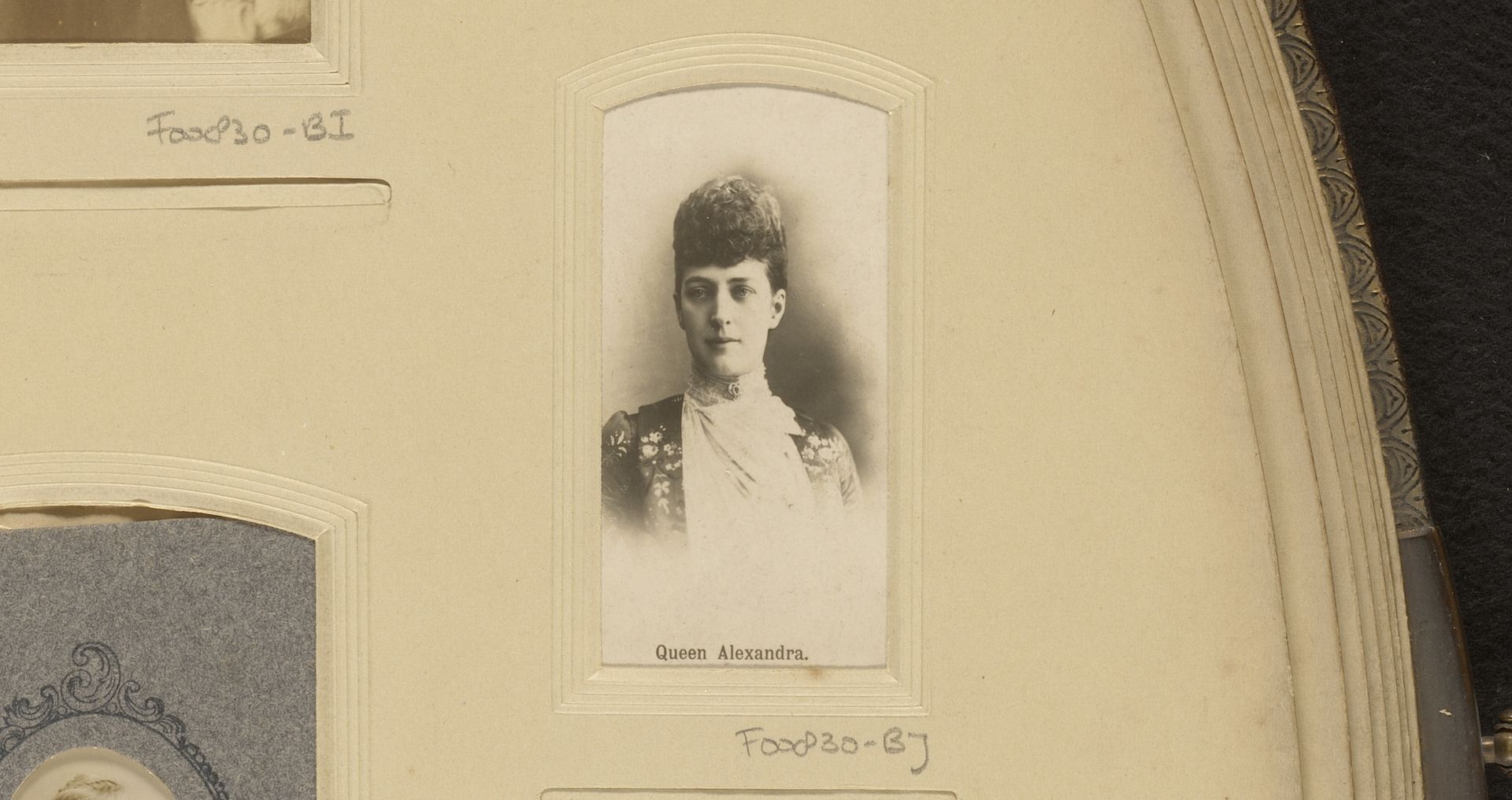
Portret van Alexandra van Denemarken

Anonymous
@anonymousLocation
RijksmuseumListen to curator's interpretation
Curatorial notes
Editor: So, this is "Portret van Alexandra van Denemarken," taken sometime between 1901 and 1910, a gelatin-silver print. It looks like it’s part of a larger collection, almost like a family album page. It’s striking how contained she is within that frame, it almost feels like a commodity of its time. How do you see this work? Curator: Considering the materials – the photographic emulsion, the silver itself – we need to think about the labor and industrial processes behind creating an image like this. The production of photographic materials at the turn of the century involved extensive mining, chemical manufacturing, and a complex network of trade. Even the album page signifies a kind of early industrial design. Editor: Right, I hadn't considered the sheer effort and material extraction that went into what appears as a simple portrait. Curator: Exactly. Who benefitted from these processes? Who were the workers extracting these materials, often in dangerous conditions? And what social rituals, like displaying such photos in albums, reinforced that system? Look at the composition: what about that setting speaks to the Queen’s class position and how the industrial era aided in keeping that standard in place? Editor: I see what you mean. It’s easy to just see a portrait of royalty, but you’re highlighting the material infrastructure that made that portrait possible, and the economic systems it represents. The creation and display are connected to broader social structures of labor and consumption. Curator: Precisely. Recognizing this artwork demands more than admiring her beauty, which really isn’t that accessible without labor and industrialization, now, is it? We also have to confront its social cost of making it. It is definitely more than a picture. It is exploitation, consumption and power. Editor: I never thought of portraiture like this. I'm left thinking about the labor that created these portraits, and what those systems of power still exist. Thanks for shifting my view on this work!