About this artwork
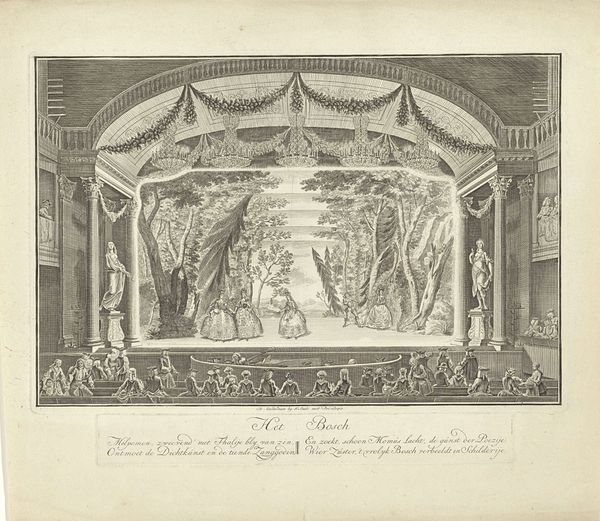
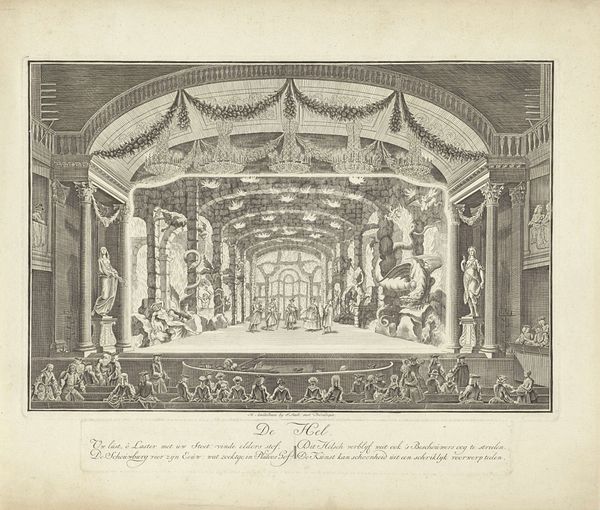
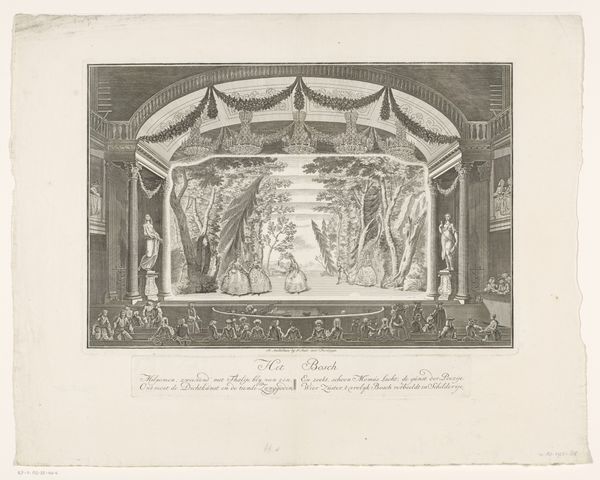
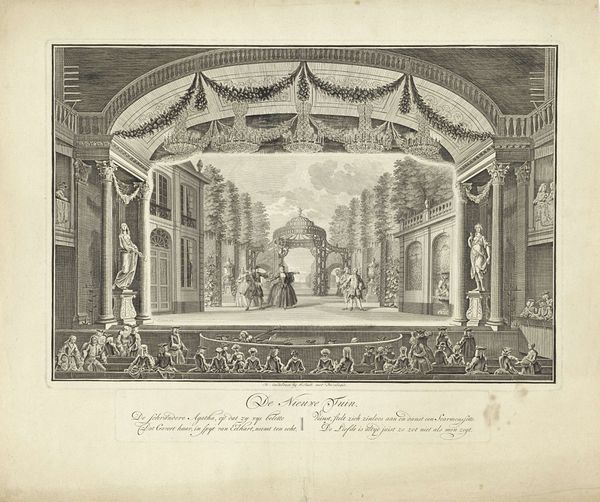
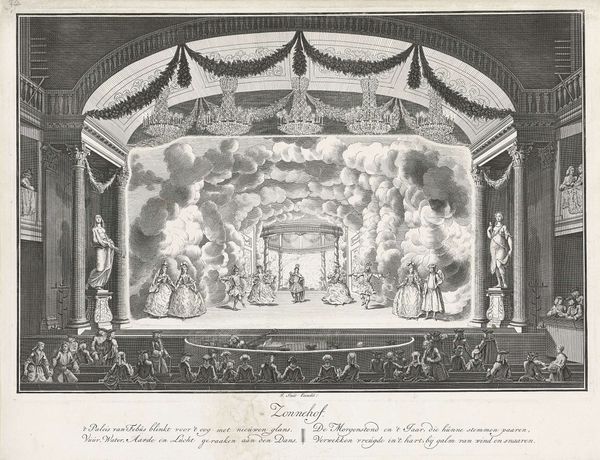
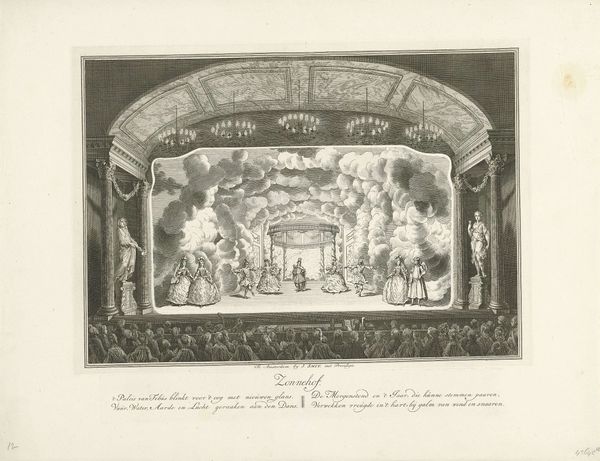
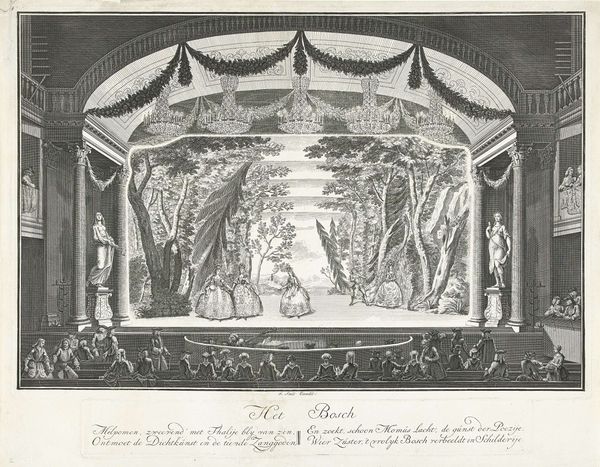
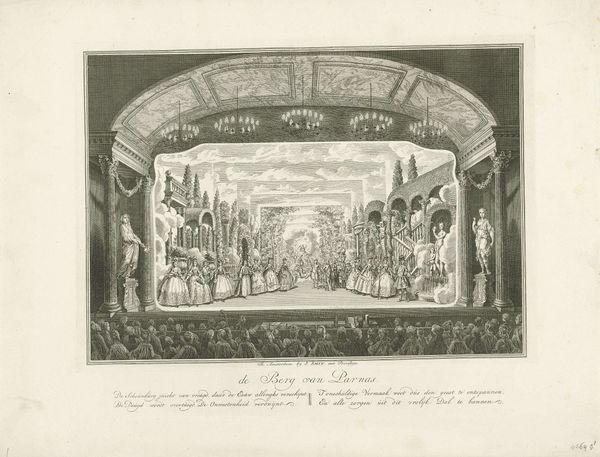
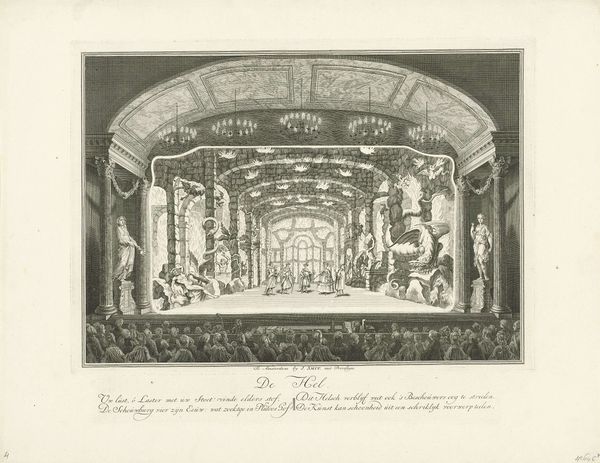
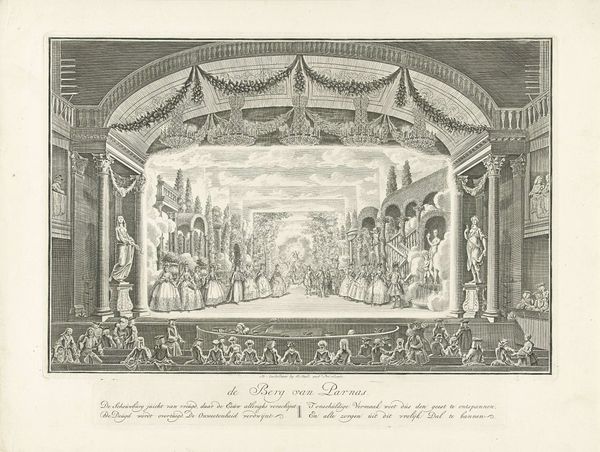
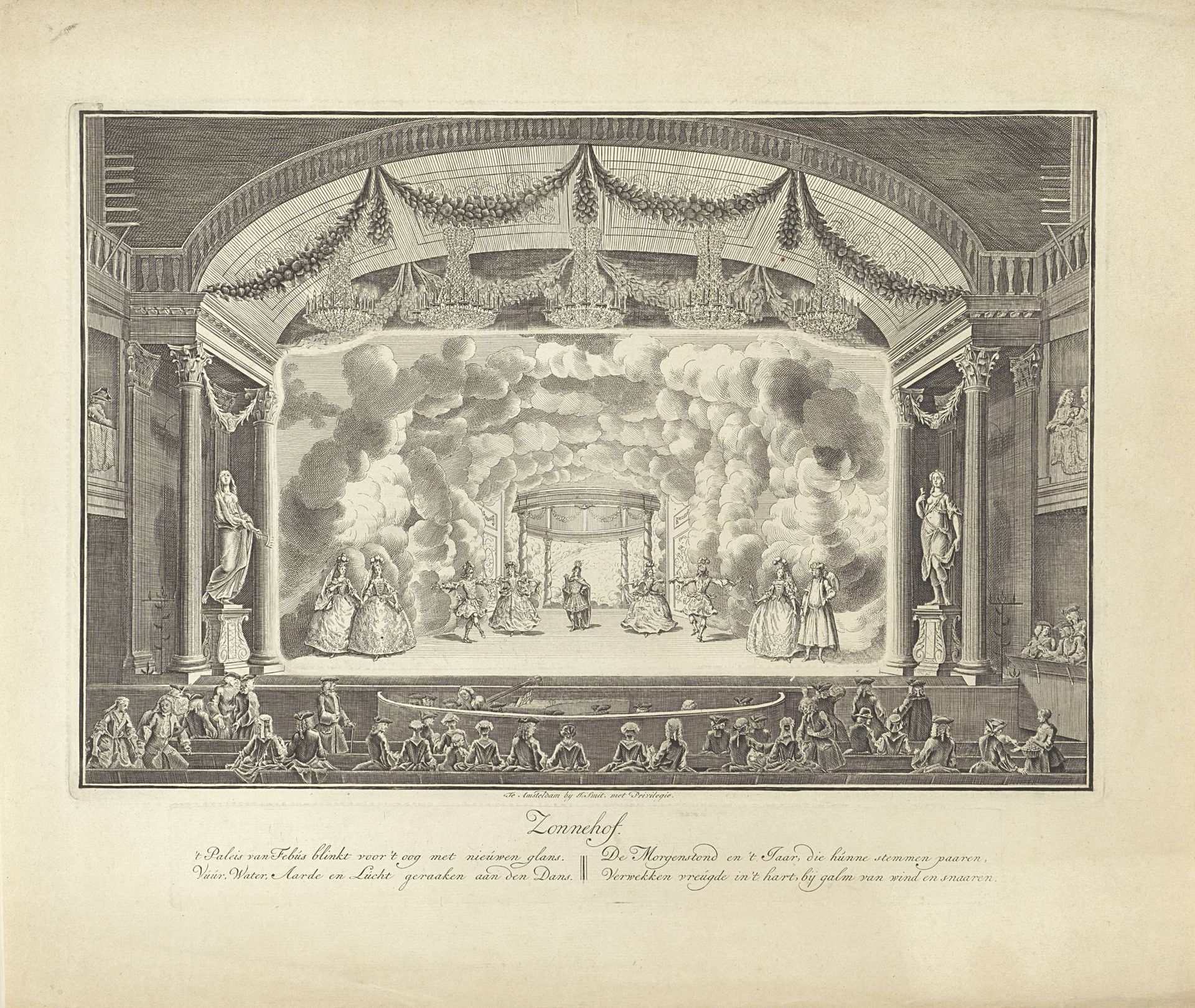
Here is the audio guide script: Jan Punt created "Schouwburg met toneeldecor: Zonnehof," using etching. The artwork presents a detailed interior view of a theater, dominated by an elaborate stage design and audience. The symmetry and precise lines lend a formal, almost architectural quality to the scene. Punt's rendering of the stage creates a space within a space, an illusion designed to transport the viewer. The classical columns and statues flanking the stage, together with the cloud-filled backdrop, establish a dialogue between real and ideal, stagecraft and nature. This contrast draws attention to the constructed nature of theatrical experience, inviting consideration of how stage settings shape our perception. The formal composition suggests a structured social order reflected in the clear separation of stage and audience. The etched lines, precise and deliberate, serve not just as a means of representation but as a commentary on the act of viewing itself, reminding us that art is always mediated, constructed, and open to interpretation.
Schouwburg met toneeldecor: Zonnehof
Possibly 1738 - 1765

Jan Punt
1711 - 1779Location
RijksmuseumArtwork details
- Medium
- print, engraving
- Dimensions
- height 142 mm, width 452 mm, height 305 mm, width 451 mm, height 42 mm, width 363 mm
- Location
- Rijksmuseum
- Copyright
- Rijks Museum: Open Domain
Tags
Comments
Share your thoughts
About this artwork
Here is the audio guide script: Jan Punt created "Schouwburg met toneeldecor: Zonnehof," using etching. The artwork presents a detailed interior view of a theater, dominated by an elaborate stage design and audience. The symmetry and precise lines lend a formal, almost architectural quality to the scene. Punt's rendering of the stage creates a space within a space, an illusion designed to transport the viewer. The classical columns and statues flanking the stage, together with the cloud-filled backdrop, establish a dialogue between real and ideal, stagecraft and nature. This contrast draws attention to the constructed nature of theatrical experience, inviting consideration of how stage settings shape our perception. The formal composition suggests a structured social order reflected in the clear separation of stage and audience. The etched lines, precise and deliberate, serve not just as a means of representation but as a commentary on the act of viewing itself, reminding us that art is always mediated, constructed, and open to interpretation.
Comments
Share your thoughts