About this artwork
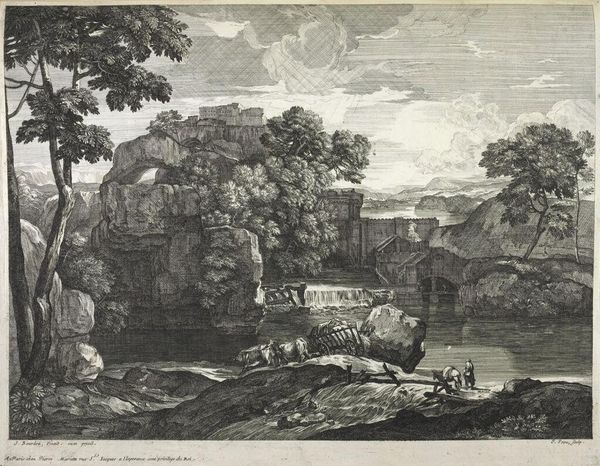
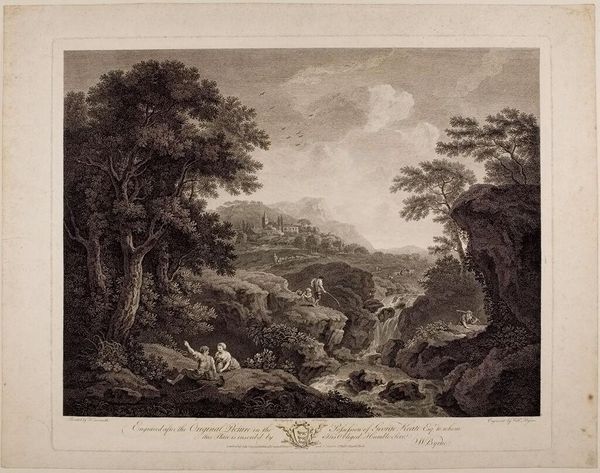
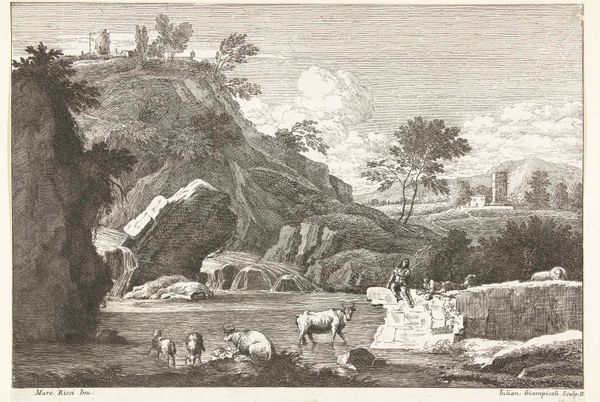
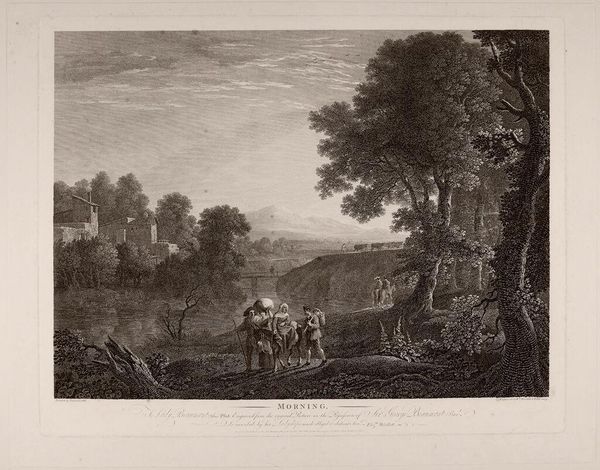
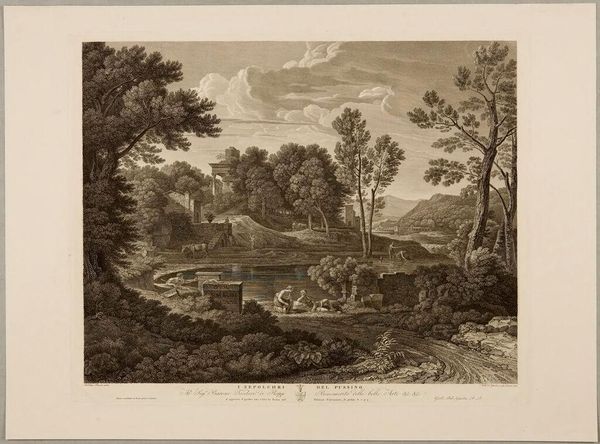
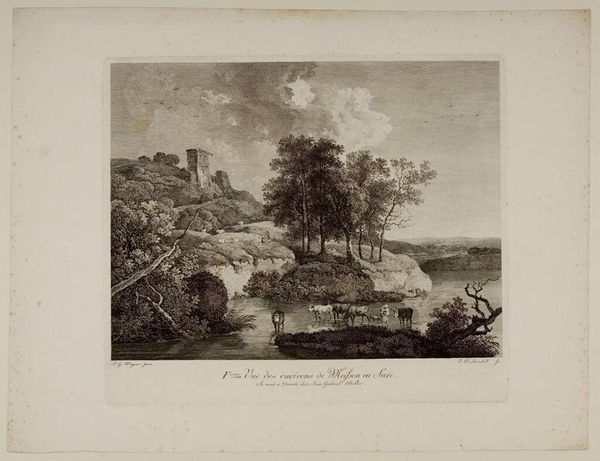
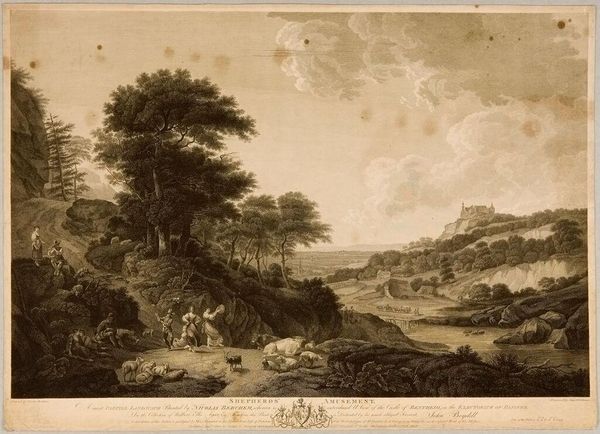
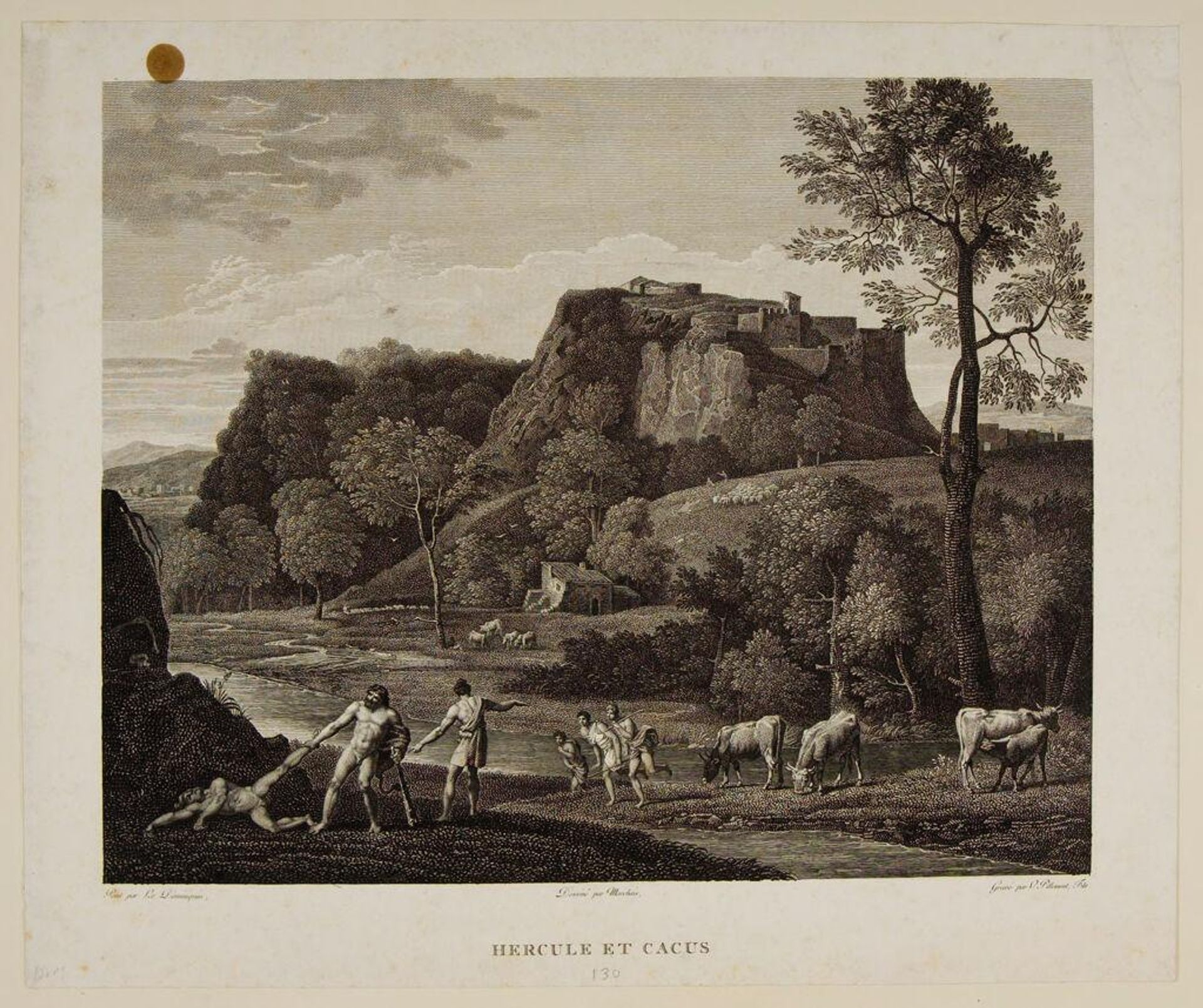
Curator: I'm immediately struck by the drama—that central clash between Hercules and Cacus feels so urgent, like a primal scream etched into the landscape. Editor: This is Victor Pillement’s "Hercules and Cacus," residing at the Harvard Art Museums. It reflects a prevalent theme: power and its often brutal enforcement. The landscape almost seems to condone it. Curator: But the landscape also feels… idealised. That pastoral scene with the cows, almost untouched by the violence unfolding nearby. It's a strange contrast, isn't it? Editor: Yes, the backdrop is key. It presents a curated reality—nature as a stage for the performance of dominance, reinforcing the notion that such acts are natural or even necessary. Curator: It does make you wonder whose perspective we're really seeing. Perhaps the romanticism softens a harsh reality for the viewer, then and now. Editor: Exactly! It's a testament to how deeply ingrained these narratives are, and how subtly art can perpetuate them. Food for thought indeed.
Hercules and Cacus
18th-19th century


Artwork details
- Location
- Harvard Art Museums
- Copyright
- CC0 1.0
Comments
Share your thoughts
About this artwork
Curator: I'm immediately struck by the drama—that central clash between Hercules and Cacus feels so urgent, like a primal scream etched into the landscape. Editor: This is Victor Pillement’s "Hercules and Cacus," residing at the Harvard Art Museums. It reflects a prevalent theme: power and its often brutal enforcement. The landscape almost seems to condone it. Curator: But the landscape also feels… idealised. That pastoral scene with the cows, almost untouched by the violence unfolding nearby. It's a strange contrast, isn't it? Editor: Yes, the backdrop is key. It presents a curated reality—nature as a stage for the performance of dominance, reinforcing the notion that such acts are natural or even necessary. Curator: It does make you wonder whose perspective we're really seeing. Perhaps the romanticism softens a harsh reality for the viewer, then and now. Editor: Exactly! It's a testament to how deeply ingrained these narratives are, and how subtly art can perpetuate them. Food for thought indeed.
Comments
Share your thoughts