1859
Dies irae in thirteen original versions

Listen to curator's interpretation
Curatorial notes
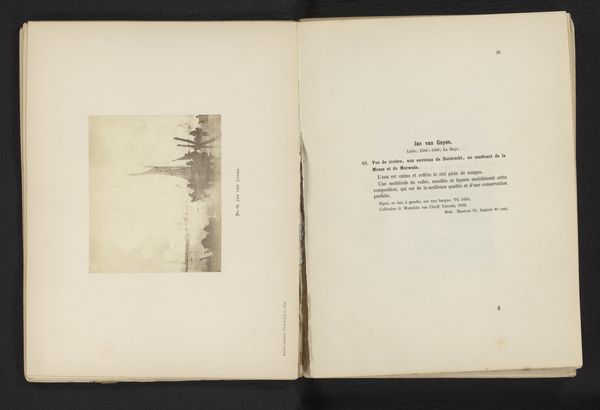
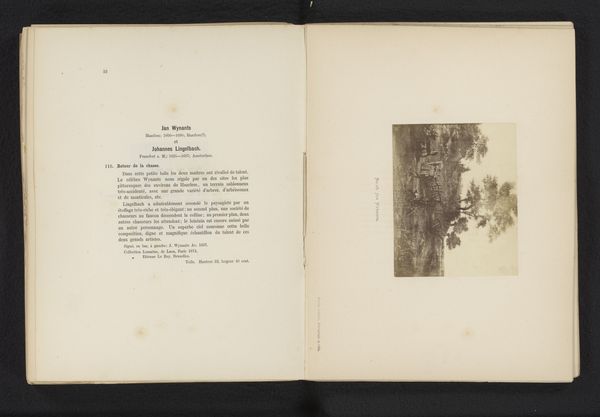
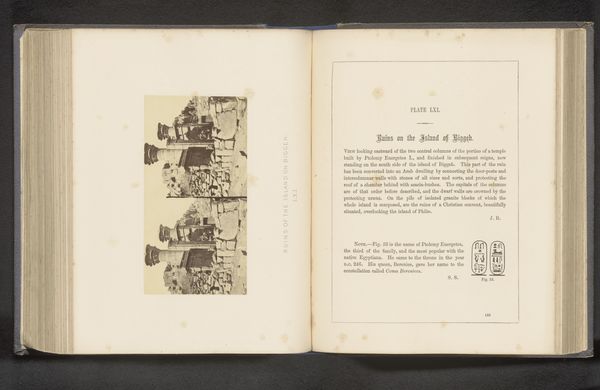
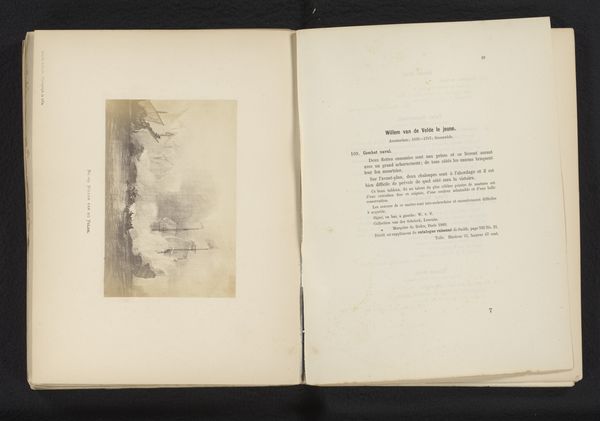
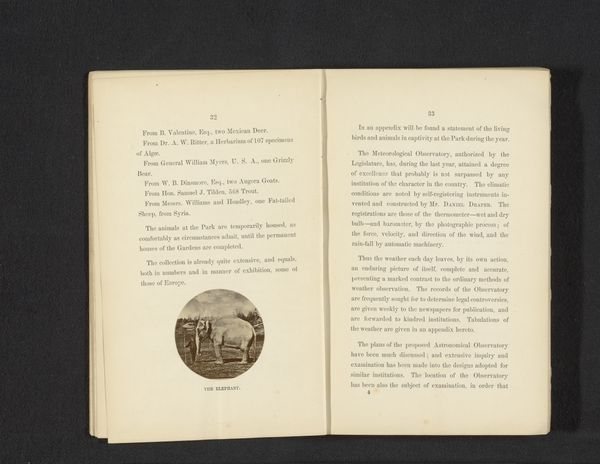
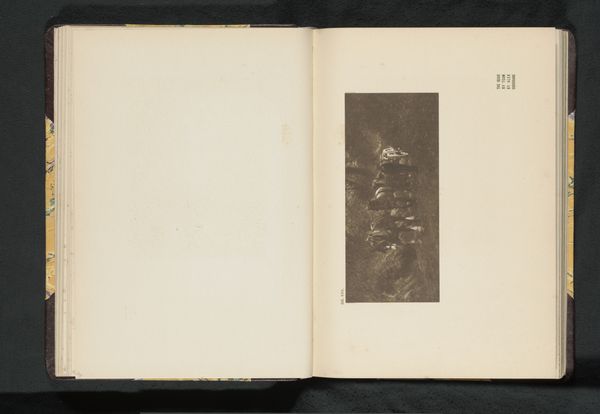
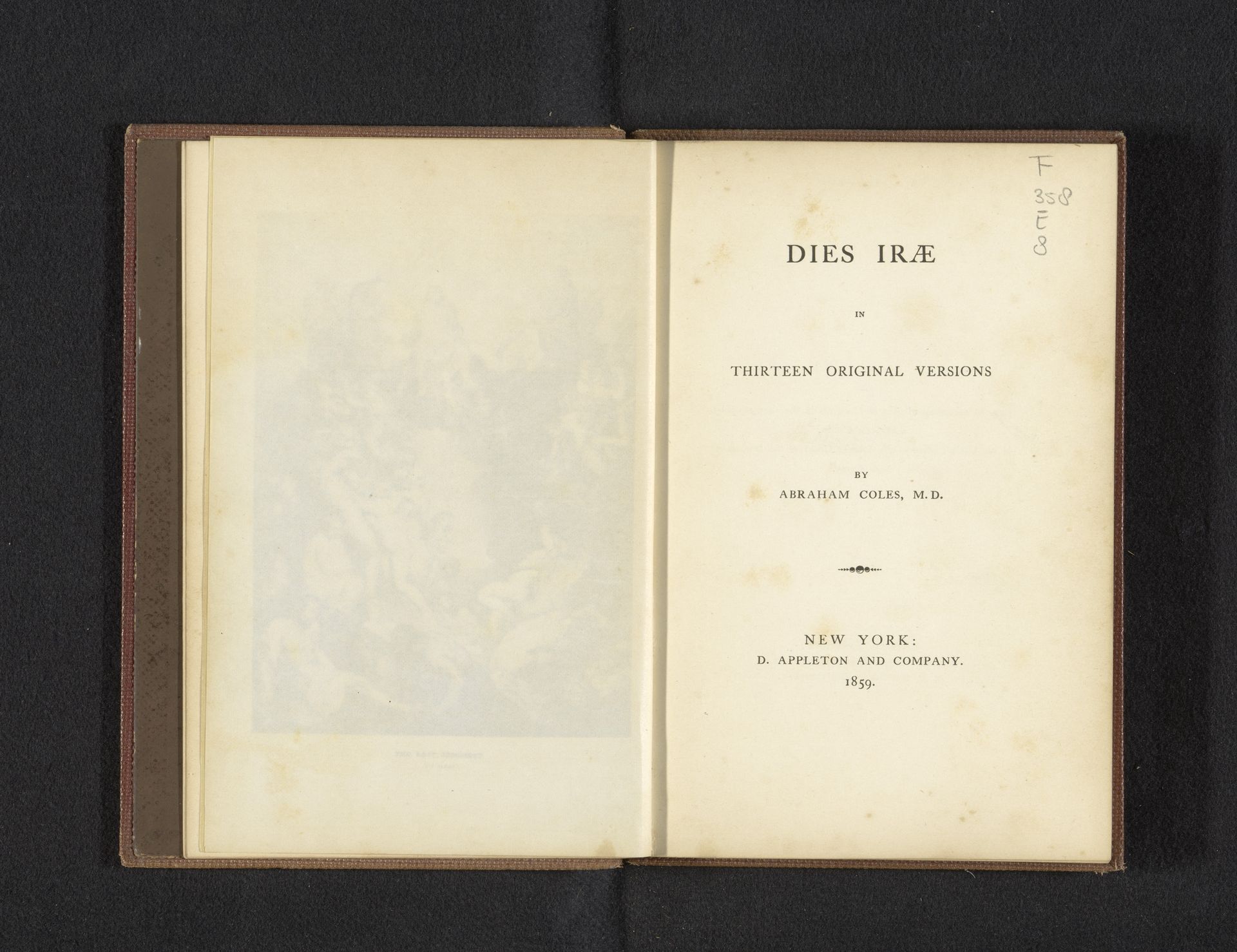
Curator: Well, hello! Today we're looking at a work called "Dies irae in thirteen original versions" by Abraham Coles, M.D., published in New York in 1859. It seems to be a printed volume. Editor: My initial reaction is drawn to the palpable age of this open book. The creamy, textured paper has such a handcrafted, personal feeling to it—unlike anything churned out on modern machines. I’m particularly drawn to what I assume are watermarks in the paper on the left side. Curator: Indeed! The visible aged paper, its non-digital material, the printmaking all point to an intentional construction of something meant to be valued. The book format itself—a signifier of learned culture—gives credence to Coles’s poetic translations, framing his work within established intellectual traditions and their material forms. Editor: Exactly, and you’ve noticed that one half has text and the other an illustration. It appears to be history-painting or illustration; it is interesting how books allowed history and culture to be portable, as they brought knowledge to those who sought it. In terms of production and circulation, where and how did these books reach their audiences? What sort of socio-economic class might own or commission one of these? Curator: Excellent point! Considering its time, owning a printed book likely represented a certain level of affluence and education. Furthermore, we should look at Coles' own biography to contextualize this production. What affiliations, societies, and patrons might have shaped its public perception? Was this meant for private contemplation or public distribution? Editor: And if for public consumption, to what extent did religious institutions influence both the production and reception of this volume? Given the title – "Dies Irae" – it's certainly invoking heavy themes of judgment and apocalypse, but in what ways would audiences interpret and react to Coles’s unique approach, of, “thirteen original versions”? Curator: That question takes us down intriguing avenues! To probe further, future studies must address reception—reader reviews, institutional records, sales, that kind of archival inquiry. Editor: Agreed. Seeing the image now makes me question the role that paper manufacturers of the 1800's play in these artworks we call prints. How did that affect public consumption, even the idea of high- and low- brow artwork in that era? It gives me so much to reflect on.