1740 - 1755
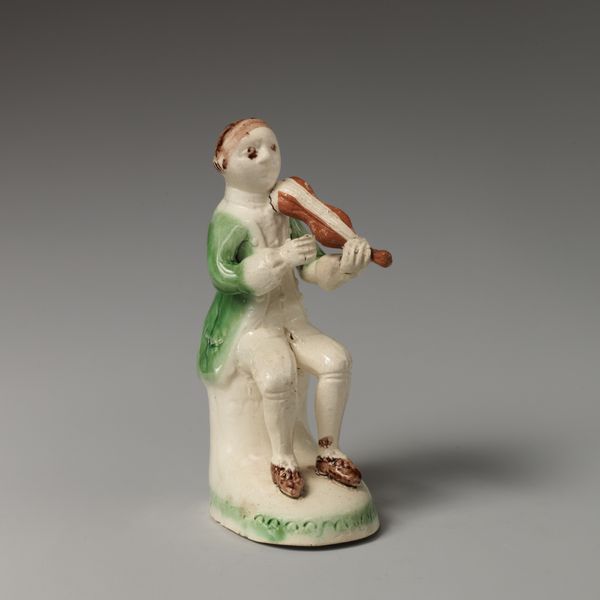
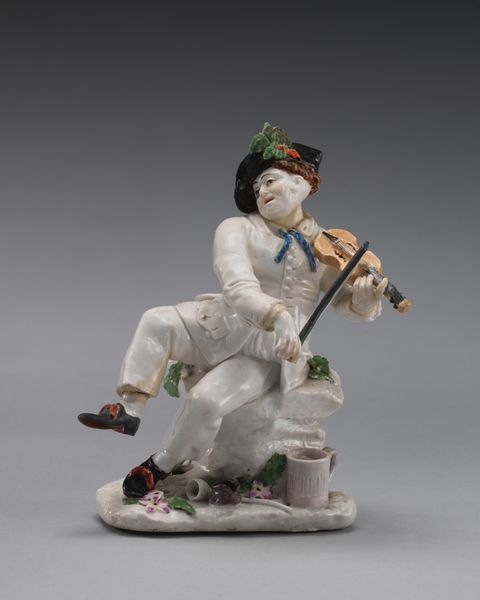
Fiddler

Astbury-Whieldon
@astburywhieldon
The Metropolitan Museum of Art
Metropolitan Museum of Art, New York, NYListen to curator's interpretation
Curatorial notes
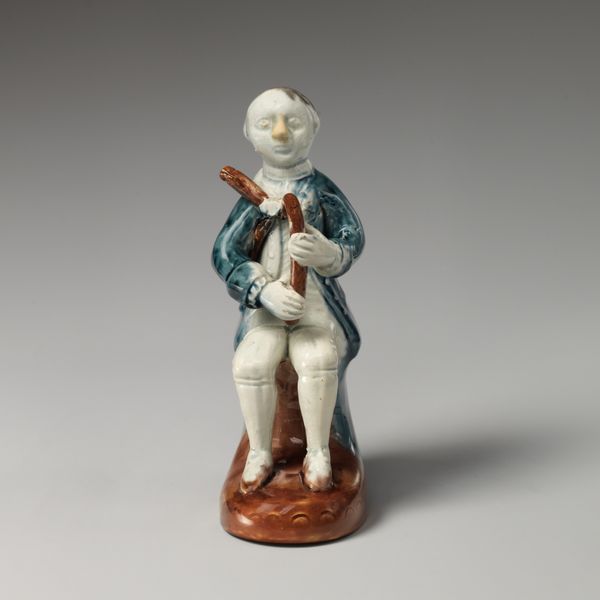
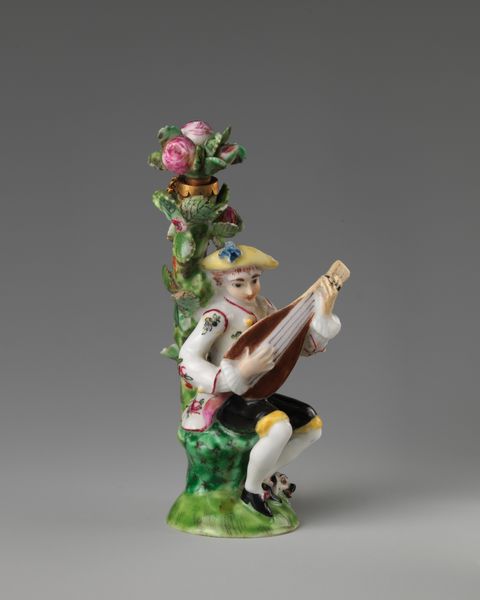
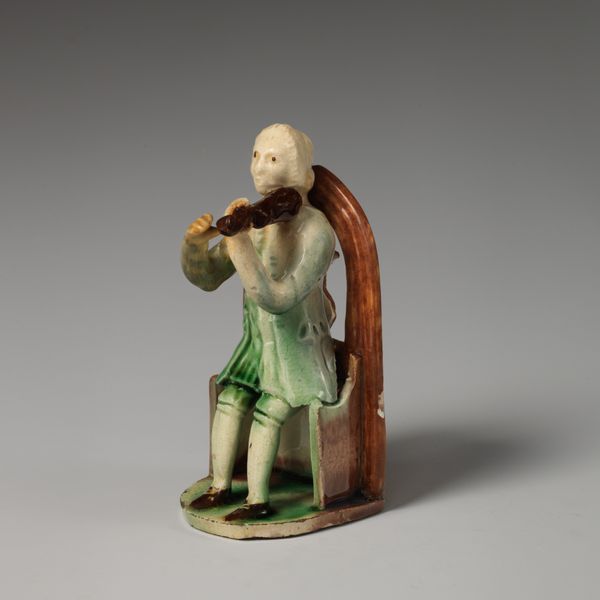
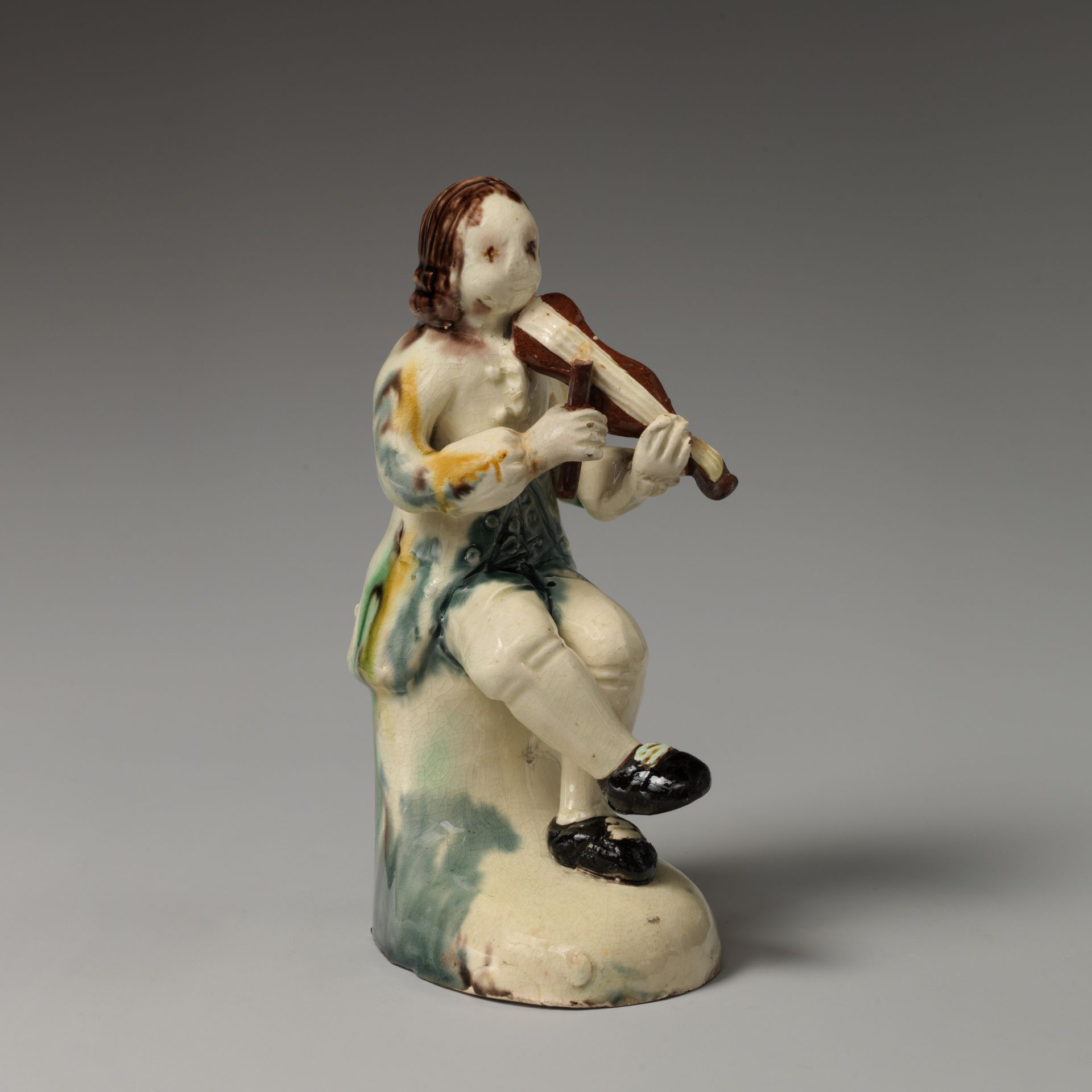
This Fiddler, now in the Met, was made by Astbury-Whieldon, using earthenware and colored lead glazes. The effect is charming, even whimsical, but it is important to remember the context of its making. Earthenware like this was a relatively low-cost material, but the processes used to form it – molding, firing, glazing – demanded a great deal of skill. The same goes for the violin, which is rendered with surprising accuracy, despite the small scale. The colored glazes also required a steady hand, and deep knowledge of ceramic chemistry. This kind of figure was aimed at a rising middle class in Britain, eager to emulate the gentry. So even a humble material like earthenware could, in the right hands, serve as a vehicle for social aspiration, and the expression of highly refined skills. It proves that you don't need to use precious materials to make something precious.