photography, gelatin-silver-print
#
portrait
#
still-life-photography
#
photography
#
gelatin-silver-print
Dimensions: height 140 mm, width 88 mm
Copyright: Rijks Museum: Open Domain
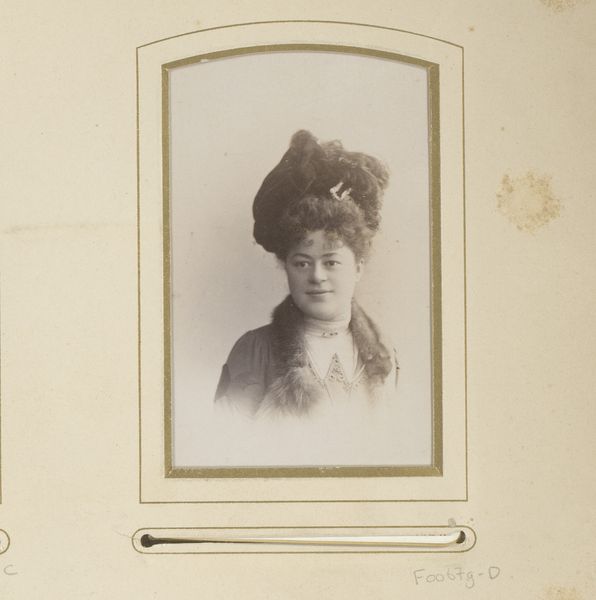
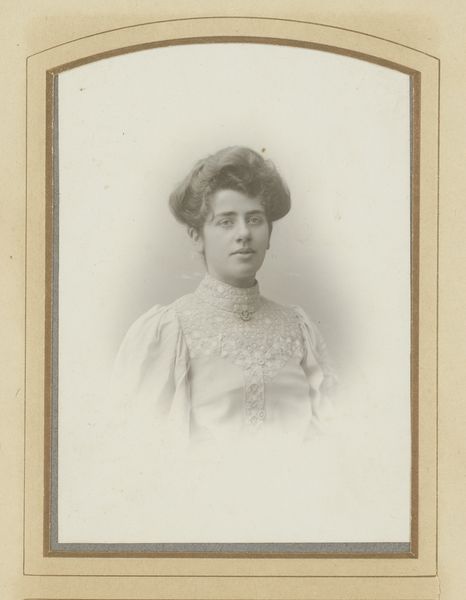
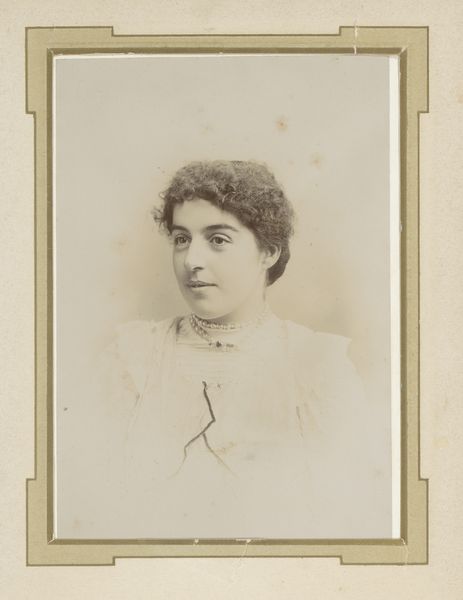
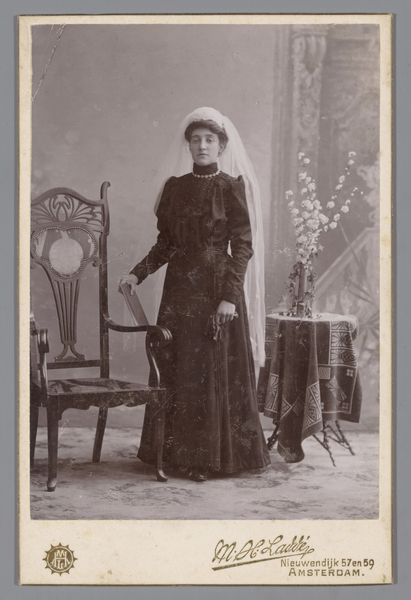
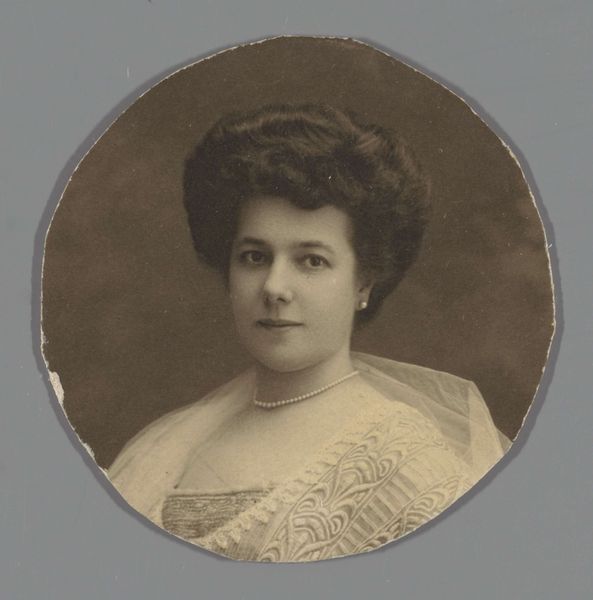
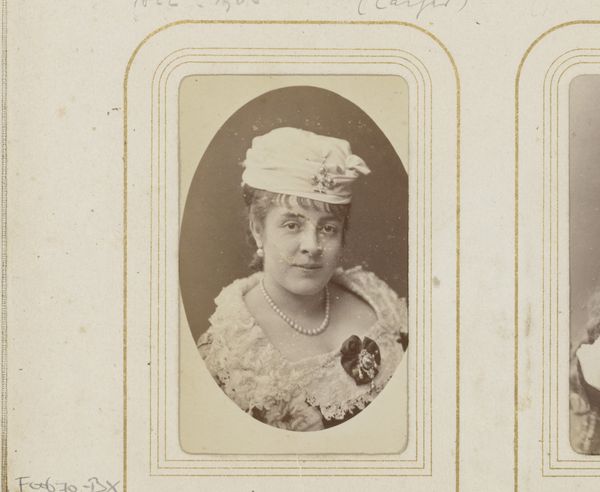
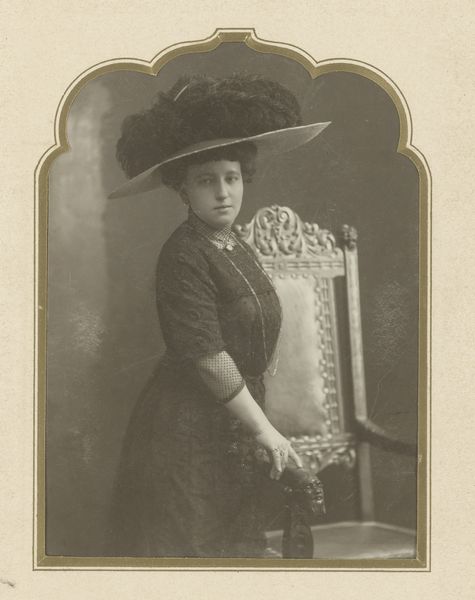
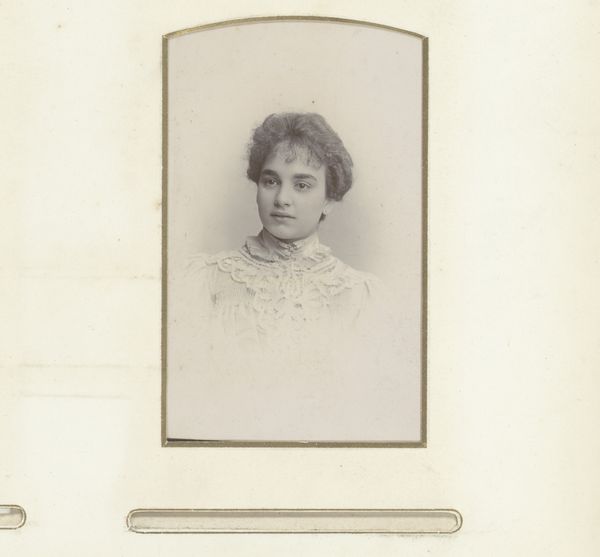
Editor: This gelatin-silver print, "Portret van Jeanne Henriette Reine Reyneke van Stuwe," made sometime between 1890 and 1920, is a striking portrait. I'm curious about the woman's expression and how it fits into the photographic trends of that time. What do you see in this piece from a historical perspective? Curator: Well, this photograph presents a compelling window into the construction of identity in the late 19th and early 20th centuries. Consider the formal conventions of portraiture at the time. Photographic studios played a significant role in shaping how individuals, especially women from particular social strata, wished to be perceived. Editor: So, it's not just about capturing a likeness? Curator: Not at all. Think about the woman's clothing and jewelry. They speak volumes about her social standing and aspirations. Also, notice the studio backdrop, though subtle, suggests a cultivated environment. The rise of photography democratized portraiture, but it also became another site for reinforcing social hierarchies. It served as a kind of social currency. Do you think she controlled her image? Editor: That’s a good question. It makes you wonder who was dictating the pose and the details we see. What are the chances someone like Jeanne Henriette Reine Reyneke van Stuwe had a real say in how she wanted to be perceived? It feels performative. Curator: Precisely. Analyzing the photograph as a social artifact encourages us to question the power dynamics involved in image making and reception during this period. Thank you for bringing attention to those dynamics. Editor: I’ll definitely look at portraits differently from now on. Thanks!
Comments
No comments
Be the first to comment and join the conversation on the ultimate creative platform.
 Collect
 React
React Comment
More like this