About this artwork
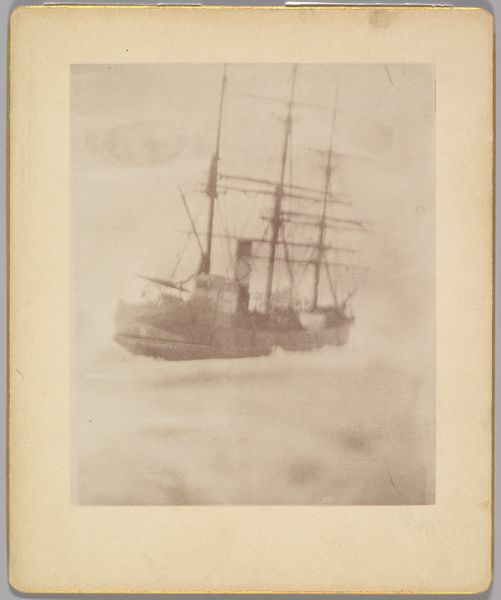
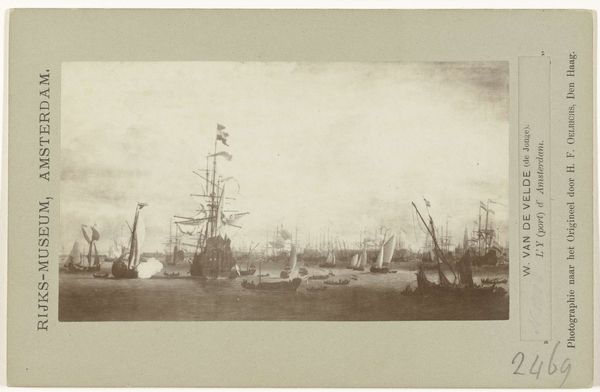
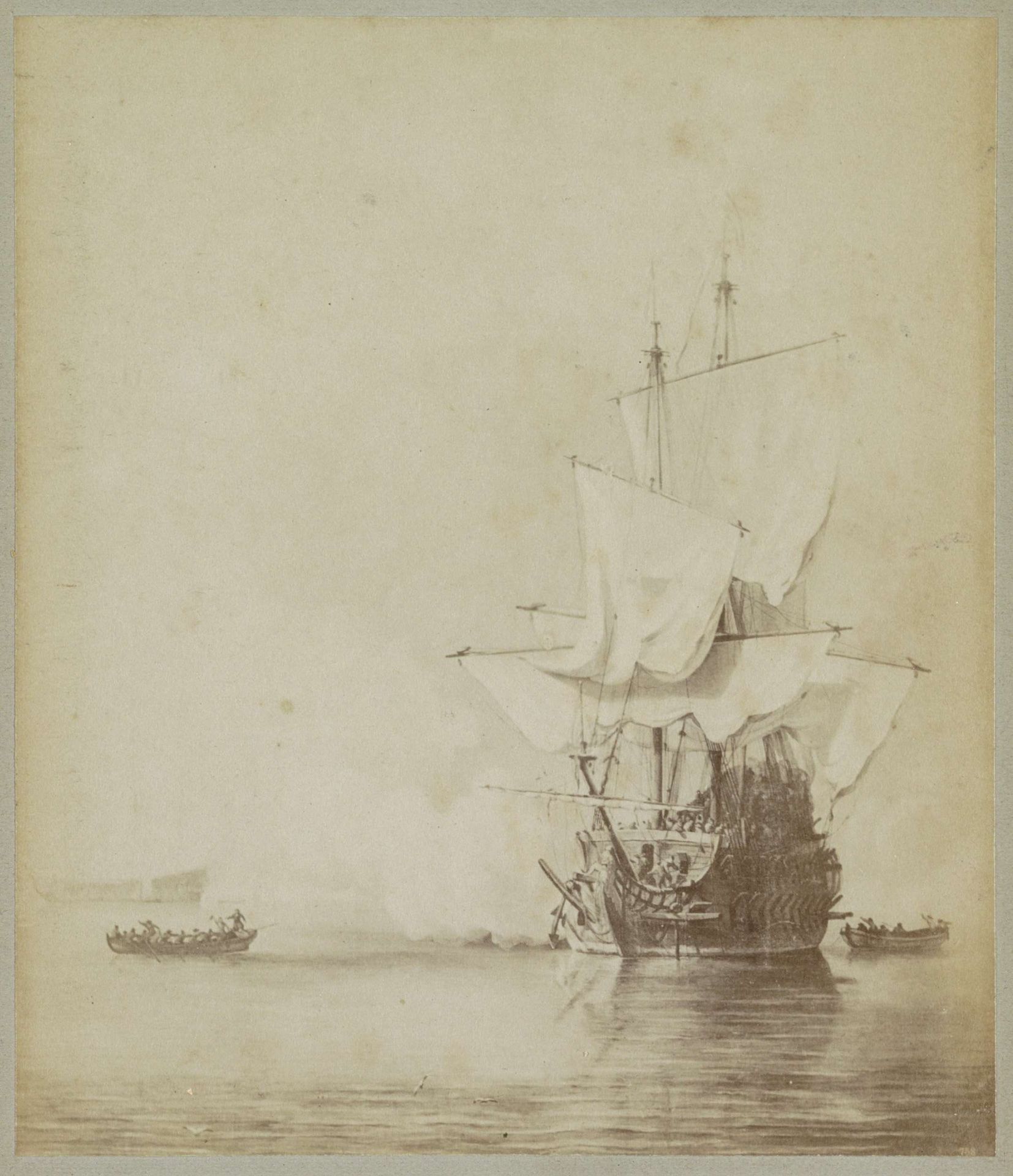
This is Johan Marinus Schalekamp’s photographic reproduction of Willem van de Velde the Younger’s painting, 'The Cannon Shot'. It's an echo of a painting, a ghost image. Look at the way the grey washes of the photograph capture the original painting’s nautical drama: the ship suspended in a hazy atmosphere. A puff of smoke lingers, as if the moment has just passed. The details are soft, edges are blurred, and the photograph’s surface looks almost like a drawing itself. I’m drawn to the tonal range: a whole world of grey in a single photograph. It makes me think about how we perceive an image versus reality, and how the act of reproduction changes our understanding of the original. The photograph doesn't try to hide its own materiality, but instead adds another layer to the artistic process. It reminds me of the work of Gerhard Richter, who also explored the blurred boundaries between painting and photography, representation and abstraction. It's all part of one big, ongoing conversation.
Fotoreproductie van het schilderij 'Het kanonschot' door Willem van de Velde (II)
1893 - 1912

Johan Marinus Schalekamp
1844 - 1912Location
RijksmuseumArtwork details
- Medium
- drawing, print, pencil
- Dimensions
- height 118 mm, width 101 mm
- Location
- Rijksmuseum
- Copyright
- Rijks Museum: Open Domain
Tags
Comments
Share your thoughts
About this artwork
This is Johan Marinus Schalekamp’s photographic reproduction of Willem van de Velde the Younger’s painting, 'The Cannon Shot'. It's an echo of a painting, a ghost image. Look at the way the grey washes of the photograph capture the original painting’s nautical drama: the ship suspended in a hazy atmosphere. A puff of smoke lingers, as if the moment has just passed. The details are soft, edges are blurred, and the photograph’s surface looks almost like a drawing itself. I’m drawn to the tonal range: a whole world of grey in a single photograph. It makes me think about how we perceive an image versus reality, and how the act of reproduction changes our understanding of the original. The photograph doesn't try to hide its own materiality, but instead adds another layer to the artistic process. It reminds me of the work of Gerhard Richter, who also explored the blurred boundaries between painting and photography, representation and abstraction. It's all part of one big, ongoing conversation.
Comments
Share your thoughts