About this artwork
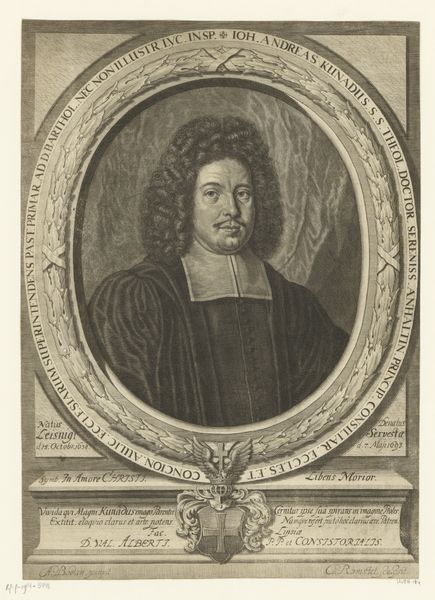
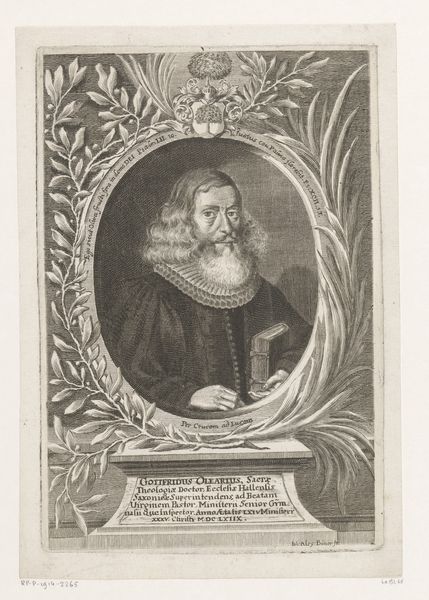
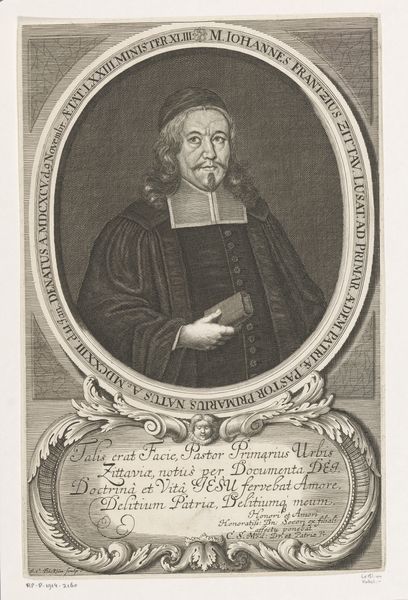
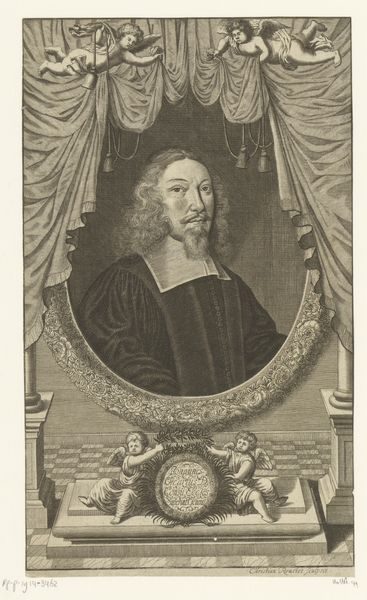
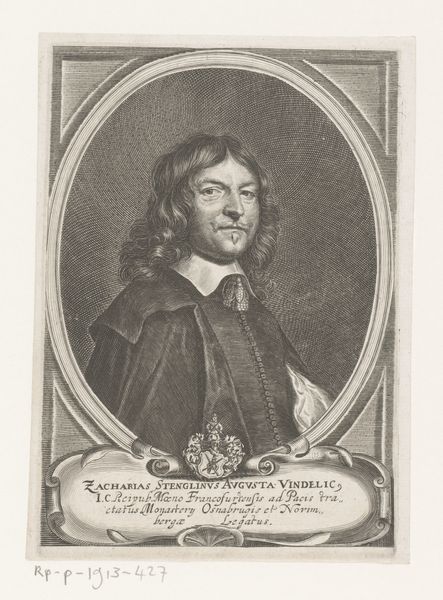
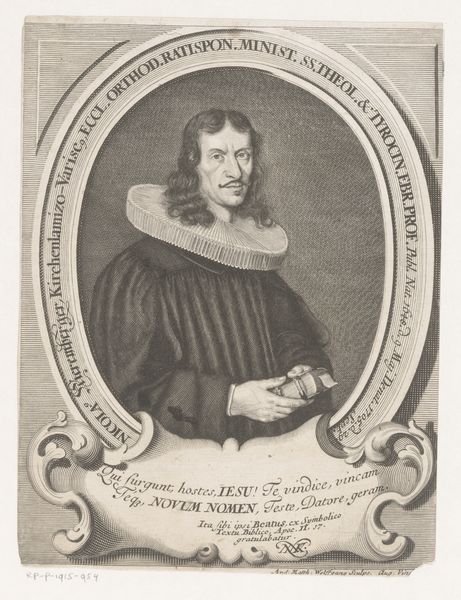
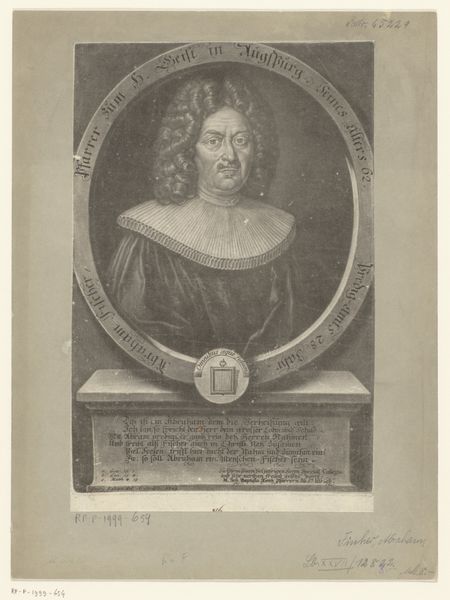
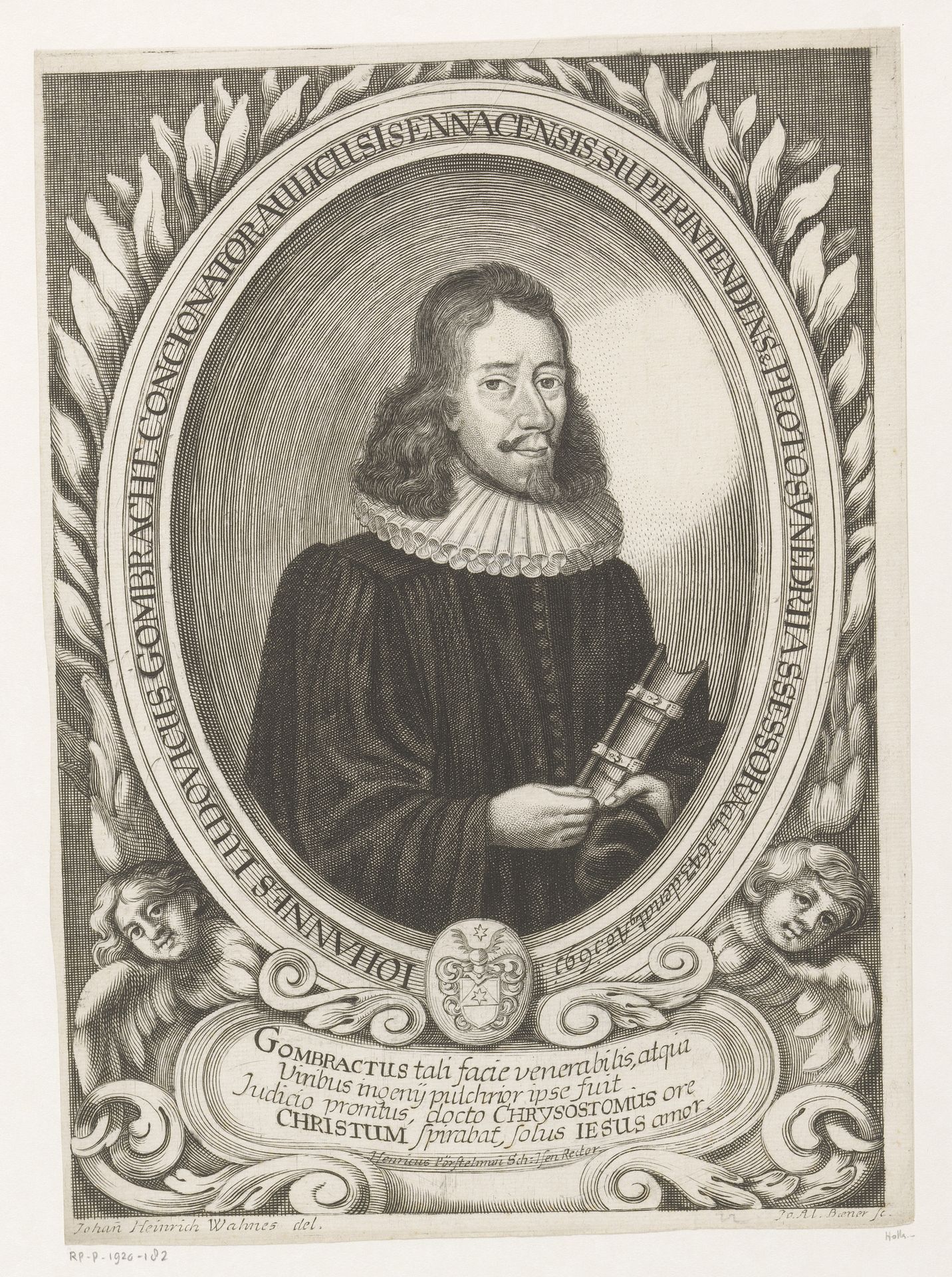
This engraving is a portrait of Johann Ludwig Gombracht, created by Johann Alexander Böner in the 17th or 18th century. The piece encapsulates the complex relationship between religious identity, social status, and the power of representation during that era. Gombracht, framed within an ornate oval, is presented as a figure of authority and reverence. His attire, the book he holds, and the Latin inscriptions all serve to reinforce his identity as a respected theologian and member of the clergy. Böner, through his detailed rendering, not only captures Gombracht's likeness, but also communicates the sitter’s self-perception and societal role. Consider how religion played a central role in shaping individual and communal identities. Portraits like these were instrumental in constructing and perpetuating particular narratives about power, knowledge, and piety. They invite us to reflect on the ways in which historical figures are remembered, and question whose stories are told. The emotional resonance of this image lies in its careful construction of an identity, meant to inspire awe and respect.
Portret van Johann Ludwig Gombracht
1691 - 1720

Johann Alexander Böner
1647 - 1720Location
RijksmuseumArtwork details
- Medium
- print, engraving
- Dimensions
- height 263 mm, width 189 mm
- Location
- Rijksmuseum
- Copyright
- Rijks Museum: Open Domain
Tags
portrait
baroque
figuration
engraving
Comments
Be the first to share your thoughts about this work.
About this artwork
This engraving is a portrait of Johann Ludwig Gombracht, created by Johann Alexander Böner in the 17th or 18th century. The piece encapsulates the complex relationship between religious identity, social status, and the power of representation during that era. Gombracht, framed within an ornate oval, is presented as a figure of authority and reverence. His attire, the book he holds, and the Latin inscriptions all serve to reinforce his identity as a respected theologian and member of the clergy. Böner, through his detailed rendering, not only captures Gombracht's likeness, but also communicates the sitter’s self-perception and societal role. Consider how religion played a central role in shaping individual and communal identities. Portraits like these were instrumental in constructing and perpetuating particular narratives about power, knowledge, and piety. They invite us to reflect on the ways in which historical figures are remembered, and question whose stories are told. The emotional resonance of this image lies in its careful construction of an identity, meant to inspire awe and respect.
Comments
Be the first to share your thoughts about this work.