drawing, pencil
#
portrait
#
drawing
#
pencil sketch
#
pencil
#
realism
Copyright: Rijks Museum: Open Domain
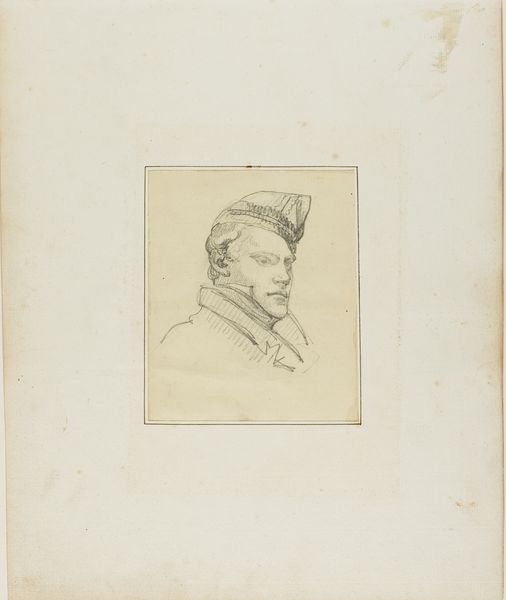
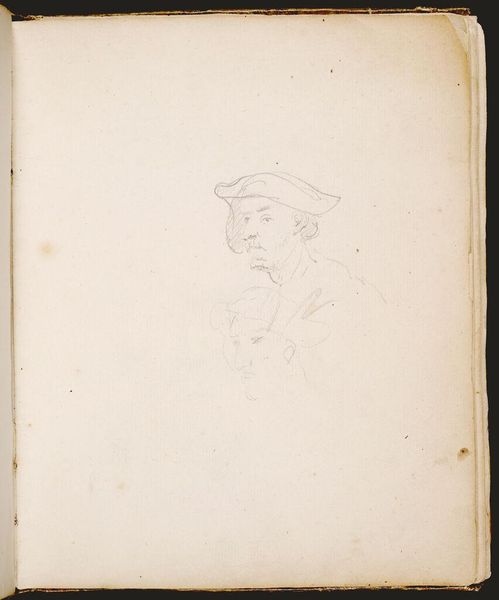
Editor: This drawing is “Boom en een mannenbuste,” or “Tree and a Man's Bust," made with pencil by George Hendrik Breitner between 1881 and 1883. It's currently housed here at the Rijksmuseum. It strikes me as a fairly informal work, maybe a study of sorts. How would you interpret this piece based on its visual components? Curator: This sketch offers a glimpse into Breitner’s artistic process, emphasizing form and line over detail. Observe the economy of means: he establishes the essence of the human face and upper body, and gestures at a tree—possibly foliage—with just a few confident strokes. Consider the relationship between these two forms. Editor: They’re juxtaposed but separate, right? It's like two different studies on one page. Is there a compositional reason for their placement? Curator: Indeed. Note how the organic lines of the 'tree' offset the geometric qualities of the bust. There’s a tension between natural and constructed form. This tension reveals Breitner's mastery of visual rhetoric; one could suggest it creates an unfinished story. Is there anything else you noticed about his particular employment of materials? Editor: I see a distinct difference in how he renders light and shadow. On the figure, the shading is more developed, particularly around the face, whereas the tree seems to fade in its values toward the bottom of the image. Curator: Precisely. He controls tonal variations and uses light and dark to suggest volume and depth, even within this rapid sketch. I wonder, is there a dynamic energy to Breitner's mark-making that captures the ephemerality of a fleeting moment or idea? Editor: It feels very spontaneous! Almost like he's trying to catch a fleeting thought. That the lack of shading below the tree could have meant that Breitner moved on when satisfied with a level of fidelity. It's so interesting to consider artistic intent just by looking at line and composition.
Comments
No comments
Be the first to comment and join the conversation on the ultimate creative platform.
 Collect
 React
React Comment
More like this