lithograph, poster
#
art-nouveau
#
narrative-art
#
lithograph
#
figuration
#
genre-painting
#
cartoon style
#
poster
Copyright: Public Domain: Artvee
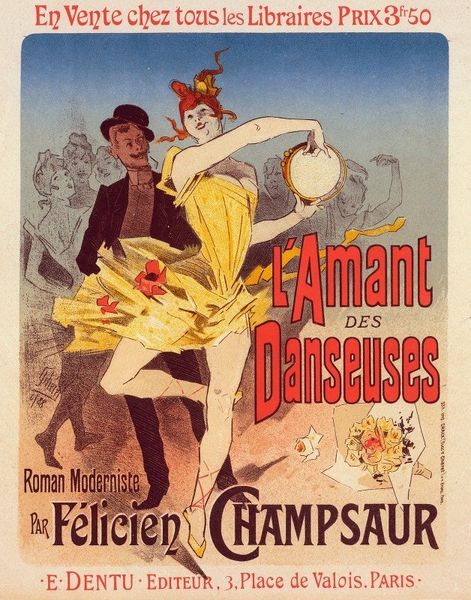
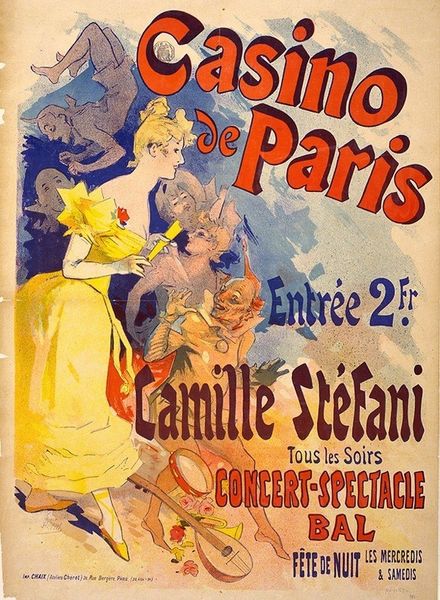
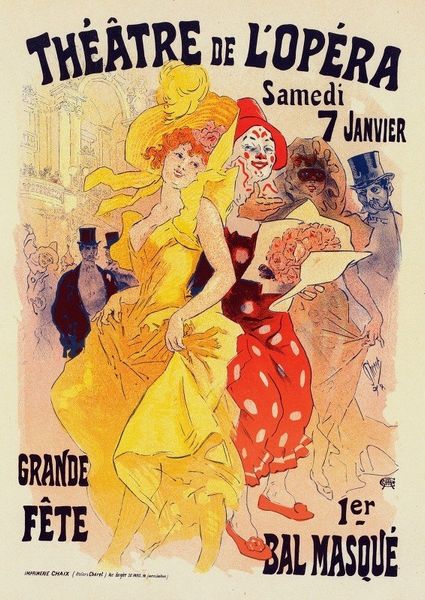
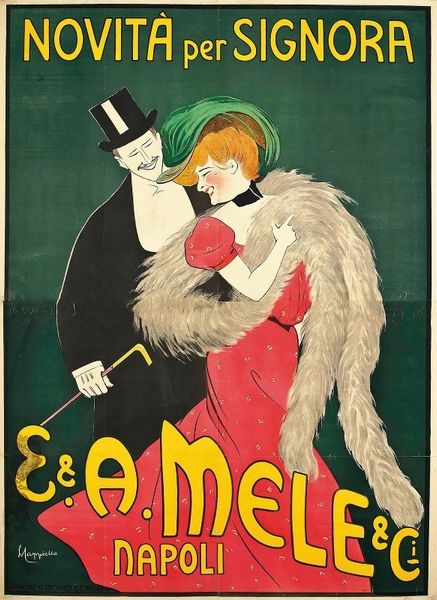
This advertisement for Félicien Champsaur’s “La Gomme” by Jules Chéret, is awash with symbols of fin-de-siècle Parisian culture. The figures, bedecked in top hats and extravagant dresses, embody the joie de vivre of the era. The walking stick, or cane, is a particularly potent emblem. Across centuries and cultures, the staff has signified authority, guidance, and support. From the scepter of a king to the bishop's crosier, its presence denotes power and status. Here, however, the cane is brandished with playful abandon, a far cry from its ancient, solemn origins. This gesture towards decadence and irreverence is the spirit of the modern age. The collective memory of this symbol is fascinating. The cane, once a symbol of the patriarchy, is refashioned into an object of whimsy. This transformation reflects a deeper psychological shift, a subconscious rebellion against rigid social norms. The audience, in turn, connects to the advertisement on an emotional level, drawn to its promise of liberation and pleasure. The cyclical nature of symbolism is ever-present.
Comments
No comments
Be the first to comment and join the conversation on the ultimate creative platform.
 Collect
 React
React Comment
More like this