painting, oil-paint
allegory
baroque
painting
oil-paint
figuration
oil painting
mythology
history-painting
italian-renaissance
Copyright: Public domain
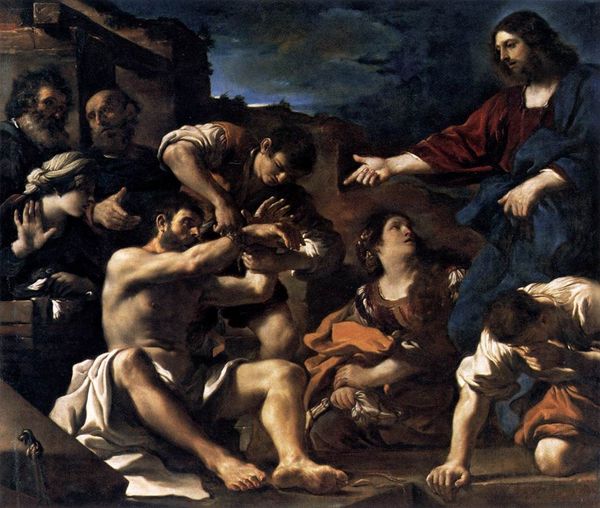
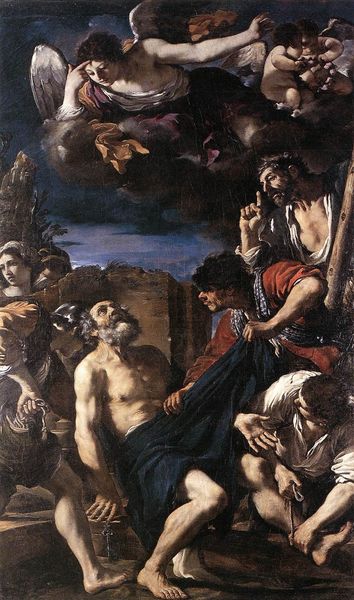
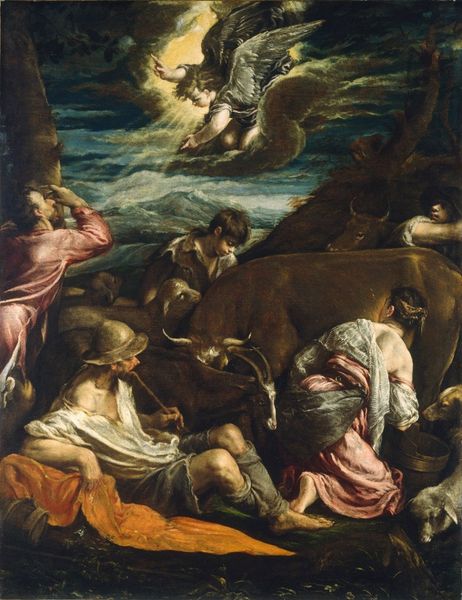
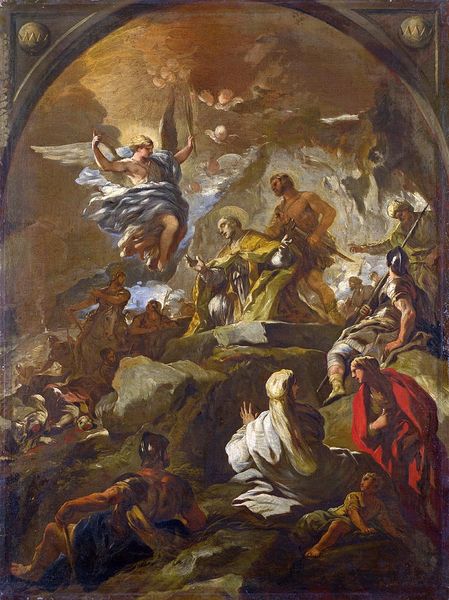
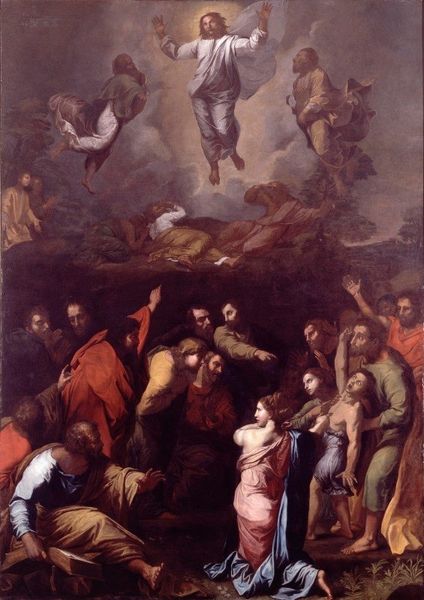
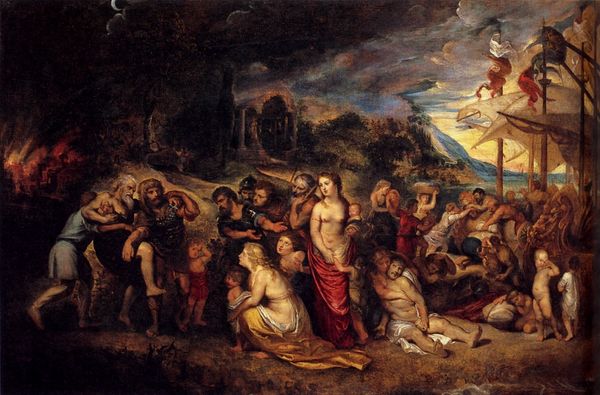
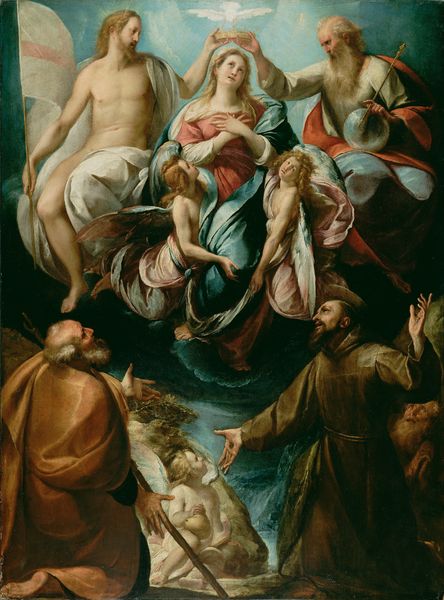
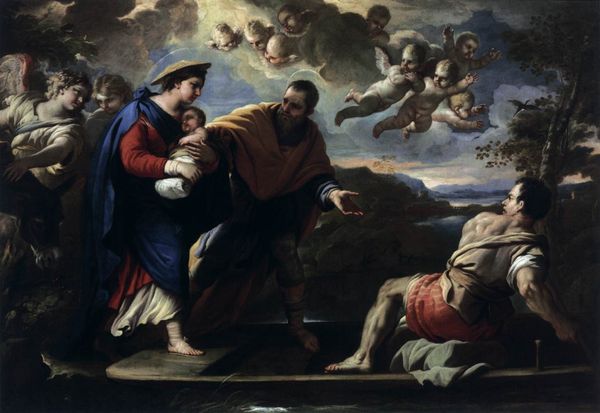
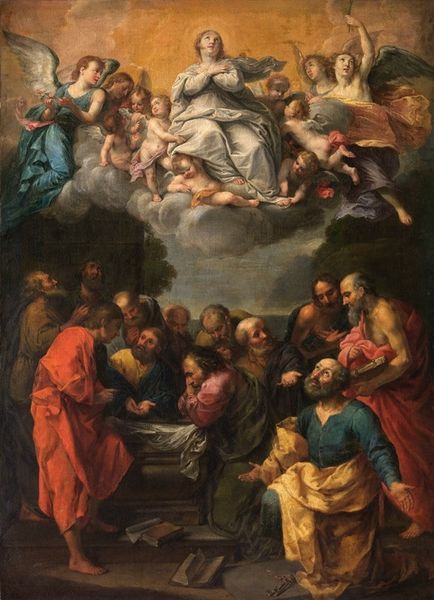
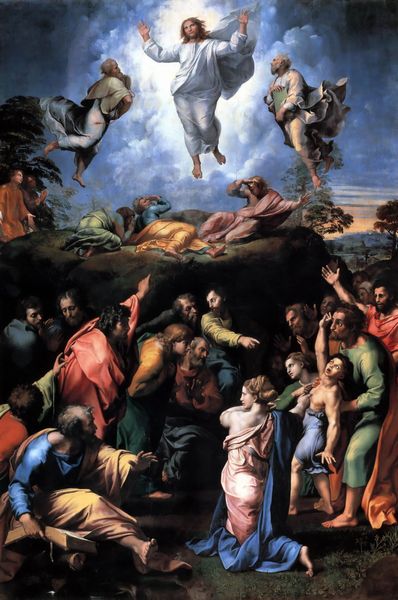
Guercino painted this ‘Assumption of the Virgin’ in Italy during the Baroque era. It depicts the Virgin Mary being carried to Heaven, surrounded by angels, while the apostles gather around her empty tomb in awe. The painting presents a traditional Catholic subject that was actively promoted through art during the Counter-Reformation. Visual codes, like Mary’s upward gaze and the apostles' dramatic gestures, encourage the viewer to participate in the scene’s emotional intensity. Guercino’s ‘Assumption’ reflects the socio-political context of seventeenth-century Italy, a period marked by religious reform. It’s useful to look at the institutional histories of the Catholic church during this time. The church used art to reaffirm its doctrines and inspire devotion among the faithful, something that Guercino's artwork seems to have embodied. Analyzing archival documents and religious treatises from that time helps us understand better the social conditions that shaped this work and appreciate its role within the broader cultural landscape.
Comments
No comments
Be the first to comment and join the conversation on the ultimate creative platform.
 React
React Comment