About this artwork
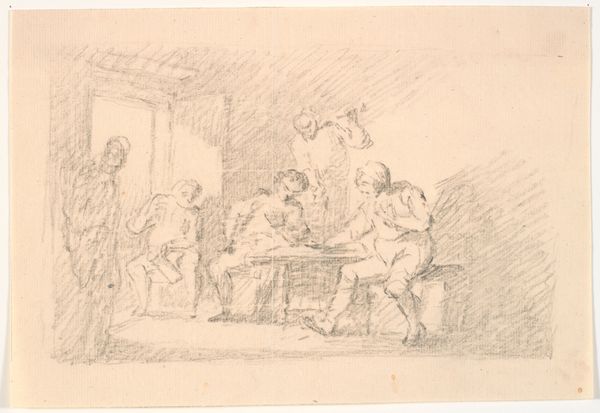
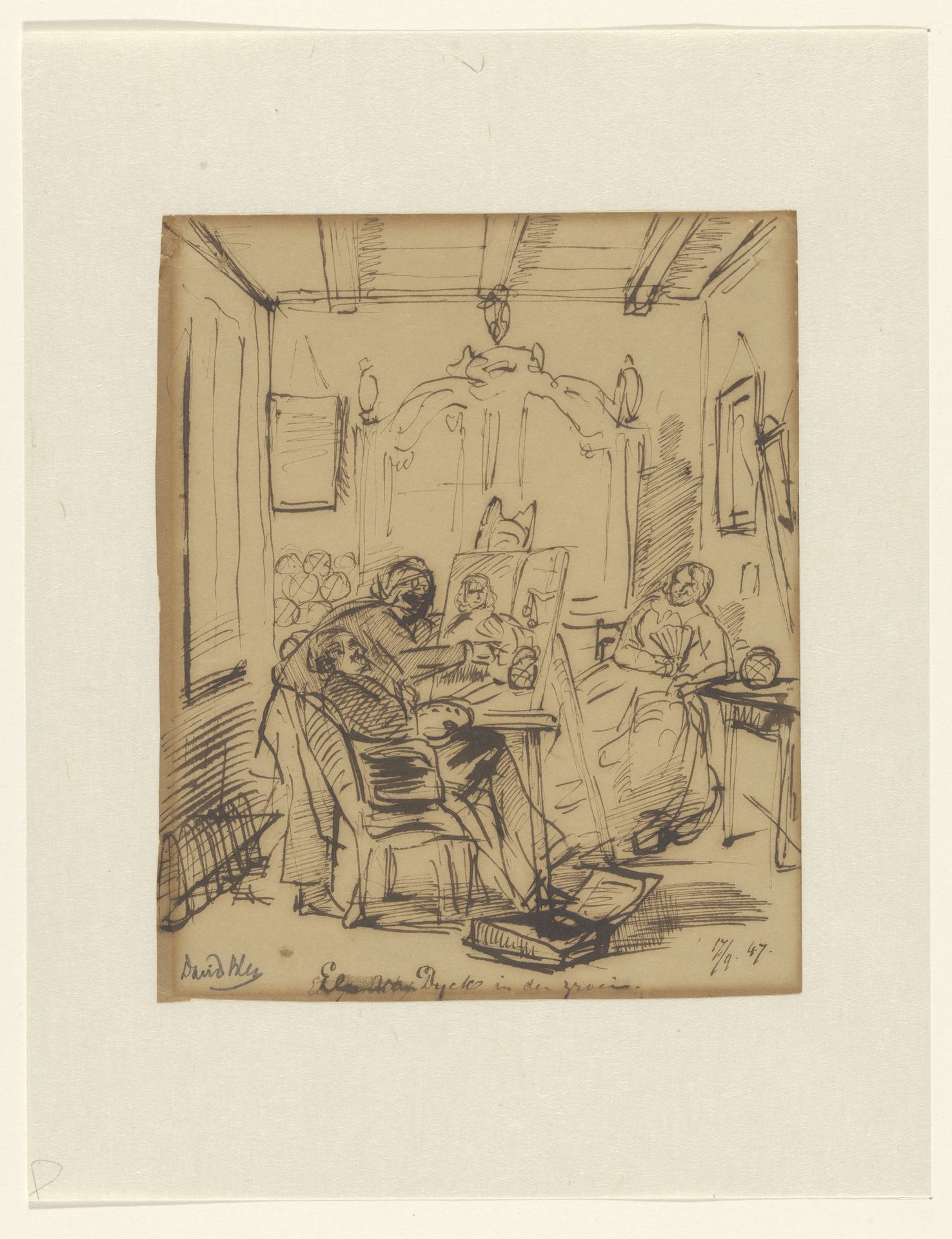
This drawing, "Portraitschilder in een interieur, met zittend model en derde figuur," was created by David Bles. The monochromatic scene unfolds through energetic lines, capturing an interior where a painter works on a portrait. The composition divides the space into zones of activity and passivity. On the left, the artist actively engages with his canvas, while on the right, a seated figure rests, seemingly disconnected. This division highlights a contrast between the act of creation and observation. The sketched lines create a sense of depth and perspective, drawing the viewer's eye into the scene. Bles plays with semiotic codes of artistic production. The easel, palette, and brush are signs representing the practice of painting. The drawing invites us to consider not just what is depicted but how the act of depiction itself shapes meaning. This piece underscores how art continually reflects upon its own processes.
Portretschilder in een interieur, met zittend model en derde figuur.
Possibly 1847 - 1849

David Bles
1821 - 1899Location
RijksmuseumArtwork details
- Medium
- drawing, paper, ink
- Dimensions
- height 194 mm, width 161 mm
- Location
- Rijksmuseum
- Copyright
- Rijks Museum: Open Domain
Tags
Comments
Share your thoughts
About this artwork
This drawing, "Portraitschilder in een interieur, met zittend model en derde figuur," was created by David Bles. The monochromatic scene unfolds through energetic lines, capturing an interior where a painter works on a portrait. The composition divides the space into zones of activity and passivity. On the left, the artist actively engages with his canvas, while on the right, a seated figure rests, seemingly disconnected. This division highlights a contrast between the act of creation and observation. The sketched lines create a sense of depth and perspective, drawing the viewer's eye into the scene. Bles plays with semiotic codes of artistic production. The easel, palette, and brush are signs representing the practice of painting. The drawing invites us to consider not just what is depicted but how the act of depiction itself shapes meaning. This piece underscores how art continually reflects upon its own processes.
Comments
Share your thoughts