1938
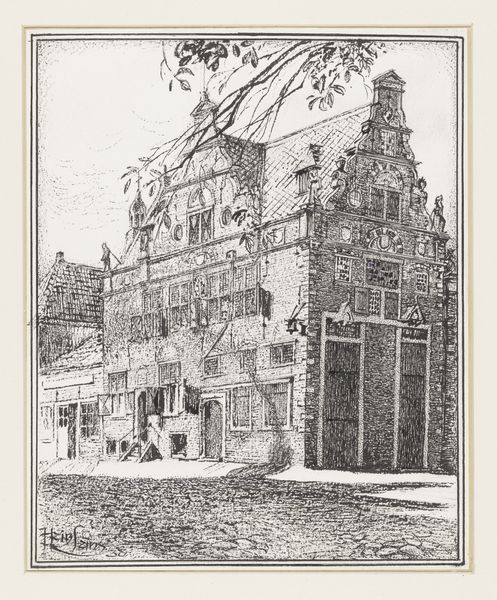
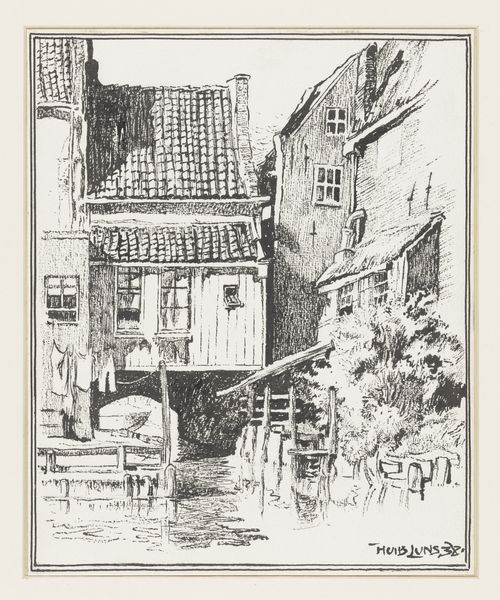
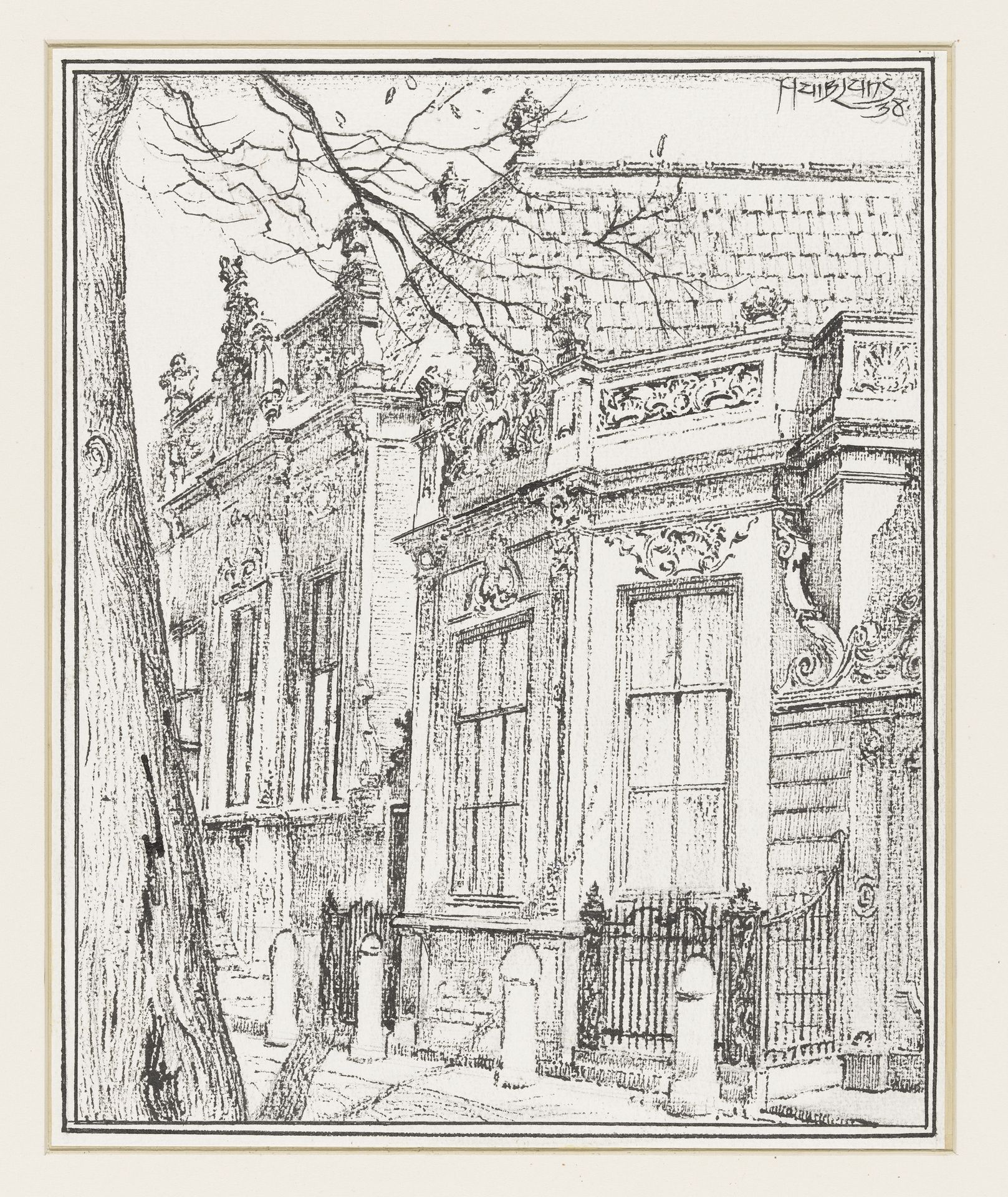
Snouck-van-Loosenhuis te Enkhuizen

Huib Luns
1881 - 1942Location
RijksmuseumListen to curator's interpretation
Curatorial notes
Curator: Right, let's pause here. This is "Snouck-van-Loosenhuis te Enkhuizen," a 1938 drawing by Huib Luns, rendered with pen and ink. Quite a mouthful, isn't it? Editor: My goodness, it's almost aggressively detailed! There's such precision, like peering into the memory of a very ornate past. A stillness emanates from the meticulous lines, it’s almost eerie. Curator: Eerie? That's an interesting take. For me, the Dutch Golden Age architectural details sing of a confident prosperity, albeit one perhaps beginning to fade a little by the time Luns captured it here in this work of realism. Editor: Prosperity yes, but trapped by time. See how the tree on the left, stark and bare, encroaches on the facade, that is potent imagery? Nature, in a way, is attempting to reclaim artifice. What symbols of civic pride once beamed out from those windows and cornices? The human impulse to monumentalize itself feels so poignant in monochrome. Curator: You always bring such depth! I tend to focus on the skill of Luns, how he captured the interplay of light and shadow using nothing but ink. Notice the variation in line weight; he really makes the building three-dimensional despite the limitations of the medium. Editor: True, technically it’s brilliant. And I appreciate the almost clinical recording of historical forms. It speaks to the preservation of heritage, which inherently hints at its vulnerability. What will become of it all? Luns gives us a stage, but the players have left. The building sits there, frozen. The tree we discussed will continue its journey on the planet… Curator: I like that: "the players have left the stage." Maybe that inherent ephemerality is the undercurrent I was missing initially. I now feel the stillness a little more too… Editor: Precisely! In capturing this moment, the artist becomes an archeologist, sifting through the relics of grandeur with fragile and beautiful strokes. Curator: So, Luns intended a realistic city landscape – with architectural interest – that inadvertently morphed into an almost spectral portrait? Editor: I wouldn’t say morphed. The artist simply, beautifully, records – the observer's own baggage shapes the message and lasting resonance of any image, including this one of “Snouck-van-Loosenhuis te Enkhuizen.” Curator: Beautifully put. Perhaps that building has more to tell, if only we’d keep looking closely and asking more. Right, onward…