1881
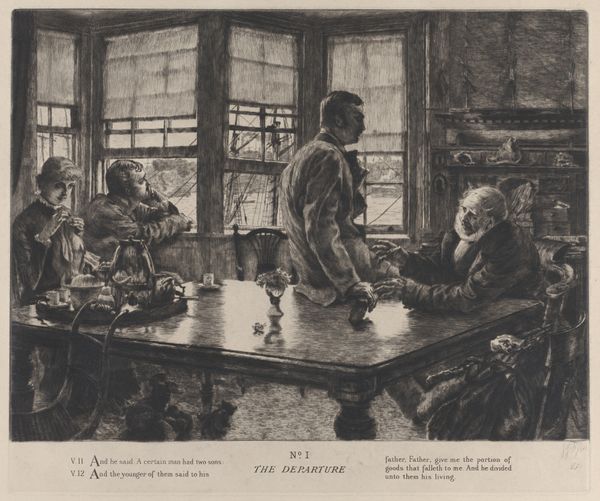
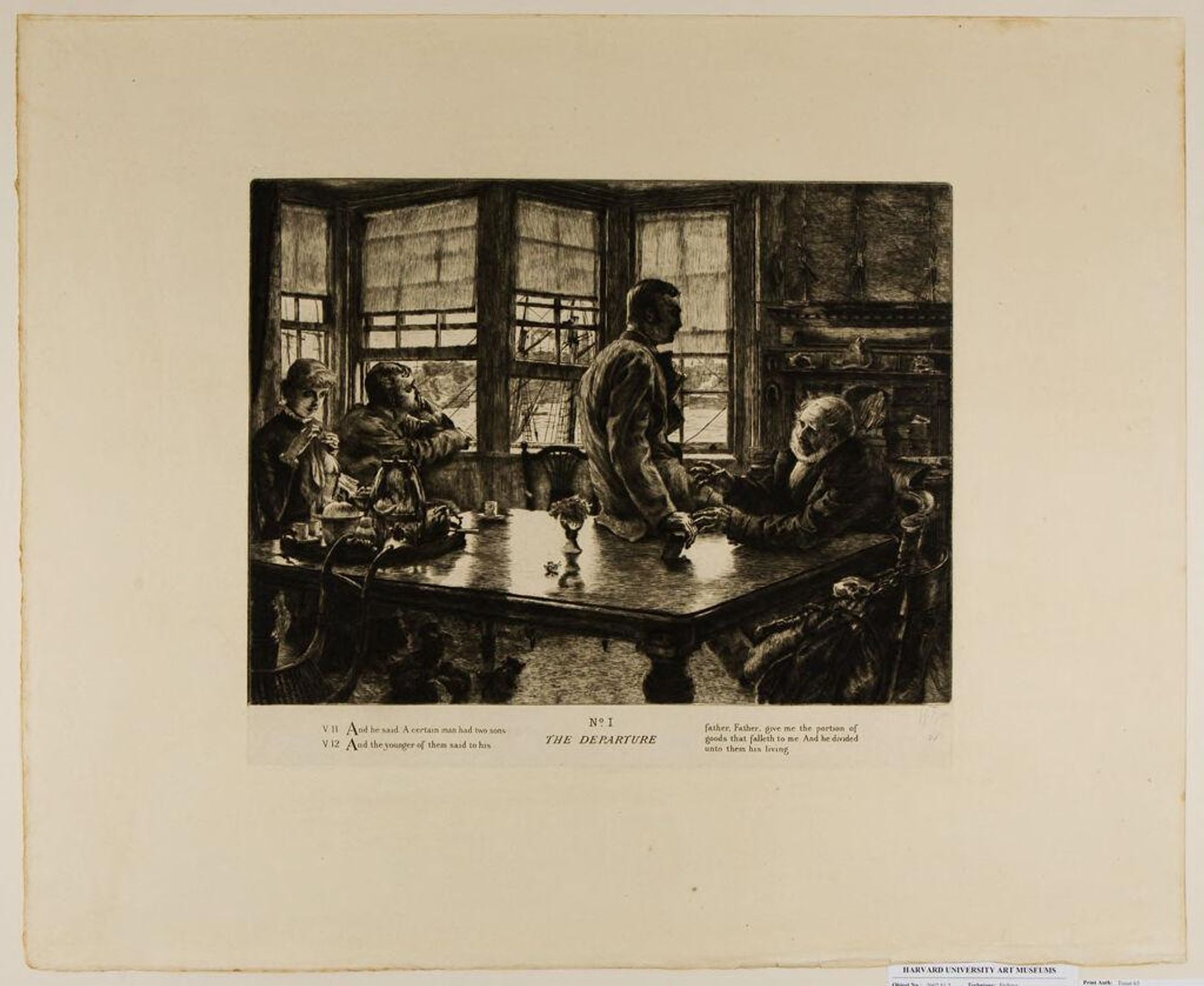
The Departure


Listen to curator's interpretation
Curatorial notes
Curator: James Tissot, born in 1836, created this etching, "The Departure." Note the tonal range he achieves with such intricate line work. It's rather somber. Editor: Yes, an oppressive stillness pervades the scene. Is it a class statement, perhaps? The figures seem burdened by unspoken tensions, a palpable sense of constraint. Curator: Observe how Tissot employs the window as a compositional device, framing the outside world, yet emphasizing the figures’ confinement. Editor: A pointed contrast, indeed. The patriarchy's weight—generational expectations, stifled emotions—manifests in every etched line, a visual study of the era’s social mores. Curator: The stark chiaroscuro enhances this mood, adding depth and drama to the composition. Editor: And that dramatic lighting highlights the power dynamics inherent in this domestic tableau, a silent scream against bourgeois norms. I find it haunting. Curator: Well, I appreciate your sociological insights; it seems we both see the merit of studying Tissot's piece here at Harvard Art Museums. Editor: Absolutely, though my interest is always in how art can inform, critique, and challenge our understanding of the past and present.